
Why jumping spiders mimic wasps
In nature's game of survival, appearances can deceive

Earth.com highlighted a study by biologists at the University of Cincinnati that found spiders that look like wasps can fool not only other spiders but also artificial intelligence.
Scientists for years have been struck by how some male jumping spiders resemble wasps when they raise their abdomen's during their courtship rituals. Australian researchers who discovered one new species named it after the Latin name for wasp.
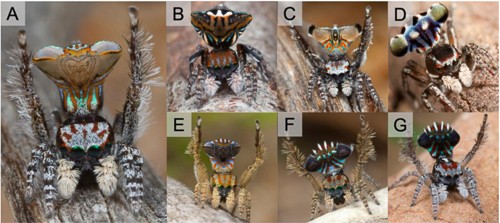
The backs of jumping spiders resemble predatory insects like wasps and praying mantises that can fool even AI. Graphic/Olivia Harris with photos by Jurgen Otto
Biologists in UC's College of Arts and Sciences discovered that the ruse tricks even artificial intelligence that could not always correctly identify the jumping spiders among images of wasps, flies and praying mantises.
Mimicry is a common strategy in nature. But why would a spider want to mimic a wasp, which hunts and feeds on spiders?
UC Associate Professor Nathan Morehouse, a study co-author, said the male spiders might use the ruse to capture the attention of females. And once they have their potential mate's attention, they can make introductions through their elaborate courtship rituals.
The study was published in the journal Behavioral Ecology.
Featured image at top: Researchers always thought the backs of some jumping spiders resembled a hornet's face. It even fools AI. Photo/Backiris/iStockPhoto

UC Associate Professor Nathan Morehouse studies jumping spiders in his biology lab. Photo/Jay Yocis/UC
Related Stories
Simple ways to find a deeper sense of happiness and well being
October 8, 2026

UC assistant professor Suzie White, featured in an AARP story on practical ways to live a happier, healthier life, shared research-backed strategies for increasing well-being through gratitude and service to others. White teaches Happiness in Action, a course that helps students apply the science of happiness in everyday life.
New vending machine helps people with addiction
October 8, 2026

The University of Cincinnati's Daniel Arendt was featured in a Spectrum News report on a new harm reduction vending machine installed at the IPM Food Pantry in partnership with the Hamilton County Mental Health and Recovery Services Board.
UC study correlates increased physical activity with slower Parkinson’s progression
October 7, 2026
Higher levels of physical activity were associated with slower declines in thinking and memory as well as slower worsening of movement symptoms for people with Parkinson’s disease, according to a new study led by University of Cincinnati researchers published Oct. 7, 2026, in Neurology.