Europe bans chemical used in some gel nail polishes
UC expert featured in CNN article discussing alleged 'reproductive toxicant'

The University of Cincinnati's Kelly Dobos spoke with CNN about the European Union prohibiting the use of a chemical ingredient called trimethylbenzoyl diphenylphosphine oxide (TPO) in some gel nail polishes and other cosmetic products due to it allegedly being a "reproductive toxicant."
TPO works as a photoinitiator, meaning it responds to light. In gel nail polish, it helps the polish set under ultraviolet or UV light.
“It starts that reaction that gets it to cure,” said Kelly Dobos, a cosmetic chemist and adjunct instructor at UC's James L. Winkle College of Pharmacy, told CNN.
The EU's concerns stem from animal study results, but Dobos said people who enjoy gel manicures do not need to panic.
“What’s important to keep in mind is that those end points and those studies were from animal-feeding studies. When you’re thinking about nail polish, that’s clearly not how we’re exposed to TPO. You’re not eating the nail polish. So, it’s a different route of exposure," Dobos said.
"In my opinion, these materials, in the way that they are used, are very safe, but there are alternatives,” she continued.
Dobos also spoke with CBS News about TPO and the EU decision. Watch the CBS News segment.
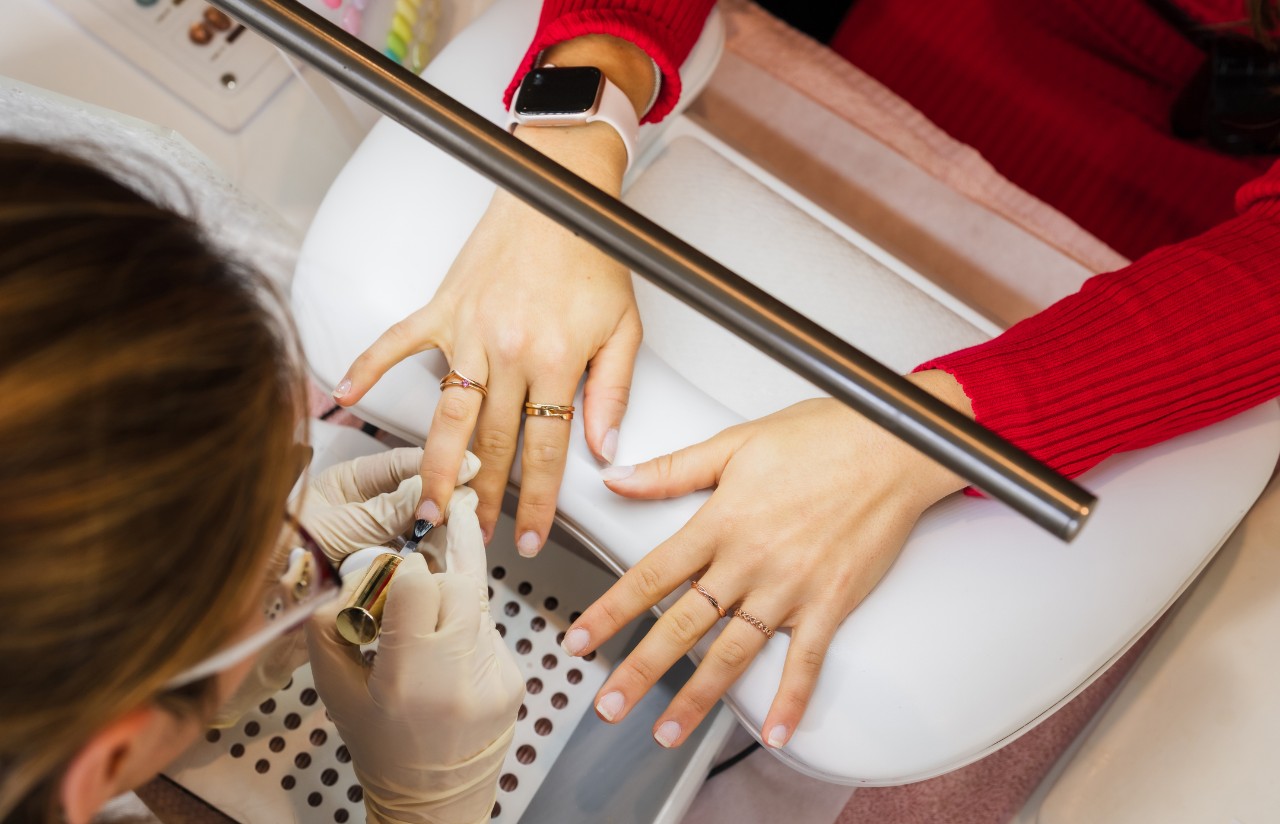
Featured photo at top of a person getting a manicure. Photo/nazar_ab/iStock Photo.
Related Stories
These teeny spiders are social media stars
August 28, 2026

The New York Times turned to a University of Cincinnati professor to explain the appeal of jumping spiders on social media.
An internal divide among unions on AI impacts the Wisconsin gubernatorial race
August 28, 2026

Anne Lofaso, a professor in the Donald P. Klekamp College of Law at UC, spoke with Wisconsin Public Radio, about the schism among unions over AI and whether it is a plus, a negative, or somewhere in between when looking at job creation.
On-site training in Speech & Hearing Clinic sets UC’s programs apart
August 27, 2026
At the University of Cincinnati’s Speech & Hearing Clinic, Doctor of Audiology and Speech-Language Pathology graduate students gain real-world experience while providing free speech and hearing services to the community.