View the Daniel S. Young Archives of Medical Illustrations
Illustrating War: A digital collection of medical illustrations

Medical illustrations and drawings reflect the state of medicine at a specific moment in time, providing a visual record of science, technology and anatomical knowledge.
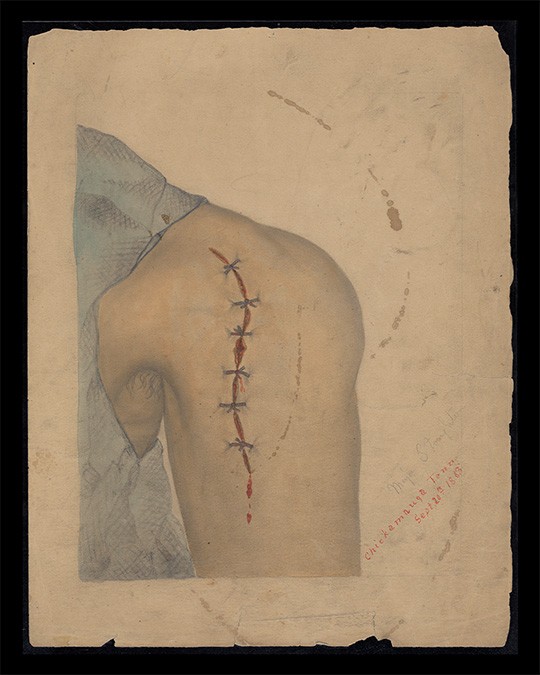
Color drawing of cuts along the upper arm and elbow. Courtesy Henry R. Winkler Center for the History of the Health Professions, University of Cincinnati Libraries.
A new University of Cincinnati Libraries digital collection, the Daniel S. Young: American Civil War Medical Illustrations, highlights the artistic and medical contributions of a surgeon and illustrator throughout his service on the battlefield.
Available online via JSTOR, the collection contains 83 medical illustrations from the Daniel S. Young Archives held by the Henry R. Winkler Center for the History of the Health Professions at the Donald C. Harrison Health Sciences Library. The collection was scanned and digitized by the UC Libraries Digital Initiatives Team.
Daniel Young was a surgeon, artist and inventor. Born in New York in 1827, he graduated from Albany Medical College, New York, and in 1855 moved to Cincinnati, Ohio.
During the American Civil War, Young was the surgeon of the 21st Regiment Ohio Volunteer Infantry (O.V.I.). Throughout the war he traveled with the O.V.I. administering medical care to injured soldiers and creating illustrations of soldiers’ wounds. Many of the medical illustrations are dated with the Civil War battle locations.
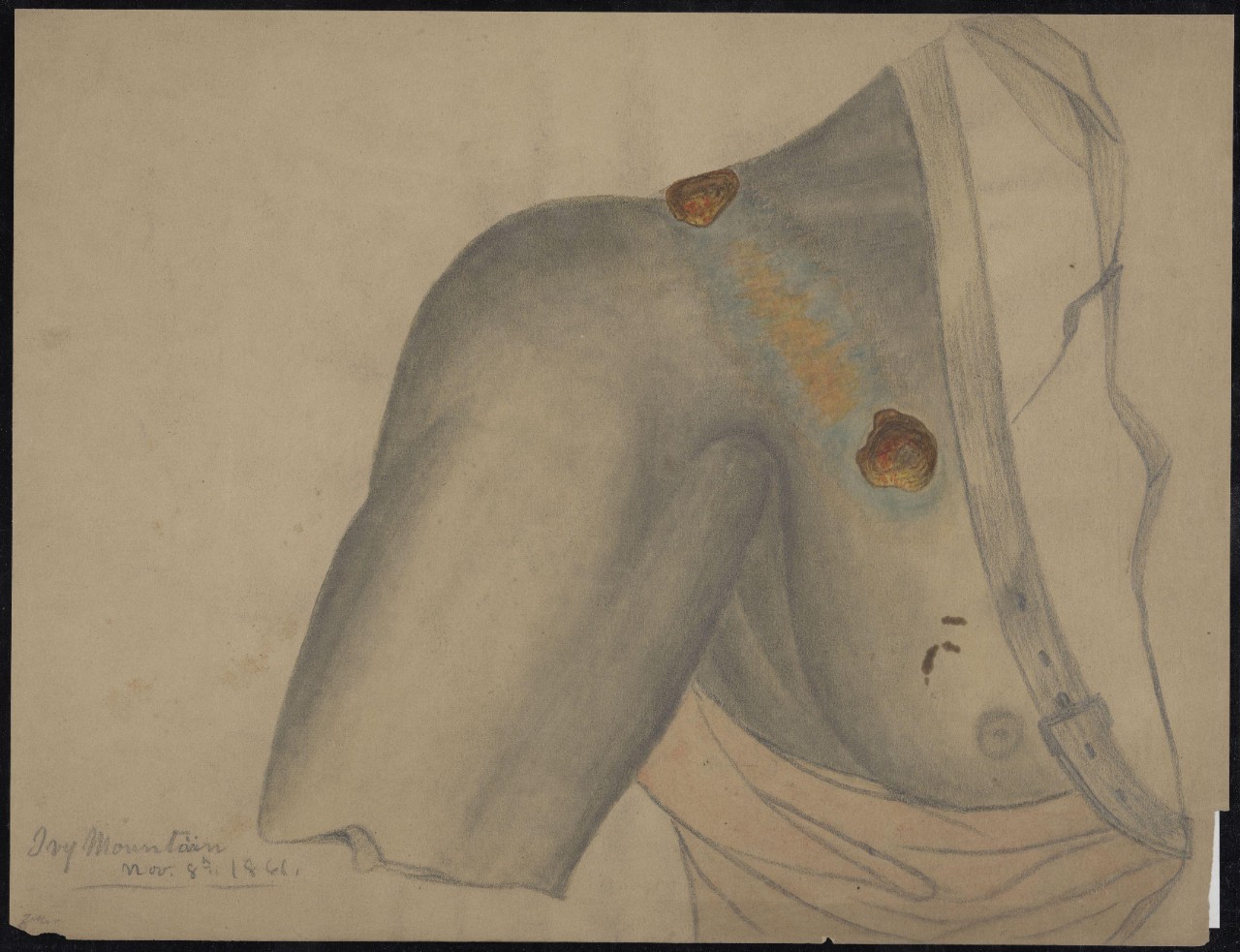
Color drawing of wounds in the shoulder and chest. Courtesy the Henry R. Winkler Center for the History of the Health Professions.
Young’s artistry paints a portrayal of how illustrations informed medical professionals during the 19th century. His Civil War medical illustrations were crucial in educating doctors on surgical procedures and about previously unseen wounds. While medical illustrations such as Young’s served to educate doctors they were also important in aiding veterans in their pension claims and showing how the war impacted soldiers’ health.
"Dr. Young's medical illustrations serve as a visual record of the advancements and challenges faced by military medical professionals during a period of prolonged intense conflict.”
Devhra BennettJones, Winker Center archivist
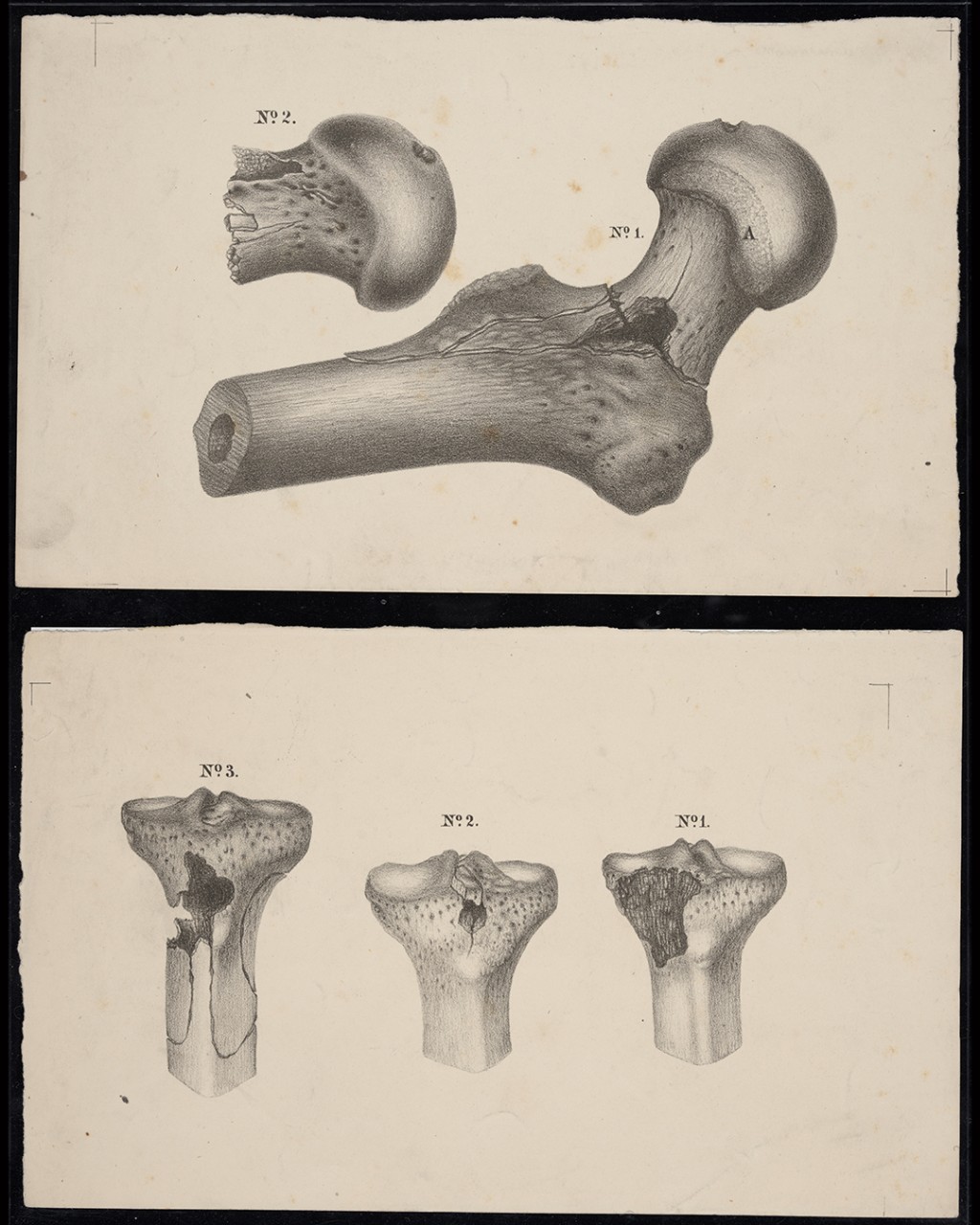
Grey scale drawing of entry and exit wounds of a thigh bone near the hip joint. Courtesy the Henry R. Winkler Center for the History of the Health Professions.
Following the war, Young returned to Cincinnati where he lectured on surgery at the Cincinnati College of Medicine and Surgery. He contributed several works on military surgery to the Cincinnati Journal of Medicine, accompanying them with his medical illustrations. He began writing a “Surgical History of the Civil War,” but abandoned the work when the War Department announced that they were preparing a similar work by the surgeon-general’s office.
Daniel Young donated his medical illustrations to the University of Cincinnati College of Medicine library, which is now the Henry R. Winkler Center for the History of the Health Professions. He died in Cincinnati in 1902.
"We expect significant interest in this collection from historians, students, researchers, physicians, scholars and those interested in the American Civil War. The work to digitize and make this collection available online provides open access worldwide," said BennettJones. "Medical illustrations from the American Civil War are important today because they offer valuable insights into the history of military medicine, diseases and the traumas faced by soldiers."
The Henry R. Winkler Center for the History of the Health Professions is an archive and exhibit facility chronicling the history of the health sciences primarily in the Cincinnati area. The Winkler Center's over 35,000 volumes of rare and classic works on health history however broaden that scope to include Europe and date back almost 500 years.
Impact Lives Here
The University of Cincinnati is leading public urban universities into a new era of innovation and impact. Our faculty, staff and students are saving lives, changing outcomes and bending the future in our city's direction. Next lives here.
Tags
Related Stories
UC Med Mentors welcomes 39 new mentees at match event
October 15, 2026
University of Cincinnati College of Medicine medical students matched with 39 Oyler School mentees at a UC Med Mentors match event, beginning four-year mentoring relationships.
More physical activity may mean slower Parkinson’s disease progression
October 15, 2026

National media including the Washington Post and U.S. News & World Report highlighted University of Cincinnati research that found higher levels of physical activity were associated with slower declines in thinking and memory as well as slower worsening of movement symptoms for people with Parkinson’s disease.
What to know about lung adenocarcinoma following Pope Leo diagnosis
October 14, 2026

The University of Cincinnati Cancer Center's Robert Van Haren, MD, was featured in a Medical News Today article discussing the diagnosis, risk factors, symptoms and treatment of lung adenocarcinoma in light of Pope Leo XIV's recent diagnosis.