
Nothingness might explain everything
UC physicist talks about dark energy's role in the universe

The BBC turned to a University of Cincinnati physicist to explain why researchers think dark matter and dark energy are key to unlocking secrets of the universe.
UC College of Arts and Sciences Assistant Professor Jessie Muir is part of the Dark Energy Survey, a collaboration which examines fundamental issues relating to the distribution of matter in the universe.
Stars, planets and other matter account for just 5% of the known universe.
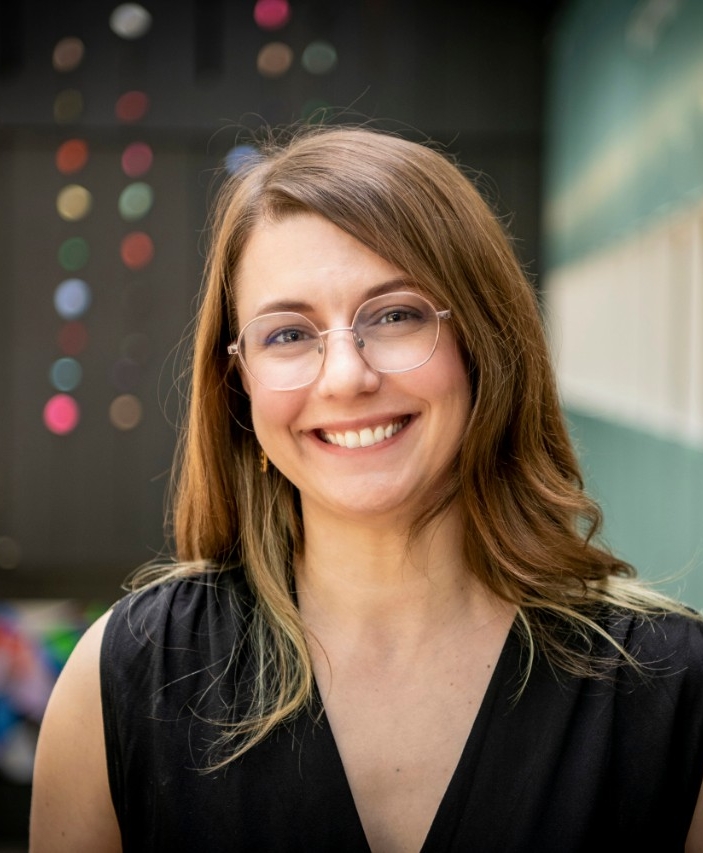
UC Assistant Professor Jessie Muir. Photo/Provided
About 27% more is composed of dark matter, which is tricky to observe because it doesn't interact with light. Instead, scientists rely on indirect observations such as gravity.
The remainder of the universe is composed of dark energy. And many researchers think dark energy is what explains why the universe is expanding at an accelerating rate.
Muir told the BBC that researchers still don't know much about it.
“There are things in our model that don’t make sense,” Muir told the BBC. “It’s not very satisfying that we don’t know what 95% of the universe is made of.”
But researchers have found tantalizing clues and anomalies through massive international research projects like Muir's work with the Dark Energy Survey at the Fermi National Accelerator Laboratory.
Read the BBC Science Focus story.
Featured image at top: An eclipse. UC Assistant Professor Jessie Muir is trying to understand dark energy's role in the universe. Photo/NASA/JPL
Related Stories
From hobbyist photographer to professional educator
October 9, 2026

DAAP alum and photographer HATSUE studied communication design after a pivot in high school from a track toward veterinary school. Today, they teach photography at 1001 Colors white working as an artist and curator in Cincinnati.
UC researcher to launch national study with $2.5 million NIH grant
October 9, 2026

A University of Cincinnati researcher has received a $2.5 million National Institutes of Health grant to conduct research during the next five years. Natalie Kreitzer, MD, a University of Cincinnati College of Medicine physician-researcher, received an R01 independent research grant from the NIH's Eunice Kennedy Shriver National Institute of Child Health and Human Development. The funding will support a test program for caregivers of patients with traumatic brain injury, as reported by the Cincinnati Business Courier.
Simple ways to find a deeper sense of happiness and well being
October 8, 2026

UC assistant professor Suzie White, featured in an AARP story on practical ways to live a happier, healthier life, shared research-backed strategies for increasing well-being through gratitude and service to others. White teaches Happiness in Action, a course that helps students apply the science of happiness in everyday life.