Exploring Melville’s enduring influence: symposium bridges law and the humanities

Event Information (passed)
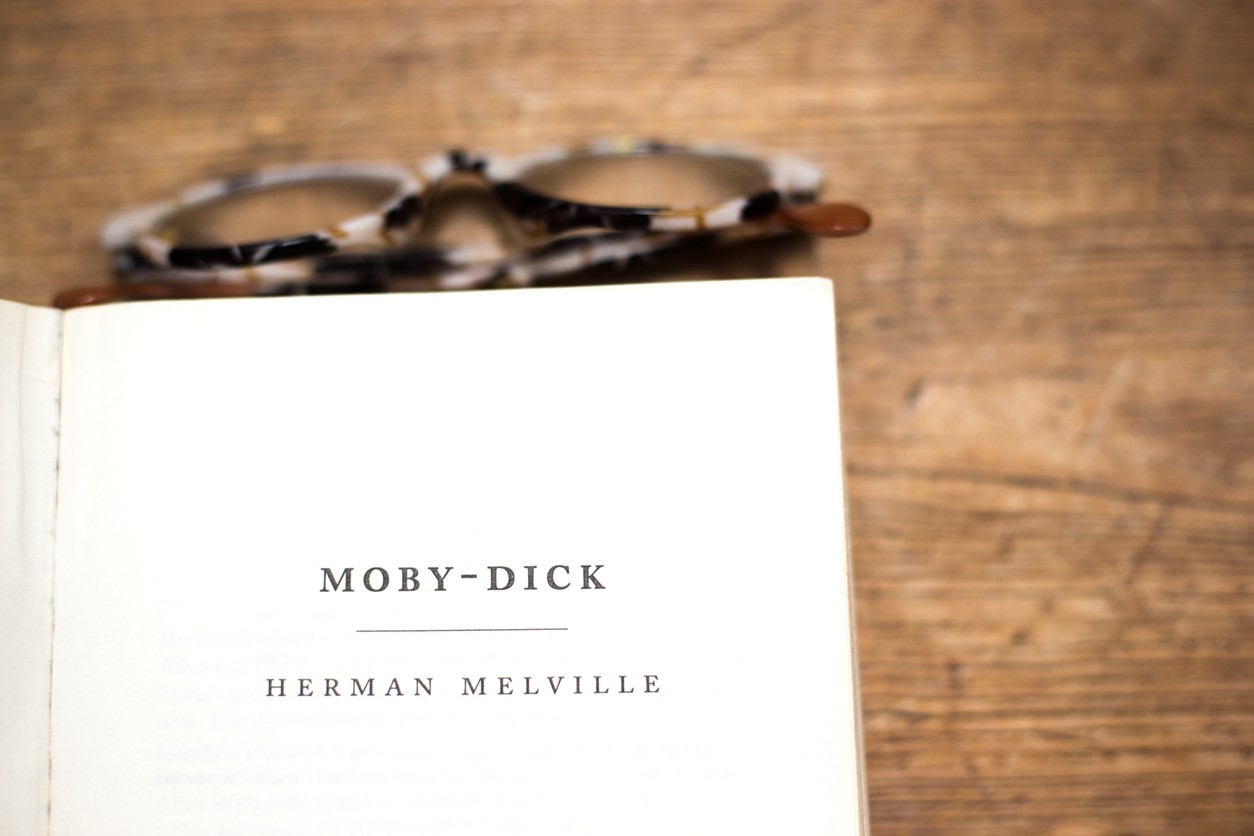
The University of Cincinnati College of Law, in partnership with the Law & Humanities Institute, will host Melville’s Legacy for Law and the Humanities, a two-day symposium examining the lasting impact of Herman Melville’s work on law, literature, and culture. Taking place Friday, Oct. 24, 2025 - Saturday, Oct. 25, 2025, in Room 170 of the College of Law, the event will bring together leading scholars from across the country to explore Melville’s complex portrayals of justice, authority, and morality — themes that continue to resonate deeply in both legal and humanistic discourse.
The symposium is free and open to the public. However, registration is appreciated and encouraged.
“All needing inspiration, all Melville lovers, and all those who simply like sea stories, will want to attend this event on both days,” said event co-convenor Richard Weisberg, Professor Emeritus, Cardozo and Distinguished Visiting Prof. of English and Law, Carnegie Mellon University. “Herman Melville's profound interest in the ways law and authority affect us remains as important in 2025 as it was during his lifetime. Pervading his stories are law, lawyers, legal statutes, and the sometimes manipulative speech of judges and other authority figures.”
He continued, “Come refresh your imagination and your sense of civic responsibility! Join renowned speakers in discussions of law during times of "perceived" emergency; of Billy Budd, Sailor, Bartleby The Scrivener and Moby Dick; and of musical selections from those stories performed for you and then discussed at the College Conservatory of Music.”
Program at a Glance
Highlights of the program include:
- Keynote Luncheon featuring Richard J. Danzig, former U.S. Secretary of the Navy under President Bill Clinton.
- Panel Discussions on Melville’s treatment of justice, discipline, slavery, and maritime law, with distinguished speakers including Professors Brook Thomas (UC Irvine), David Caudill (Villanova Law School), Robin West (Georgetown Law), Paul Finkelman (Albany Law School), Marguerite DeHuszar Allen (Renowned Chicago-based scholar of German and Comparative Literature, Dr. Allen is a Fulbright Award winner and her celebrated work on the Faust theme, which originated in her doctoral dissertation at the University of Chicago, appeared in The Faustian Century; she is also Visiting Scholar, Buffett Institute for Global Studies, Northwestern University), and Sanford Levinson (University of Texas School of Law).
- Musical Performance presented by members of UC’s College-Conservatory of Music (CCM), featuring selections from operatic adaptations of Melville’s stories, introduced by Professors Robert K. Wallace (Northern Kentucky University), and Vernon Hartman (College Conservatory of Music at the University of Cincinnati).
The symposium underscores UC’s longstanding commitment to fostering interdisciplinary dialogue between law and the humanities.
About the Law and Humanities Institute
The Rutgers/Newark Connection began in 1978 when a group of visionary law professors and students at Rutgers/Newark Law School—Professors J. Allen Smith and David Haber, along with their student Loree “Rip” Collins—founded an organization to bridge the disciplines of law and literature. Their goal was to create a space where scholars, dramatists, lawyers, and poets could engage in dialogue about how these fields intersect, giving rise to what would become the “Law and Literature” movement. This idea materialized as the Law and Humanities Institute (LHI). The organization dedicated itself to humanizing the law, enriching literary criticism, protecting creative expression from censorship, and sponsoring symposia in the rapidly growing field of Law and Literature.
About the University of Cincinnati College of Law
Founded in 1833, the University of Cincinnati College of Law is the fourth-oldest law school in the United States, behind only Harvard, Yale, and the University of Virginia. With a legacy of producing influential leaders in government, the judiciary, major law firms, Fortune 500 companies, and non-governmental organizations, the University of Cincinnati College of Law is also a pioneer in legal education. It was the first law school to establish a center dedicated to the study of international human rights and is home to one of the most successful Innocence Projects globally, working to combat wrongful convictions.
Training lawyers for nearly two centuries, the law college remains steadfast in its mission to provide a top-tier legal education that inspires students to pursue justice and advance the role of law in society.
Lead photo: istockphoto.com
Tags
Related Stories
Mistakes to avoid when shopping for a product dupe
August 13, 2026

The University of Cincinnati’s Kelly Dobos was featured in an AARP article discussing ways to determine if “dupe” cosmetic products really are comparable to the more expensive name brand.
What is a trademark?
August 11, 2026

Sean Owens, an adjunct professor in the Donald P. Klekamp College of Law, discussed trademark law with the Dayton Daily News. Owens is also a partner at intellectual property law firm Wood Herron & Evans in Cincinnati.
Career fairs and resources for every Bearcat
August 11, 2026
UC's fall career fairs connect Bearcats with co-ops, internships, and jobs — plus free resume help, career coaching, and prep resources at the Bearcat Promise Career Studio.