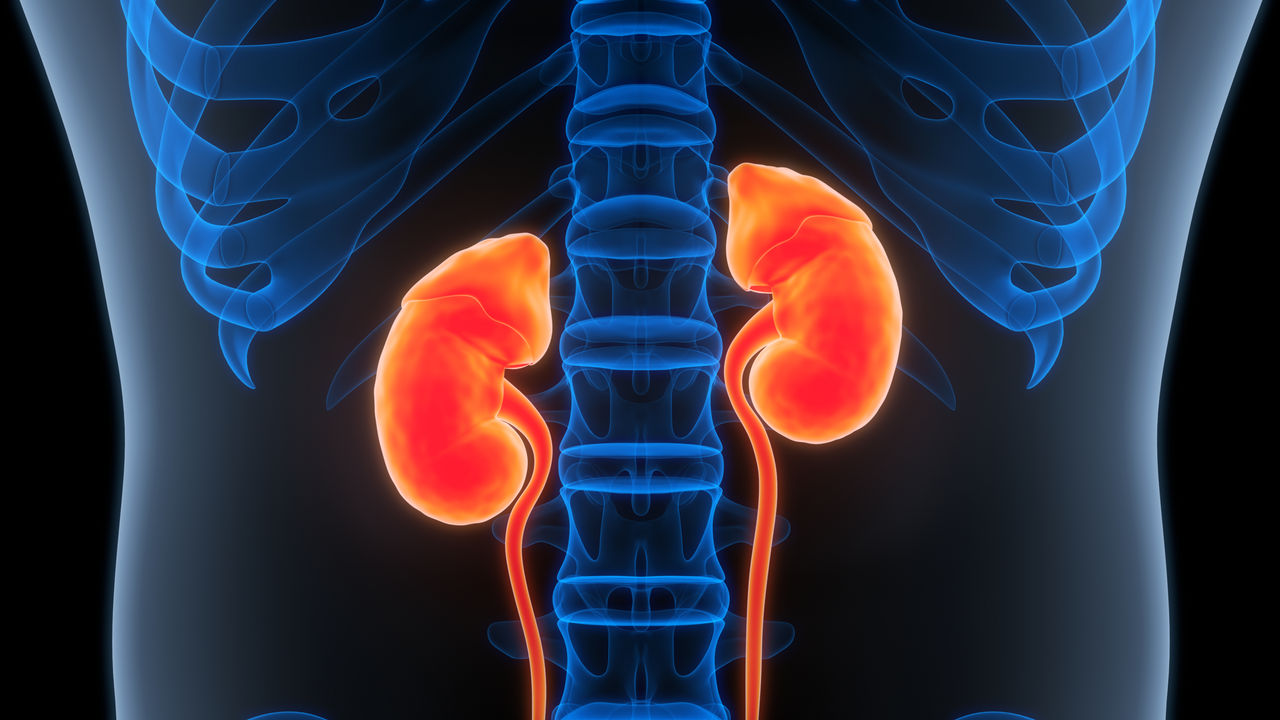
American Society of Nephrology hosts Kidney Week 2025
UC expert shares perspectives on meeting highlights

The American Society of Nephrology (ASN) hosted its annual Kidney Week 2025 meeting recently in Houston.
Prakash Gudsoorkar, MD, a University of Cincinnati College of Medicine associate professor of clinical medicine in the Division of Nephrology in the Department of Internal Medicine, shared his perspectives with MedCentral on three studies presented during the meeting:
Diabetic Kidney Disease: Biomarkers May Predict SGTL2 Inhibitor Response
Novel Plasma Protein Index Surpasses Conventional Diagnostics in Kidney Diseases
ORIGIN Phase 3 Trial Confirms Atacicept’s Efficacy in IgAN
Gudsoorkar also serves as deputy editor of the American Society of Nephrology's Kidney News, a nephrology publication.
Featured image at top: iStock/magicmine.
Related Stories
Struggling with daily HIV meds?
March 23, 2026

For many people living with HIV, staying healthy depends on something deceptively simple: taking a pill every day. But for those navigating unstable housing, stigma, mental health challenges or addiction, that daily routine can be hard to maintain. As Yahoo!Health recently reported, a new study suggests there may be a better option.
UC researchers work to understand how extreme heat impacts older adults
June 1, 2026

University of Cincinnati College of Medicine researchers are working to understand how extreme summer heat affects older adults’ health, as reported by 91.7 WXVU News recently. George Leikauf, PhD, co-director of UC's Center for Collaboration on Climate and Community for Health (C4H) and a professor in the Division of Pulmonary, Critical Care and Sleep Medicine within the Department of Internal Medicine, is leading a study to track the health of older Cincinnatians who live without air conditioning during heat waves.
Certain weather patterns can trigger migraines
June 30, 2026

Certain weather patterns really do trigger migraine headaches — and the incidence is more common in the Midwest. As WGN 9 in Chicago recently reported, researchers at the University of Cincinnati College of Medicine have identified two specific weather patterns associated with an increased risk of headaches.