
NEH grant supports DAAP professor’s research on art
Christopher Platts to explore how European Old Master paintings inspired early American artists

A University of Cincinnati professor has received support from the National Endowment for the Humanities (NEH) for research examining the impact of collecting and exhibiting European Old Master paintings in colonial America.
Christopher Platts, assistant professor of art history at UC's College of Design, Architecture, Art, and Planning (DAAP), is investigating how Renaissance and Baroque paintings were seen by and subsequently inspired American artists and collectors between approximately 1730 and 1840. His project, “Inspiring America’s Earliest Artists: Exhibitions and Galleries of Old Master Paintings in Colonial and Early Republican America,” explores how European paintings, including painted copies and engravings of painted originals, reached the American colonies and early republic, providing significant resources for the nation’s first several generations of painters.
Artists such as Charles Willson Peale, John Singleton Copley, John Trumbull, Gilbert Stuart, John Vanderlyn and Washington Allston drew from the work of European masters including Raphael, Titian, Rembrandt, Rubens and Poussin. The American artists’ paintings helped shape how everyday Americans saw and understood the nation’s founders, political leaders, historical figures and defining events.
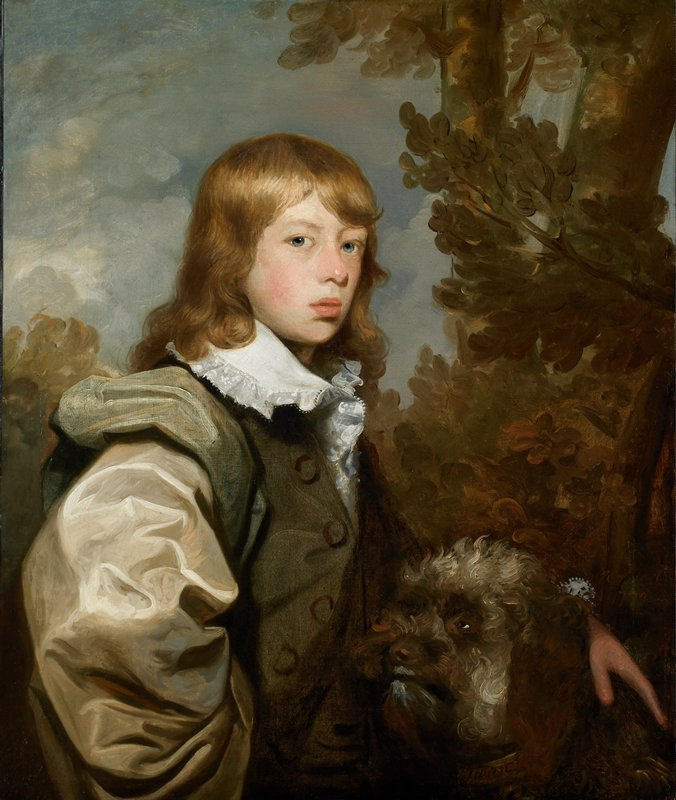
Painting "Portrait of James Ward" (1779) by Gilbert Stuart, an American artist heavily steeped in European Old Master traditions.
Platts’ research looks not only at the artists themselves but also considers the American networks of collectors, patrons, dealers and emerging cultural institutions such as art academies and scholarly societies that brought early European art to America and exhibited it for all to see. Galleries, museums, auction houses, churches, and artists’ studios in cities including Philadelphia, Boston, New York, Cincinnati, Annapolis and Baltimore provided opportunities for artists and audiences to encounter and potentially draw inspiration from these works by renowned European masters.
The project also considers the collecting practices of both lesser-known figures in the history of art and dignitaries such as George Washington and Thomas Jefferson. Both acquired originals or replicas of European Old Master paintings as well as contemporary American works, displaying them at Mount Vernon and Monticello respectively. Their collections reflected an evolving appreciation for earlier European artistic traditions and contributed to an emerging culture of art collecting and patronage in the United States.
"As my scholarly interests expand to include provenance research and the history of collecting, I'm excited to undertake this project to study the history of exhibitions and displays of Old Master paintings in early America," Platts said. "Reconstructing what kinds of artworks the first American artists were able to see and take inspiration from, including Renaissance and Baroque paintings from Europe, is a valuable perspective on American art history that I believe hasn't been adequately researched."
The role played by exhibitions and accessible collections of European Renaissance and Baroque art in the development of early American art has not been systematically studied before. While such histories of art collecting and exhibition in Europe, especially England, Italy, and Holland, are the subject of recently scholarly work, these phenomena in colonial America and the United States have been overlooked. Platts’ research concentrates on a period beginning in the 1730s when Scottish-born painter John Smibert arrived in Boston with a substantial collection of Old Master paintings and copies that he made available for viewing and extending into the 1840s, shortly before the establishment of the Wadsworth Atheneum in Hartford, Connecticut, one of the nation's earliest public art museums.
By bringing attention to these understudied histories of collecting and exhibition and how they affected America’s earliest painters, Platts’ research contributes to a broader understanding of America's cultural heritage as the country celebrates its 250th anniversary.
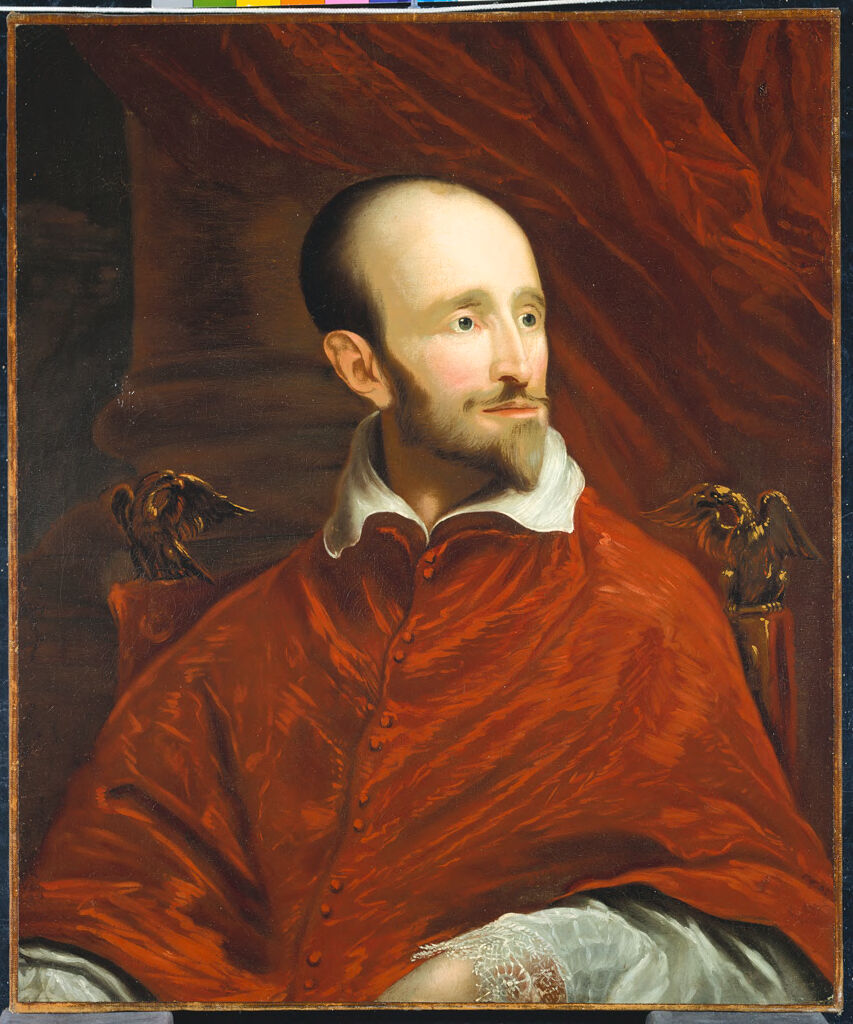
Painting "Cardinal Guido Bentivoglio" attributed to John Smibert, American after Anthony van Dyck, Flemish, previously attributed to John Trumbull, American.
Platts plans to produce both scholarly and public-facing articles and presentations over the coming two years, including work on the city of Cincinnati itself, which had at least one substantial (yet today virtually unknown) collection of European Old Master paintings from the 1820s on. The project will also inform the development of a University of Cincinnati course on the history of collecting and displaying European artworks in America ca. 1750-present, giving students an opportunity to explore the activities of American collectors, patrons, artists and institutions that contributed to the international development of American art and culture.
The next groundbreaking discovery
UC is a powerhouse of discovery and impact as a Carnegie 1 research institution. From pioneering medical research to transformative engineering and social innovation, our faculty and students drive progress that reaches across the world.
Featured image at top of a painted portrait. All photos of paintings provided from https://collections.artsmia.org/art/76/portrait-of-james-ward-gilbert-stuart and https://harvardartmuseums.org/collections/object/228156
Related Stories
Research team aims to simplify the mammography process for patients
October 30, 2024

MSN, Becker's Hospital Review and a San Francisco television station highlighted a multidisciplinary project from the University of Cincinnati’s Colleges of Medicine and Design, Architecture, Art and Planning that took a human-centered design approach to identify and implement tangible patient-centered improvements in the screening mammography program.
Climate change, health impacts are focuses of new UC research center
October 17, 2024

The University of Cincinnati has received a $4 million grant from the National Institutes of Health to fund the new Cincinnati Center for Climate and Health. The grant will support research into how climate change impacts human health. The new center has been featured in local news reports
UC researcher adds Chicago collaboration
February 11, 2026
University of Cincinnati research examining how public art and murals influence foot traffic, neighborhood vitality and economic development is now shaping planning conversations well beyond Cincinnati.