
UC researcher adds Chicago collaboration
Study looks at public art and its contribution to foot traffic, neighborhood vitality
A University of Cincinnati faculty member is leading a new collaboration that builds on her research that focused on how murals and public art contribute to higher foot traffic and increased local business.
Hyesun Jeong, an assistant professor in UC’s College of Design, Architecture, Art, and Planning (DAAP), is collaborating with community organizations, city officials and academic collaborators from Chicago’s South Side.
The work builds on her research originally supported by a National Endowment for the Arts grant and through collaboration with faculty in the University of Chicago’s Department of Sociology.
Her early research focused on Cincinnati, analyzing how murals and public art relate to street vitality, foot traffic and crime patterns. For example, she found that blocks with murals exhibit nearly three times higher foot traffic than blocks without murals, particularly within areas that are characterized by greater housing density, small businesses, historic buildings and walkable streets.
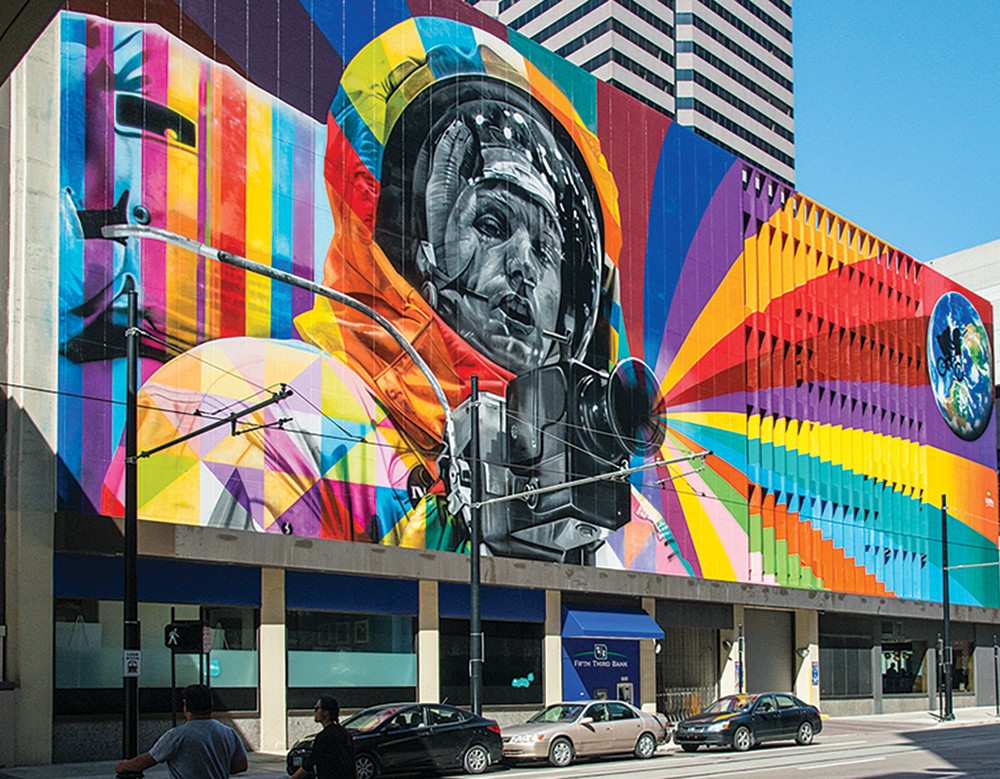
Astronaut Neil Armstrong is the subject of this mural located on Fifth Third Bank Headquarters in the heart of Cincinnati’s Central Business District. After walking on the moon, Armstrong went on to teach at UC as a professor of aeronautical engineering from 1971-79. Photo/J. Miles Wolf courtesy of ArtWorks
The study, published last year in ScienceDirect’s Cities, found positive correlations that sparked interest from organizations beyond the region. Following the study’s publication, Jeong was contacted by organizations both locally and in other cities, including Chicago. These organizations, she said, expressed interest in applying similar research approaches to better understand foot traffic patterns and to inform strategies for revitalizing commercial corridors and cultural districts.
“I receive many interesting questions from people,” Jeong said. “We are surrounded by many forms of public arts, but we don’t always understand their specific impacts. Does that support local business or attract foot traffic or tourism?”
Among those groups is the Greater Chatham Initiative, a Chicago South Side nonprofit organization that has established its Mahalia’s Mile as a designated cultural district. The area is named for renowned singer and gospel music pioneer Mahalia Jackson, who built her home in the Greater Chatham community, with a nod to Chicago’s Magnificent Mile district.
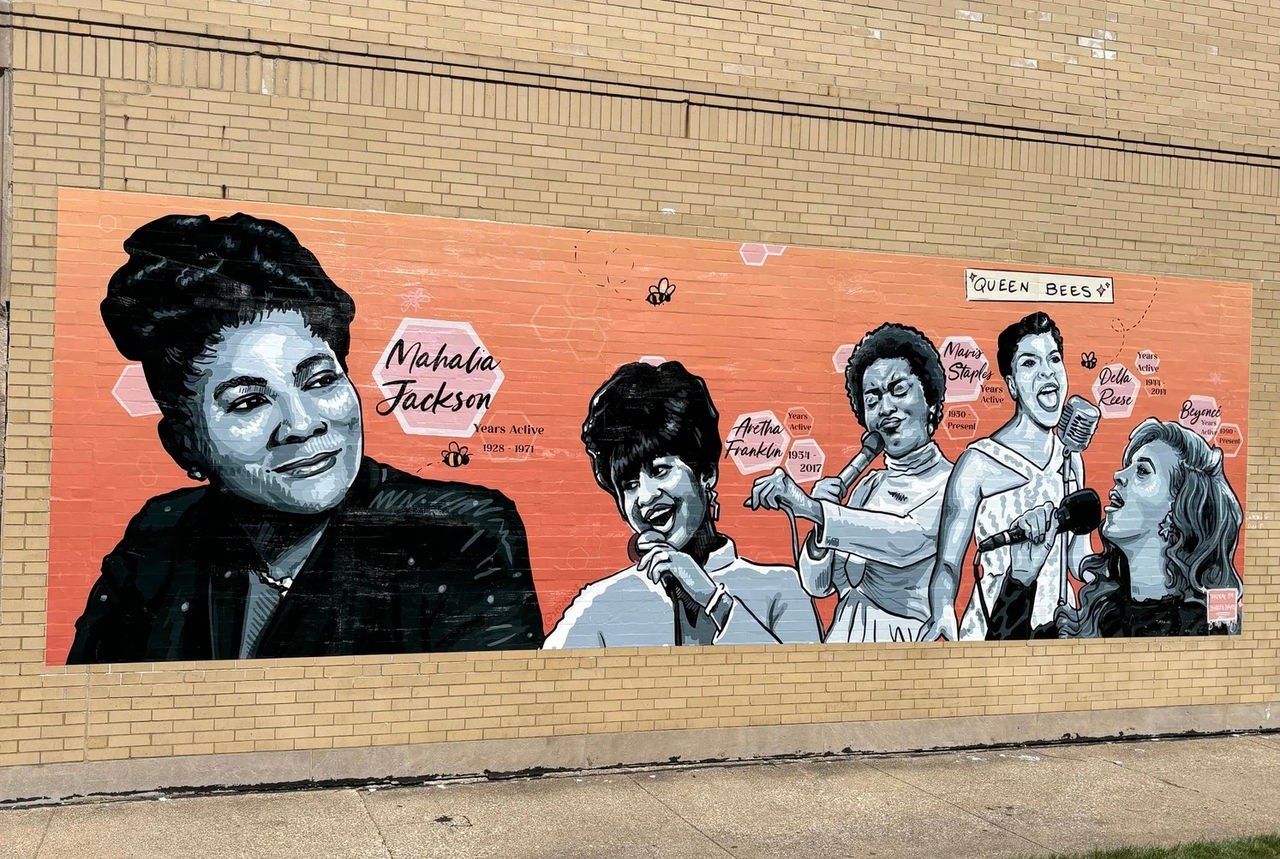
Mahalia Jackson mural in Chicago's Chatham neighborhood. Photo/provided
The Chicago group is now exploring its expansion through food-based programming, sustainable urban design, historic preservation and tourism near the future Obama Presidential Library.
According to Nedra Sims Fears, the Greater Chatham Initiative’s executive director, Jeong’s research was pivotal in shaping how corridor development practitioners in Chicago understand the relationship between food-based businesses, foot traffic and neighborhood vitality.
In November 2025, Jeong presented a foot traffic analysis of commercial corridors on Chicago’s South Side during an online workshop that brought together neighborhood organizations and city officials from the City of Chicago’s Department of Planning and Development.
Her work showed that having 10 or more food-based businesses concentrated within a three- to four-block area can generate up to 500% more foot traffic than similar corridors with fewer than 10 such businesses.
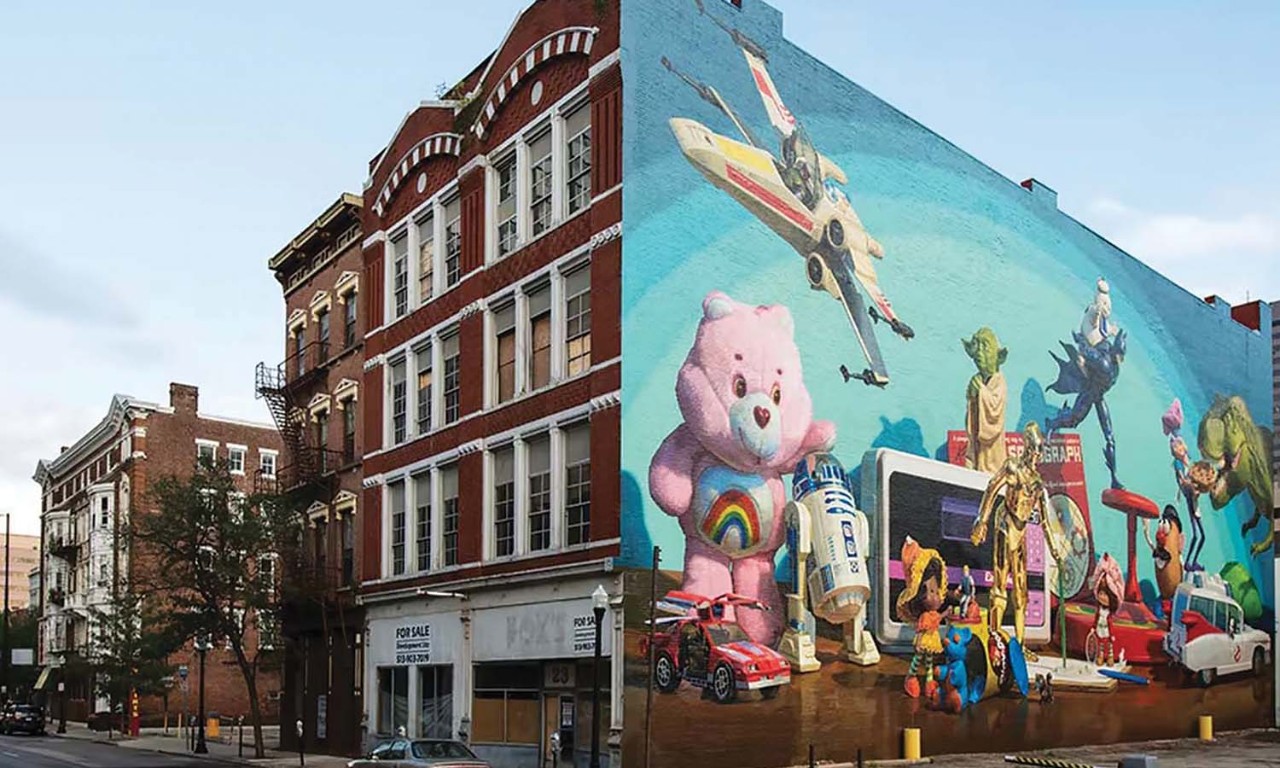
"Cincinnati Toy Heritage" celebrates the legacy of Cincinnati-based Kenner Toys, which boasts many ties to UC. Photo/ArtWorks
“Dr. Jeong’s measurement of foot traffic along corridors and its correlation with restaurant density helped bring this message home in a concrete, measurable way: that food-based businesses ‘drive' corridor impact,” said Sims Fears.
Jeong and Sims said the group found the foot traffic study useful in its analysis of Chicago’s 79th Street corridor and inquired whether findings from Cincinnati could be applied in a different urban context.
This spring, UC students will play a central role as the collaboration moves from analysis to applied design. Jeong is teaching Elements of Urban Design and a master’s degree capstone studio, which will partner directly with Chicago stakeholders.
The students will be given the programs where they could project the future growth of these corridors and neighborhoods and can compare Chicago and Cincinnati neighborhoods. They will present their idea of new urban design and planning ideas for Mahalia’s Mile and the surrounding neighborhood to the city officials, Chatham Initiative and other stakeholders and then they will come back and apply the similar idea to Cincinnati.
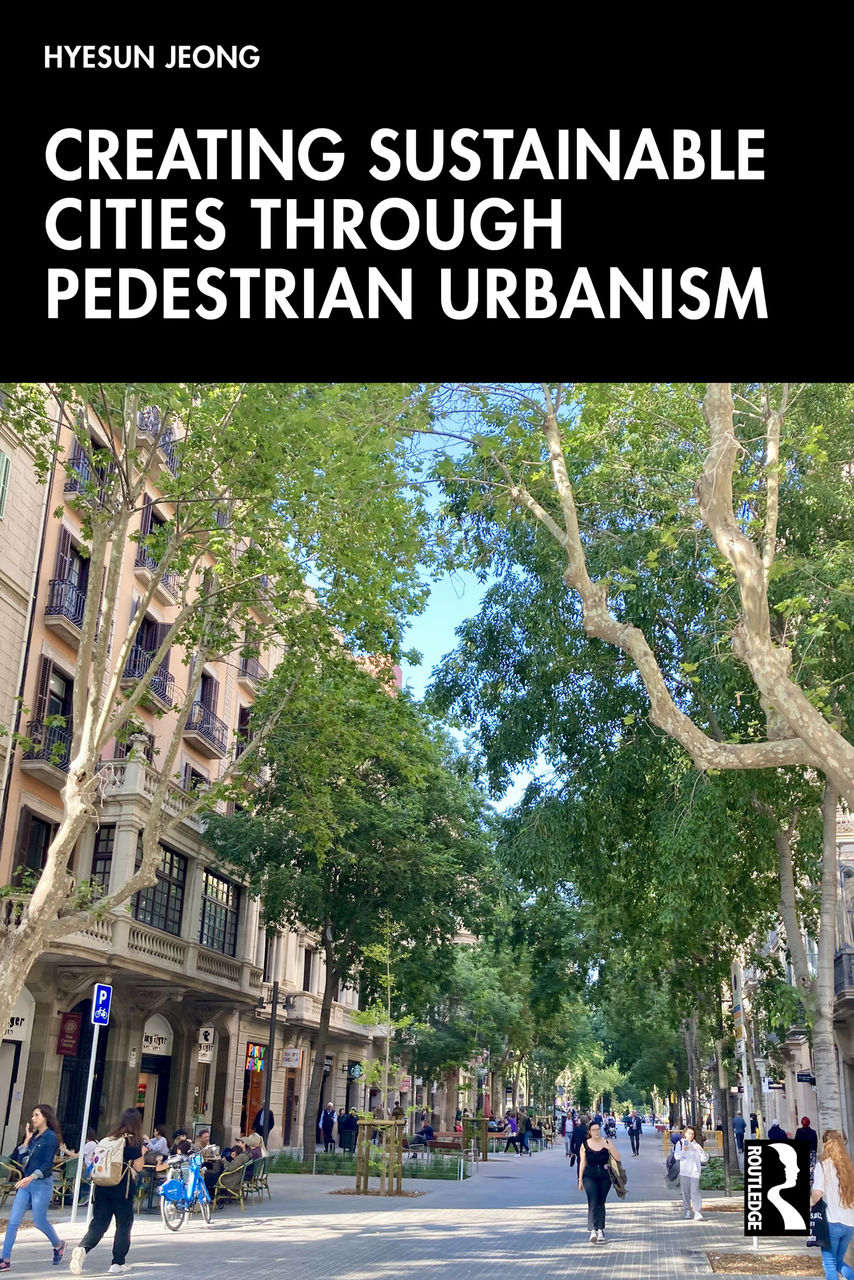
Jeong’s current work also coincides with the publication of her new book, "Creating Sustainable Cities through Pedestrian Urbanism," which was released Jan. 26 and will be used as a textbook.
Grounded in comparative analyses, global case studies and urban theory, the book builds on Jeong’s broader research examining the relationships among public art, urban design and neighborhood vitality and extending the questions she is now exploring through community-engaged research and student-led design studios.
“The goal is to have some generalizable urban strategies that we can create for multiple cities,” she said.
At the core of the work is a growing body of empirical data that links art, design and the built environment to economic and social outcomes — something Jeong says has often been missing from conversations about public art.
“Discussions of public art have often lacked empirical analysis of its impacts and economic implications,” she said. “The focus should be on how we can maximize the impact of the art and culture elements for economic development as well as the cultural placemaking, safety and broader measures of neighborhood growth.”
She added that the research has helped reframe long-standing questions about whether murals and public art tangibly benefit neighborhoods.
By combining data analysis, design studios and community partnerships, Jeong said the project creates opportunities for students, cities and neighborhoods to learn from one another.
Bearcats in the Windy City
Jeong and UC graduate students will present replicable corridor development solutions at an upcoming design workshop in Chicago, hosted by the Greater Chatham Initiative and supported by the DAAP Simpson Center.
“The Future of the South Side: Cultural Placemaking and Sustainable Growth” takes place Thursday, March 12, at Southside Market & Cafe Coop. Find more info online.
Featured image at top: Photo/Sawyer Bengtson on Unsplash
Join the UC Alumni Chicago Network
Are you a UC alumnus living in the Chicago area? Stay up to date on everything happening at your alma mater and with your fellow Chicago-based Bearcats. There are more than 4,900 alumni living in the Chicago area and we all share one thing in common — we’re Bearcats for Life.

Story by Angela Koenig
Related Stories
Decade of discovery
July 27, 2026
Every summer, UHP Discover has connected undergraduate students in the University Honors Program (UHP) to a unique array of opportunities in original interdisciplinary research. This year, the program celebrates its 10th anniversary.
NEH grant funds CCM faculty project that explores Cincinnati's sounds
January 24, 2025
A faculty team at the University of Cincinnati College-Conservatory of Music (CCM) has been awarded a National Endowment for the Humanities Landmarks in America History and Culture grant. The award of $190,000 will fund their project Cincinnati Sounds: Exploring a Musical City’s Spaces, Places, and Sounds.
UC faculty and students in the design phase for Blink Cincinnati
October 5, 2022
DAAP creates mural to honor the Ukraine for Blink Cincinnati 2022