Learn About the First Greenhouses in New Communiversity Class

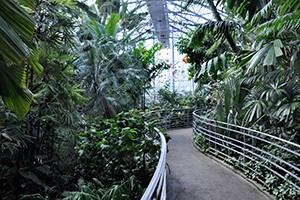
Today, greenhouses allow even those in colder climates to have fresh produce year-round, and provide us with some of the most beautiful botanical gardens to stroll through. During Victorian times, greenhouses were almost de rigueur for Gilded Age mansions. Yet, their origins go further back in history. Louis XIV created the Kings Kitchen Garden in Versailles, and George Washington built a greenhouse at Mount Vernon so he could serve his guests pineapple.
Explore the history and the technological wonder of greenhouses in the new Communiversity course
The First Greenhouses: From Europe to America
. The session includes a personal tour of Krohn Conservatory in Eden Park and a visit to a local Victorian home with a greenhouse that is still in use. The course meets at UCs Victory Parkway Campus on Feb. 25 starting at 1 p.m. The course fee is $59 and includes your admission to Krohn.
The First Greenhouses: From Europe to America
is taught by Frank Farmer Loomis, author of
, Secrets to Affordable Antiques
, and
. Loomis was an antiques columnist for
The Cincinnati Enquirer
from 1987 to 1995, a columnist for
Cincinnati Magazine
from 1993 to 1995, and a syndicated columnist for Cox Newspapers as well as
Art & Antiques Magazine
. Nationally, he was an appraiser for Antiques Roadshow on PBS from 1997-1998 and hosted, wrote and co-produced the PBS series Is It Antique Yet? (1986-1991). You can listen to him every Thursday at 5 p.m. on
.
Most of us have romantic perspectives about greenhouses. We envision King Louis at Versailles raising oranges at his orangerie, the French word for what would revolutionize modern life, Loomis said. But there is much more to their story.
Loomis said that after the Industrial Revolution, machinery could manufacture bigger glass pieces than could be done by hand. This began the golden era of greenhouses that were technological marvels, offering myriad possibilities besides oranges. Such marvels include The Crystal Palace in London's Hyde Park, a huge glass exposition hall that played host to the first World's Fair.
Also dating back from that era is Findlay Market. While constructed later, the glass terminals of Cincinnati-Northern Kentucky International Airport provide another local example of greenhouses.
While The First Greenhouses: From Europe to America is a new course, this isnt Loomis first time teaching for Communiversity. This year marks his 37th year of being an instructor. I have learned to so much from my students. Cincinnati never ceases to inspire me, Lommis said.
Communiversity offers fun and innovative continuing education courses to enrich the lives of those around Cincinnati and beyond. With locations both on UC Victory Parkway Campus and around Cincinnati, Communiversity makes it easy for working professionals, retirees and other lifelong learners to develop new skills and hobbies.
To register for this or any other Communiversity class, visit our
or call (513) 556-6932 and press 2.
Related Stories
These teeny spiders are social media stars
August 28, 2026

The New York Times turned to a University of Cincinnati professor to explain the appeal of jumping spiders on social media.
Niah Fowler
BEARCATS FOR LIFE
My time at UC has been defined by growth, community, and opportunity. From UCBA to campus involvement, professional experience, and pursuing a career in STEM, each experience has helped shape who I am today and prepared me for the future.
An internal divide among unions on AI impacts the Wisconsin gubernatorial race
August 28, 2026

Anne Lofaso, a professor in the Donald P. Klekamp College of Law at UC, spoke with Wisconsin Public Radio, about the schism among unions over AI and whether it is a plus, a negative, or somewhere in between when looking at job creation.