Research Demonstrates Value of Fostering Transition Student Success

Higher education is how we as a nation move the dial on systematic, economic inequality at scale, says Eileen Strempel, senior vice provost for academic affairs at the University of Cincinnati. Fixing the transfer process is absolutely essential. There is too much at stake, for our students, our communities and our country.
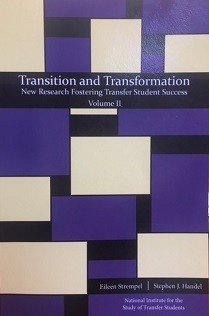
Strempel has co-authored a new book, alongside Stephen J. Handel, associate vice president for undergraduate admissions at the University of California, on transition student research.
Transition and Transformation: New Research Fostering Transfer Student Success: Volume II
reviews the most recent research on issues related to the journeys of transfer students at the individual, campus and public policy levels.
Transfer students include those transitioning from community college to a four-year university and those transitioning from one university to another. Community colleges enroll more undergraduates than any other postsecondary segment in the United States 41 percent according to the American Association of Community Colleges. Strempel and Handels first book focused on the practitioner side of transfer. This second volume, complimentary to the first volume and the focus of an
, explores best practices and policies in the field of transfer as identified by the latest research studies. Volume
II reinforces the importance of longitudinal advising for students.
Strempel stresses that unless we facilitate the transition of transfer students, we will
miss the opportunity to realize transfers full potential to combat our
nations economic inequalities. She says families look to community college as an affordable higher education option.
"Community colleges serve a diverse population of students. Often these students are
first-generation, low income, traditionally underrepresented community-members,
students who are the least equipped to navigate the frequently unmarked,
pothole-filled path of transfer in the middle of their undergraduate career, adds Strempel.
Research supported by the Bill and Melinda Gates Foundation and conducted by College Boards Advocacy and Policy Center shows that over 80 percent of community college students intend to transfer and complete a bachelors degree and beyond, however, only 13.3 percent currently
manage to do so within six years.
Related Stories
London fashion in focus
August 31, 2026
Since 2016, the University of Cincinnati's College of Design, Architecture, Art, and Planning (DAAP) has offered a study abroad trip called “United Kingdom: The Style Studies.” This year, 15 students embarked across the Atlantic right before the fall semester to see all the retail expertise London has to offer.
Heavy social media use linked to depression
August 31, 2026

U.S. News and World Report, Yahoo! News, MSN, USA Today and other national media highlight a new study by the University of Cincinnati and Northwestern University that found a correlation between heavy social media use and depression in adults.
These teeny spiders are social media stars
August 28, 2026

The New York Times turned to a University of Cincinnati professor to explain the appeal of jumping spiders on social media.