'Aquanauts' Give Local Kids Glimpse of Medicine in Space

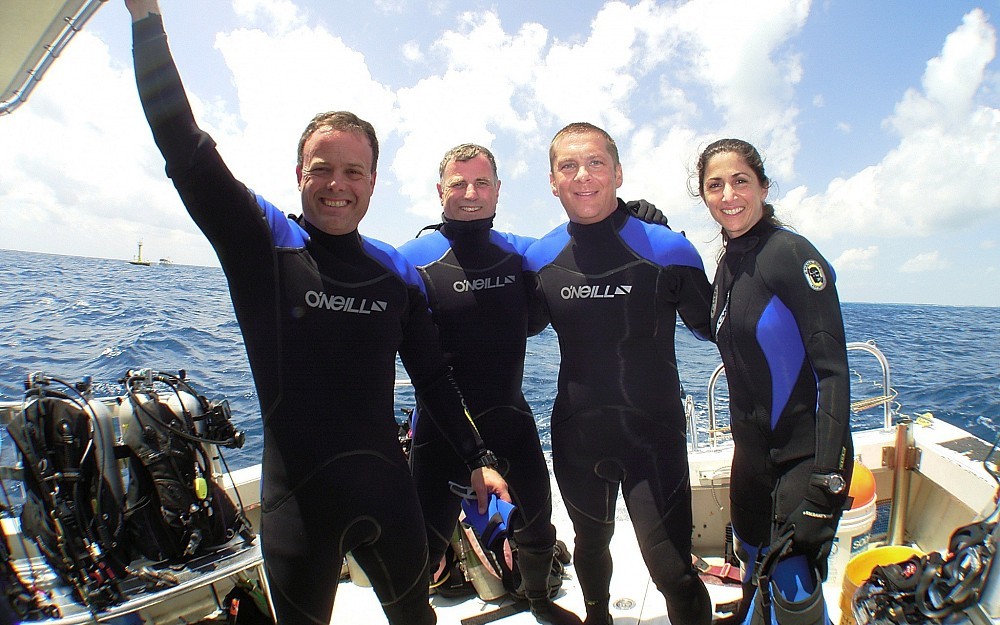
CINCINNATIInstead of blasting off, Timothy Broderick, MD, will splash down to test new concepts in space medicine and lunar exploration. Dr. Broderick, medical director for the University of Cincinnatis (UC) Center for Surgical Innovation (CSI), is part of the ninthand longestof the NASA Extreme Environment Mission Operations (NEEMO). He and a team of three NASA astronauts head undersea today (Monday, April 3) on an 18-day undersea research and training mission in the Aquarius research station off the Florida Keys. We need to figure out better ways to care for astronauts before we make the long trip to Mars, said Dr. Broderick. Telemedicine and robotic surgery could be the key to maintaining the health of future spacefarers and responding to medical emergencies in space. The NEEMO-9 mission will demonstrate and evaluate surgical technologies that can be used in long-range space voyages. During the mission, a surgeon in Canada will use two-way telecommunication and a surgical robot to perform real-time abdominal surgery on a patient simulator in Aquarius. On April 10, nearly 300 local childrengrades 4 through 6will talk directly to Dr. Broderick and the NASA team about how doctors will eventually treat sick or injured astronauts when they are millions of miles away from the hospital. Attendees will hear what its like to live and work undersea. The children will have the opportunity to ask questions during a virtual tour of the scientists tiny living space. When I was a child, I saw an astronaut on TV walking on the moon and decided that Id become an astronaut, says Dr. Broderick. Whether an astronaut or a surgeon, the important thing is to get hooked on science early. Education is a big part of this mission, he continues. By exposing kids to cool real-life examples of scienceand technology like NEEMO, we hope to spark their interest in science, math and engineering. The youth-focused event takes place Monday, April 10, from 11 a.m. to 12:30 p.m. at the Cincinnati Museum Center. Adults are encouraged to attend a similarbut more technically sophisticatedprogram that evening from 6:30 p.m. to 8 p.m. Dr. Broderick and other members of the CSI team will talk about the NEEMO-9 mission goals and other innovative CSI research projects and collaborations. Both events take place in the Cincinnati Museum Centers Reakirt Auditorium, 1301 Western Ave. To reserve a space, contact Amy Molleran, at (513) 287-7074 or amolleran@cincymuseum.org. UCs Center for Surgical Innovation focuses on developing, assessing and disseminating new technologies in biomedical and surgical care. The center links the interdisciplinary expertise of UCs colleges of medicine and engineering and their government, military and industry partners with the latest findings in surgical robotics, medical simulation, telecommunications and medical informatics. A pre-mission NEEMO-9 video is available at http://surgery.uc.edu/csi. -30-

Astronaut Nicole Stott and Dr. Timothy Broderick perform a survey and mapping activities during the NASA NEEMO-9 mission.

Chief-Division of Gastrointestinal and Endocrine Surgery, Medical Director-Center for Surgical Innovation. Assistant Professor of Surgery and Biomedical Engineering
Tags
Related Stories
UC radiation oncologist speaks with Local 12 news about clinical trial for head and neck cancer treatment
August 10, 2026

Dr. Sara Medek, a UC radiation oncology professor, speaks with Local 12 news about a new clinical trial aimed at reducing radiation in certain areas while still treating cancer effectively but with fewer painful side effects.
Cancer Center director charts future based on collaboration, AI
August 10, 2026

David Gius, MD, PhD, was featured in a Cincinnati Business Courier article and The Cancer Letter’s “The Directors" podcast discussing his priorities and goals as he recently took the helm as director of the University of Cincinnati Cancer Center.
Bidirectional link between oral, kidney health calls for patient education, access
August 4, 2026

Despite growing awareness of the connection between oral health and chronic health conditions, patient awareness and access to dental care remain limited, according to University of Cincinnati experts who recently spoke with Healio | Nephrology News & Issues.