UC HEALTH LINE: Practice Sports Safely, Prevent Injuries

CINCINNATIAs the temperature gets warmer and the sun stays out longer, more people will be playing sports or participating in physical activities, especially outdoors.
April has been designated National Youth Sports Safety month and Keith Kenter, MD, encourages young people and adults to take steps to avoid sports related injuries all year round.
One of the biggest things people can do to prevent injuries is simpleknow your body, he says. If you havent worked out in 10 years and you jump into a rigorous fitness routine, youre likely to injure yourself. Start out slowly and increase your activity as you become accustomed to physical activity.
There are two types of injuriesacute and chronic, says Dr. Kenter, an assistant professor of orthopedic surgery at the University of Cincinnati (UC) Academic Health Center.
Acute injuries include strains (an injury to the muscle or tendon), sprains (an injury to the ligament), fractures and dislocations. They are generally easy to diagnose and treat, Dr. Kenter says.
A chronic injury, on the other hand, typically results from overuse. Overuse injuries can be difficult to treat because there often isnt a specific anatomic problem that can be fixedits just a breakdown in mechanics.
According to Dr. Kenter, 70 to 80 percent of sports injuries can be treated non-operatively.
Dr. Kenter, the team orthopedic surgeon for the UC Bearcats and the Cincinnati Marshals, offers the following suggestions to prevent sports-related injuries:
-
Seek the advice of a physician before beginning an exercise program or participating in sports. Your doctor could discover underlying health conditions that you dont even realize you have.
Its a good idea to ensure youre in overall good health, encourages Dr. Kenter.
-
Use proper equipment. Its important to use certified equipment specific to the sport youre playing.
Dont wear a football helmet to play hockey, says Dr. Kenter. That may seem like common sense, but its amazing how many people dont use proper equipment. Equipment needs to fit you properly as well.
Wearing quality shoes designed for your sport (soccer or football cleats, for example) or your foot type (durable heel, flexibility, good arch support) is important.
- Wear appropriate clothing. If its hot outside, wear loose-fitting clothing that allows your skin to breathe. When its cold, its important to wear clothing that will keep you warm but not overheated. Sports clothing that wicks away perspiration can help regulate the bodys temperature.
-
Get proper nutrition. Eating well-balanced meals of good fats, proteins and carbohydrates is key.
Parents sometimes give their children meals, candy or protein bars right before a game. This isnt good because it sits in their stomach. Food should be eaten at least two hours before a game.
Meals with more fat should be eaten four to six hours before a game to allow time for digestion, says Dr. Kenter.
Dr. Kenter also says there isnt any basic science proving commercial, supplementation products are useful, and he advises people to use them cautiously.
Endurance athletes may benefit from carbohydrate loading a week or so prior to the event, because it will help them store energy. Burst athletes, such as football and hockey players, may benefit from eating high-protein food before a game because it provides them with quick energy.
-
Hydrate appropriately. Ensuring youre well hydrated is important during sports and exercise. However, there are some liquids you should avoidlike fruit juice.
Fruit juice can actually dehydrate you, because the glucose level is very high. Fruit juice actually pulls hydration from your blood to the gastrointestinal system, Dr. Kenter explains.
- Warm up and cool down. Dr. Kenter admits that science hasnt been able to prove that stretching prevents injuries, but it does help with flexibility and warms the fibers in your muscles.
-
No pain, no gainThis common phrase can be somewhat misleading, says Dr. Kenter.
Its actually safe for some athletes to play when they have a minor injury. If they have good motion, good mechanics and good strength and their pain is tolerable, it may be safe for them play, Dr. Kenter says. Having said that, athletes have to listen to their body to know when they shouldnt be playing.
If you are injured, you should follow a rule many people knowRICE, short for rest, ice, compression and elevation.
Rest can help reduce stress to the injured area. Ice should be applied for 20 minutes at a time, four times a day. Compression with a wrap helps stabilize the injured area, allowing it to heal, and elevation above the heart is important to decrease blood flow and minimize swelling.
Its also important to know when to seek medical help, says Dr. Kenter. This goes back to knowing your own body. You know when the pain youre feeling isnt normal.

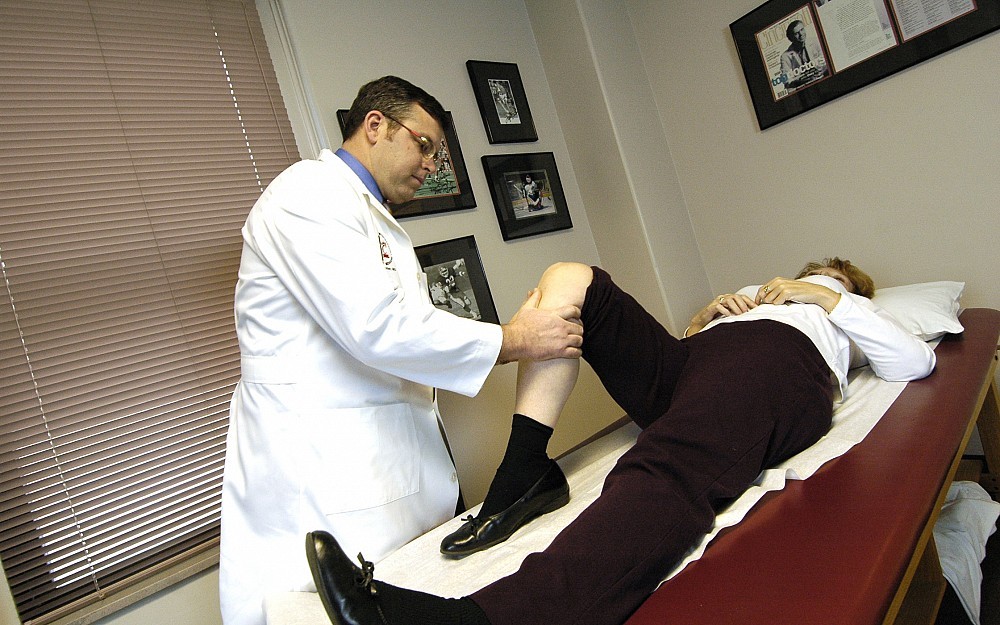
Keith Kenter, MD, explains how the knee functions with Darlene Pabst.

Assistant Professor of Orthopaedic Surgery
Tags
Related Stories
UC radiation oncologist speaks with Local 12 news about clinical trial for head and neck cancer treatment
August 10, 2026

Dr. Sara Medek, a UC radiation oncology professor, speaks with Local 12 news about a new clinical trial aimed at reducing radiation in certain areas while still treating cancer effectively but with fewer painful side effects.
Cancer Center director charts future based on collaboration, AI
August 10, 2026

David Gius, MD, PhD, was featured in a Cincinnati Business Courier article and The Cancer Letter’s “The Directors" podcast discussing his priorities and goals as he recently took the helm as director of the University of Cincinnati Cancer Center.
Bidirectional link between oral, kidney health calls for patient education, access
August 4, 2026

Despite growing awareness of the connection between oral health and chronic health conditions, patient awareness and access to dental care remain limited, according to University of Cincinnati experts who recently spoke with Healio | Nephrology News & Issues.