UC HEALTH LINE: Trio of Tests Can Detect Vascular Disease Earlier

CINCINNATIIf youre over 60, University of Cincinnati (UC) vascular health experts say making time for three simple screening tests might just save your life.
Most people dont understand how their vascular health can affect the body, explains Amy Reed, MD, a vascular surgeon and associate professor of surgery. People understand the risks associated with blockages in heart vessels, but the reality is that blockages in the vessels leading to your brain and legs can be just as limb-threatening.
The human vascular system is a complex arrangement of vessels that carry blood to specific parts of the body. Arteries, which carry oxygen-rich blood away from the heart, distribute blood throughout the body. Veins, smaller vessels, return blood to the heart.
Vascular problems occur when fat and cholesterol (plaque) build up on the artery walls. As plaque increases, the arteries harden and become narrow. Gradually, blood flow decreases and parts of the body are deprived of the oxygen they need to function properly.
Thats why its absolutely critical that you know your risk, get screened and take steps to improve your vascular health, adds Dr. Reed. Detecting vascular disease early can help prevent serious problemslike stroke or crippling leg painin the future.
Three of the most common non-cardiac vascular diseasesabdominal aortic aneurysms, carotid artery disease and peripheral arterial diseasecan be found through screening tests and then treated with minimally invasive surgery techniques, says Dr. Reed.
According to the American Vascular Association, more than 15,000 Americans die of ruptured abdominal aortic aneurysms each year. People with peripheral arterial disease are three times more likely than the average person to die of heart attacks or strokes.
Your risk for vascular disease goes up with age and familial history, so every person over 60 who has a family history of vascular disease should get screened, explains Dr. Reed. Diabetics and people who have high blood pressure or high cholesterol or have ever smoked are also at elevated risk.
As part of National Vascular Screening Awareness Month in May, the UC Heart and
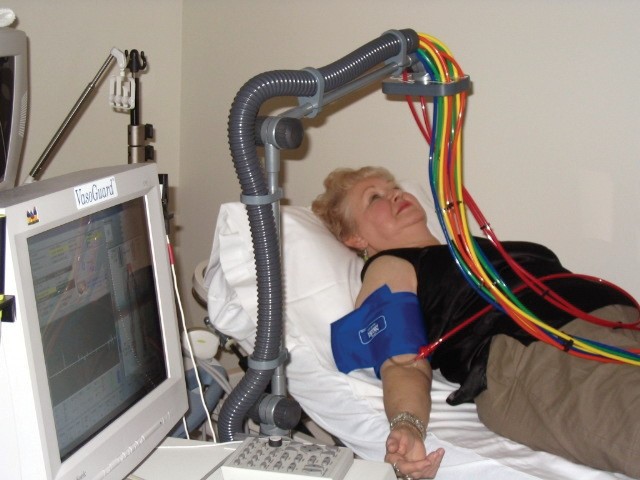
The tests, which take about 10 to 15 minutes combined, include a carotid artery ultrasound to detect blockages in the vessels that feed blood to the brain, an abdominal aorta ultrasound to identify aneurysms or bulges that indicate vessel weakness, and an ankle blood pressure test to detect blockages in the legs.
All the tests are noninvasive, so youll experience no pain or discomfort, adds Dr. Reed. But youll leave armed with information about your vascular health.
Adopting a healthy lifestyleincluding regular exercise, ceasing to smoke, reducing cholesterol levels, controlling blood pressure and maintaining a healthy body weightcan reduce your risk for vascular disease, says Dr. Reed.
Our goal, she adds, is to catch vascular disease early so that it can be treated before it begins to affect the patients quality of life.
Men and women over 60 are invited to take advantage of free vascular screenings for abdominal aortic aneurysms, carotid artery disease and peripheral arterial disease on Friday, May 19, from 8 a.m. to 3:30 p.m. at the University Pointe Medical Campus in
Dr. Reed is one of nearly 140 UC experts answering health-related questions from consumers on NetWellness, a collaborative health-information Web site staffed by
Tags
Related Stories
UC radiation oncologist speaks with Local 12 news about clinical trial for head and neck cancer treatment
August 10, 2026

Dr. Sara Medek, a UC radiation oncology professor, speaks with Local 12 news about a new clinical trial aimed at reducing radiation in certain areas while still treating cancer effectively but with fewer painful side effects.
Cancer Center director charts future based on collaboration, AI
August 10, 2026

David Gius, MD, PhD, was featured in a Cincinnati Business Courier article and The Cancer Letter’s “The Directors" podcast discussing his priorities and goals as he recently took the helm as director of the University of Cincinnati Cancer Center.
Bidirectional link between oral, kidney health calls for patient education, access
August 4, 2026

Despite growing awareness of the connection between oral health and chronic health conditions, patient awareness and access to dental care remain limited, according to University of Cincinnati experts who recently spoke with Healio | Nephrology News & Issues.