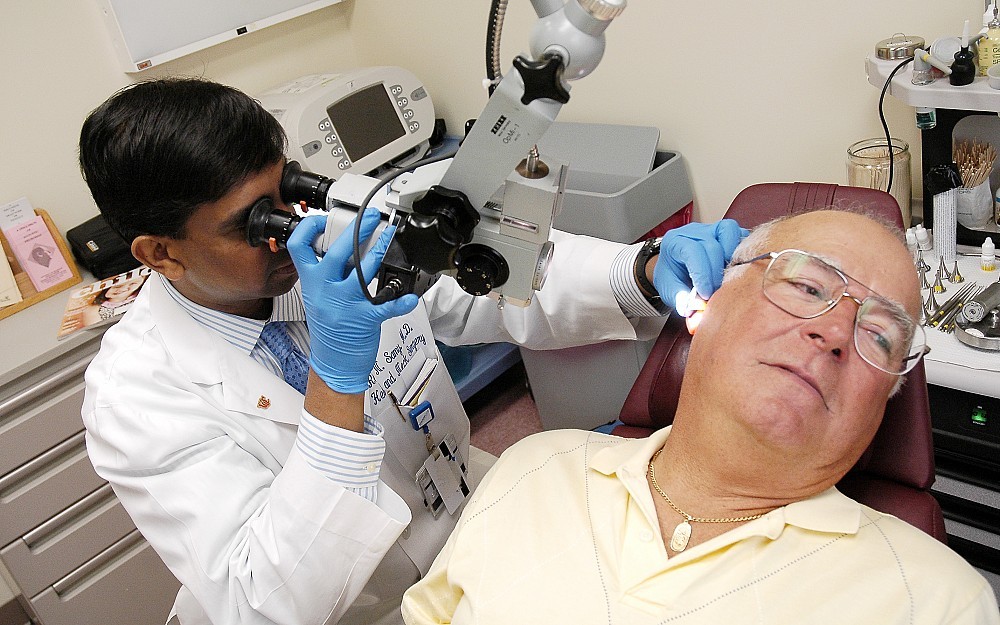
UC HEALTH LINE: Summer Activities Can Increase Hearing Loss

Tinnitus (perception of sound in the ears) affects most people at some point in their lives and is often due to hearing loss or the result of exposure to loud noises. Other causes include stress, ear-damaging drugs, ear infections, jaw misalignment, brain or head injury and, in rare cases, a tumor on the auditory nerve.
Its important for people to realize they can help minimize tinnitus caused by loud noises, says Ravi Samy, MD, assistant professor of otolaryngology. The cochlear hair cells in your ears can be damaged when listening to loud music or working around loud equipment (such as lawnmowers) for prolonged periods of time, which can lead to hearing loss.
Protecting your hearing can be as simple as turning the music down and wearing ear plugs when mowing, attending concerts, working with machinery or engaged in other loud activities.
The American Tinnitus Association estimates that 50 million Americans suffer from the condition. For most its temporary, but for 12 million people it can disrupt their lives.
Most of the time when patients come to me, they have severe tinnitus, says Dr. Samy. Their quality of life is affectedthe noise they hear in their ears disrupts their sleep, and they have trouble concentrating and focusing on work.
Tinnitus is a subjective noise, and people often describe it as ringing in the ears. Dr. Samy says patients also describe hearing noises like crickets, whooshing, pulsing and buzzing, among others.
A lot of patients with tinnitus get frustrated because they may have been told to just live with the noisedeal with it, he says. They feel like they cant do anything. There are things that can be done for tinnitus, but theyre not quick fixes.
Dr. Samy says many patients with tinnitus are most affected when its quiet around them, such as when they are trying to sleep. Tinnitus sufferers need something pleasant to distract their minda radio or TV during the day and white noise at night, like an air conditioner, fan, a radio on static, etc., he says.
Other treatments for tinnitus include:
-
Hearing aids: Its important for people with tinnitus to undergo a hearing test, because they may have hearing loss. The brain has the ability to change itself to adapt to various situations, and tinnitus may be one way the brain adapts to hearing loss, says Dr. Samy.
-
Medications: Currently, there are no drugs specifically for the treatment of tinnitus. People who suffer from depression or anxiety may also have tinnitus. The stress of dealing with the noise in their ears can really affect them psychologically, says Dr. Samy. Medications are available to treat these conditions and may lessen the severity of tinnitus.
-
Tinnitus retraining (sound therapy): A device called a masker, which is similar to a hearing aid, emits a steady, low-level broadband sound, like that of rainfall, which can reduce the contrast between a tinnitus sufferers internal sound and the quiet of the outside world.
-
Biofeedback: Stress is a major contributor to tinnitus. Biofeedback tests measure heart rate and temperature as people respond to stressors or things that relax them. Over time, people can figure out what they were thinking about at the time of stress and how they relaxed. This can help them focus on whatever relaxes them, such as prayer, meditation, soothing music, etc., Dr. Samy says.
- Nontraditional treatments: Some herbs, such as ginkgo and garlic, have been said to help people deal with tinnitus, says Dr. Samy. Its up to the individual if they want to try herbal supplementsits their money, time and resources. Having said that, its important for people to realize that herbs can cause complications and they need to be sure they let their health-care provider know what theyre taking. Also, there are few, if any, research studies to date that have proven herbs are actually effective for tinnitus.
Other treatments include acupuncture and hypnosis. Dr. Samy points out that while its unclear how effective these activities are, they promote relaxation, which is key in helping people reduce the severity of tinnitus.
Reducing stress and increasing relaxation are probably the most important things people can do for tinnitus, says Dr. Samy. I know that can be difficult, and it takes patience, but its one of the best ways to control the condition.
May 2127 is National Tinnitus Awareness Week.
Tags
Related Stories
UC study shows lack of awareness for lung cancer screenings across country
August 21, 2026
University of Cincinnati Cancer Center researchers have published a study in the American Journal of Surgery that found only 15% of eligible American adults have discussed lung cancer screening with their doctors.This research emphasizes the need to spread awareness and better educate the public about screening through low-dose computed tomography.
UC radiation oncologist speaks with Local 12 news about clinical trial for head and neck cancer treatment
August 10, 2026

Dr. Sara Medek, a UC radiation oncology professor, speaks with Local 12 news about a new clinical trial aimed at reducing radiation in certain areas while still treating cancer effectively but with fewer painful side effects.
Cancer Center director charts future based on collaboration, AI
August 10, 2026

David Gius, MD, PhD, was featured in a Cincinnati Business Courier article and The Cancer Letter’s “The Directors" podcast discussing his priorities and goals as he recently took the helm as director of the University of Cincinnati Cancer Center.