Tobacco Smoke Linked to Allergic Rhinitis in Infants

CINCINNATIUniversity of Cincinnati (UC) epidemiologists say its environmental tobacco smokenot the suspected visible moldthat drastically increases an infants risk for developing allergic rhinitis by age 1.
Commonly known as hay fever, allergic rhinitis occurs when a persons immune system mistakenly reacts to allergens (aggravating particles) in the air. The body then releases substances to protect itself, causing the allergy sufferer to experience persistent sneezing and a runny, blocked nose.
This is the first study to show a relationship between environmental tobacco smoke exposure and allergic rhinitis in year-old infants, the UC team reports in the June issue of Pediatric Allergy and Immunology and an early online edition May 17.
Previous studies have addressed risk factors for allergic rhinitis, but they failed to examine multiple environmental exposures, and some yielded contradictory results, says Jocelyn Biagini, lead author and an epidemiologist in UCs environmental health department.
The study evaluated the effects of numerous indoor exposures to such things as environmental tobacco smoke, visible mold, pets, siblings and the day-care environment on 633 infants under age one.
We found that infants who were exposed to 20 or more cigarettes a day were three times more likely to develop allergic rhinitis by their first birthday than those who were not exposed, says Biagini.
These findings, she says, suggest that for the health of their children, its important for parents to eliminate tobacco smoke from their homes.
An infants lungs and immune system are still developing in the first year of life, says Grace LeMasters, PhD, coauthor and principal investigator of the Cincinnati Childhood Allergy and Air Pollution Study (CCAAPS). Environmental tobacco smoke puts harmful particulates in the air thatwhen inhaled regularly at such an early agecould lead to serious allergic conditions like asthma.
CCAAPS, funded by the National Institute of Environmental Health Sciences, is a five-year study examining the effects of environmental particulates on childhood respiratory health and allergy development.
About 43 percent of children, says Dr. LeMasters, are exposed to home environmental tobacco smoke. According to the Centers for Disease Control and Prevention, about 21 percent of all American adults smoke cigarettes. Of them, 12 percent report smoking 25 or more cigarettes daily.
While household mold, long thought to be a major cause, did not contribute to allergic rhinitis development, Biagini says, it did increase the infants risk for ear infections.
Infants exposed to a mold patch about the size of a shoebox were five times more likely to contract ear infections requiring antibiotics than those living in mold-free homes, she explains.
The UC study also suggests that infants with older siblings are less likely to have allergic rhinitis.
Research has shown that exposure to certain infections early in life may decrease your risk for allergic diseases, explains James Lockey, MD, professor of environmental health and pulmonary medicine. We found a sibling protective effect for allergic rhinitisthis may mean the more siblings infants have, the more infections they are exposed to. As a result, the infants body may be better equipped to fight off allergic diseases later in life.
Collaborators in the study were David Bernstein, MD, Gurjit Khurana Hershey, MD, PhD, Patrick Ryan, Linda Levin, PhD, Tiina Reponen, PhD, Jeff Burkle and Manuel Villareal, MD.
According to the Asthma and Allergy Foundation of America, more than 50 million Americans suffer from allergies, many of which are can be triggered by airborne environmental pollutants.

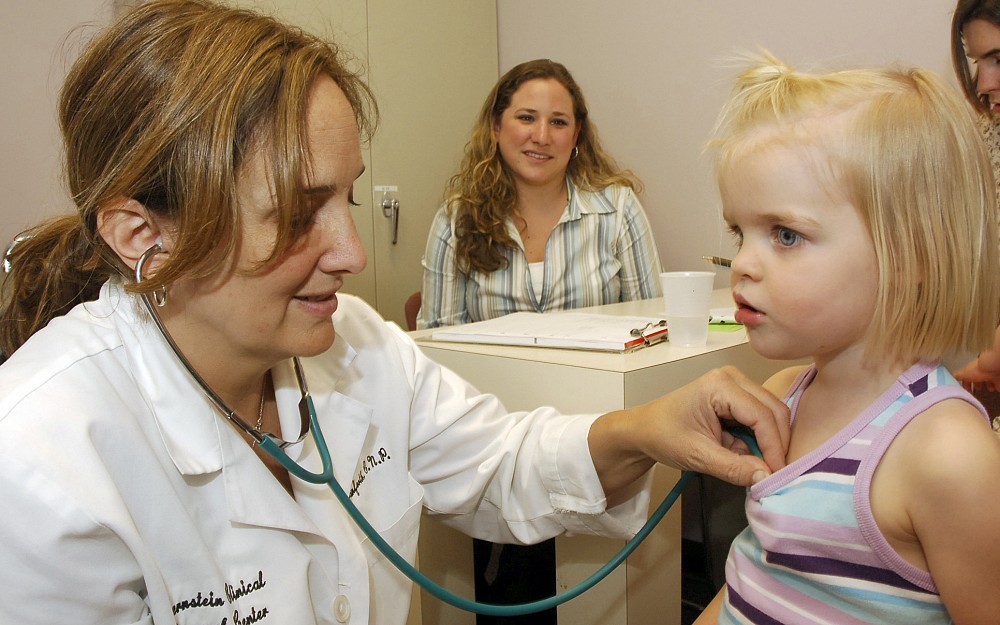
Nurse practitioner Sherry Stanforth evaluates a child's allergic reactions to a skin prick test as part of the Cincinnati Childhood Allergy and Air Pollution Study at the University of Cincinnati.

University of Cincinnati epidemiologist Jocelyn Biagini interacts with a child from the Cincinnati Childhood Allergy and Air Pollution Study.
Tags
Related Stories
UC radiation oncologist speaks with Local 12 news about clinical trial for head and neck cancer treatment
August 10, 2026

Dr. Sara Medek, a UC radiation oncology professor, speaks with Local 12 news about a new clinical trial aimed at reducing radiation in certain areas while still treating cancer effectively but with fewer painful side effects.
Cancer Center director charts future based on collaboration, AI
August 10, 2026

David Gius, MD, PhD, was featured in a Cincinnati Business Courier article and The Cancer Letter’s “The Directors" podcast discussing his priorities and goals as he recently took the helm as director of the University of Cincinnati Cancer Center.
Bidirectional link between oral, kidney health calls for patient education, access
August 4, 2026

Despite growing awareness of the connection between oral health and chronic health conditions, patient awareness and access to dental care remain limited, according to University of Cincinnati experts who recently spoke with Healio | Nephrology News & Issues.