Researchers Identify New Markers for Prostate Cancer Risk

The research is reported in the June edition of the journal Cancer Research by Shuk-mei Ho, PhD, professor and chair of the
In a laboratory study, Ho and Prins found that animals exposed to low doses of the natural human estrogen estradiol, or the environmental estrogen bisphenol A (BPA), during fetal development were more likely to develop an early form of prostate cancer in humans (prostatic intraepithelial neoplasia) than those who were not exposed.
These findings suggest that exposure to environmental and natural estrogens during fetal development could affect the way prostate genes behave, leading to higher rates of prostate disease during aging.
BPA is a chemical regularly used in the manufacture of plastics that can leach out when heated. It is one of many man-made chemicals known as endocrine disruptors, which permanently alter the function of the endocrine system by mimicking the role of the bodys natural hormones. Hormones are secreted through endocrine glands and dispersed to serve different functions throughout the body.
Our research showed that early BPA exposure made the prostate more susceptible to precancerous lesions, which are brought on by the adult animals exposure to elevated estradiol, says Ho, lead author of the report. This is an important discovery, because BPA has been found in human maternal and fetal circulation. If it has such a long-lasting effectby reprogramming how adult tissues respond many years laterthen potential exposure sources during pregnancy need to be carefully scrutinized.
The researchers showed that early BPA exposure permanently changed methylation or tagging of specific stretches of DNA and the way certain genes are packaged within the nuclei of prostate cells.
This phenomenon is known as epigenetic reprogramming, explains Ho. The gene expression changes, but the DNA sequences and content do not.
They found that a specific altered geneknown as phosphodiesterase 4 (PDE4D4)did not shut down through the natural aging process. Although the gene should normally phase out in adult life, when exposed to estradiol or BPA early in life the animals continued to produce it at high levels.
It turns out that this specific gene plays an important role in regulating cellular function, so when it doesnt shut down as it should, it begins to promote prostate disease instead, says Ho.
These findings are true for an animal model, the researchers stress, but application to human prostate disease needs further study.
We need to understand the mechanism behind disease to inspire better lifestyle changes and smart manufacturing changes that will make a broader impact on human health, says Ho. If we can develop strong biomarkers, we can manage and prevent diseases much earlier.
More than 1.6 million pounds of BPA, the molecular building block of polycarbonate plastics, are produced in the
Wan-Yee Tang, of UC, and Jessica Belmonte de Frausto of UIC also contributed to the study. This research was funded by grants from the National Institutes of Health and the Department of Defense.

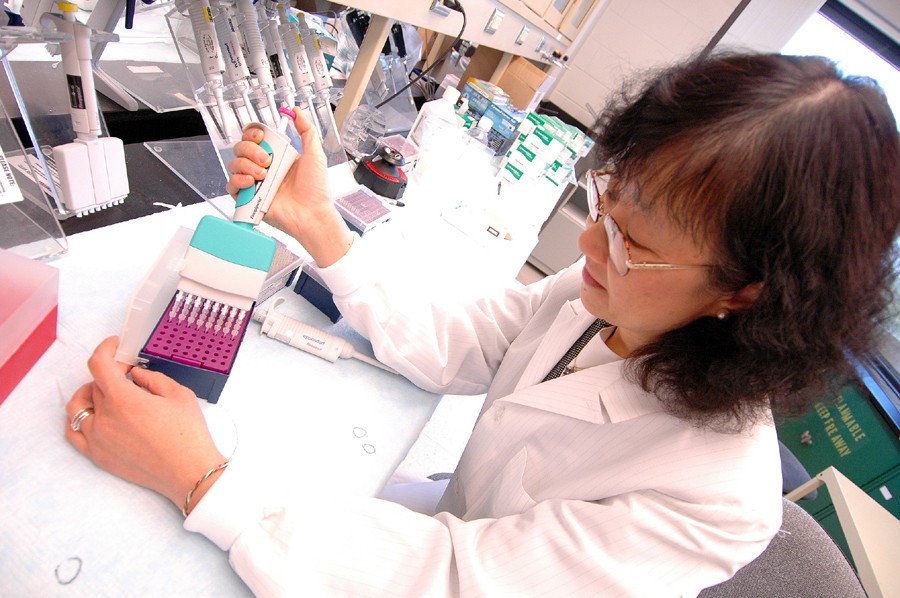
Shuk-Mei Ho, PhD, is an expert in hormonal carcinogenesis and proteomics.

Shuk-Mei Ho, PhD, is the chair of UC's Department of Environmental Health.

UC Department of Environmental Health Department Chair Shuk-Mei Ho, PhD, is an expert in hormonal carcinogenesis and proteomics.
Tags
Related Stories
UC radiation oncologist speaks with Local 12 news about clinical trial for head and neck cancer treatment
August 10, 2026

Dr. Sara Medek, a UC radiation oncology professor, speaks with Local 12 news about a new clinical trial aimed at reducing radiation in certain areas while still treating cancer effectively but with fewer painful side effects.
Cancer Center director charts future based on collaboration, AI
August 10, 2026

David Gius, MD, PhD, was featured in a Cincinnati Business Courier article and The Cancer Letter’s “The Directors" podcast discussing his priorities and goals as he recently took the helm as director of the University of Cincinnati Cancer Center.
Bidirectional link between oral, kidney health calls for patient education, access
August 4, 2026

Despite growing awareness of the connection between oral health and chronic health conditions, patient awareness and access to dental care remain limited, according to University of Cincinnati experts who recently spoke with Healio | Nephrology News & Issues.