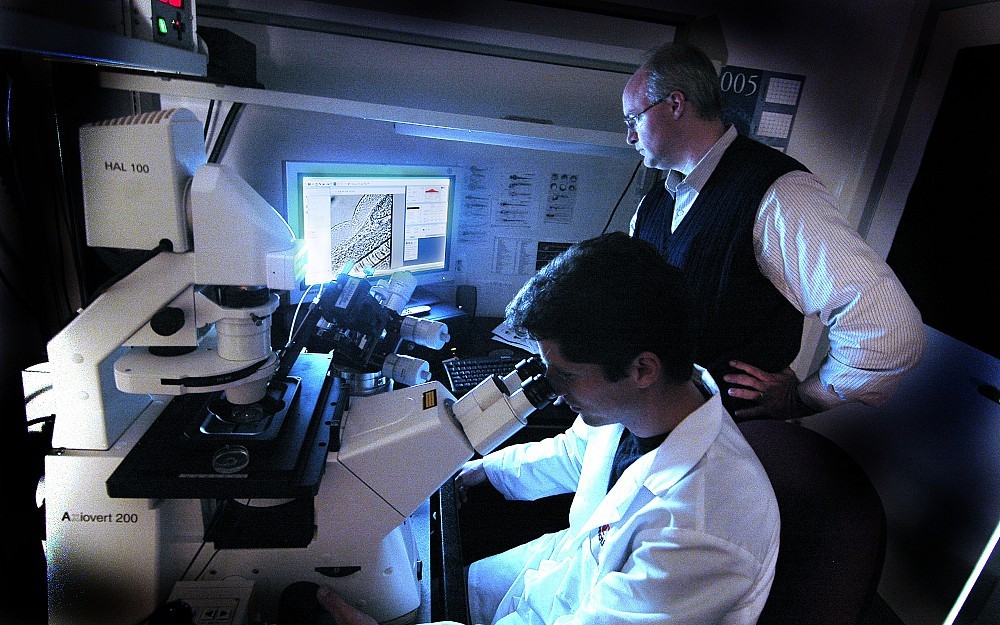
New Program Trains Scientists to Apply Increasing Genetic Knowledge

CINCINNATIThe University of Cincinnati (UC) has introduced a visionary PhD program that will train tomorrows scientists to analyze and apply the burgeoning amounts of biological data now being provided by genetic research.
The first in the Midwest, the new doctorate in systems biology and physiology will take science education into the post-genomic era, says program director Nelson Horseman, PhD, professor of molecular and cellular physiology.
Genetic scientists are delivering more and more information, says Horseman. Our job is to understand how it works in the context of complex biological systems, and ultimately the human body.
Knowing the human genome is like knowing the thousands of components of an automobile, he explains. You have to understand how theyre connected, and how they affect each other. Its not enough just to know you have a gas pedalyou have to know its effect on the engine.
In science we might know the genetics, but if thats all we know, well miss something surprising about how systems functionuntil we analyze them.
The goal of the systems biology and physiology PhD program, Horseman says, is to combine the latest research tools, all essentially driven by a vast amount of computer power, and bring them to bear on the questions scientists are asking.
The toolswhich include DNA sequencing, data base research, gene expression profiling, high-throughput biological assay and multiphoton microscopyare available in a number of different UC labs.
The physical sciences have always been more quantitative, formal and theoretical in their approach to knowledge, Horseman says. The biological sciences, on the other hand, have been more descriptive.
With this new PhD program were moving the biological sciences to the same level the physical sciences have been on for 100 years, he says.
Our vision of the future of biology and technology is that it will be like the current relationship between physics and engineering, but we want to achieve that in less than 100 years!
UCs systems biology and physiology doctoral program, which has just begun accepting students, is believed to be one of only half a dozen in the country. Similar programs have been established at Massachusetts Institute of Technology, Harvard, the University California at San Francisco, Cornell, Drexel and the University of Maryland.
Based in the molecular and cell physiology department at the Academic Health Center, the program will also expose doctoral candidates to techniques and research in UCs colleges of medicine, pharmacy and engineering. Over 50 faculty members in these departments will participate in training.
For more information on the program, log on to www.med.uc.edu/sbp, call coordinator Bette Young at (513) 558-2536 or e-mail bette.young@uc.edu.
Tags
Related Stories
UC radiation oncologist speaks with Local 12 news about clinical trial for head and neck cancer treatment
August 10, 2026

Dr. Sara Medek, a UC radiation oncology professor, speaks with Local 12 news about a new clinical trial aimed at reducing radiation in certain areas while still treating cancer effectively but with fewer painful side effects.
Cancer Center director charts future based on collaboration, AI
August 10, 2026

David Gius, MD, PhD, was featured in a Cincinnati Business Courier article and The Cancer Letter’s “The Directors" podcast discussing his priorities and goals as he recently took the helm as director of the University of Cincinnati Cancer Center.
Bidirectional link between oral, kidney health calls for patient education, access
August 4, 2026

Despite growing awareness of the connection between oral health and chronic health conditions, patient awareness and access to dental care remain limited, according to University of Cincinnati experts who recently spoke with Healio | Nephrology News & Issues.