UC Surgeons Add Laparoscopic Bypass to List of Tristate Firsts

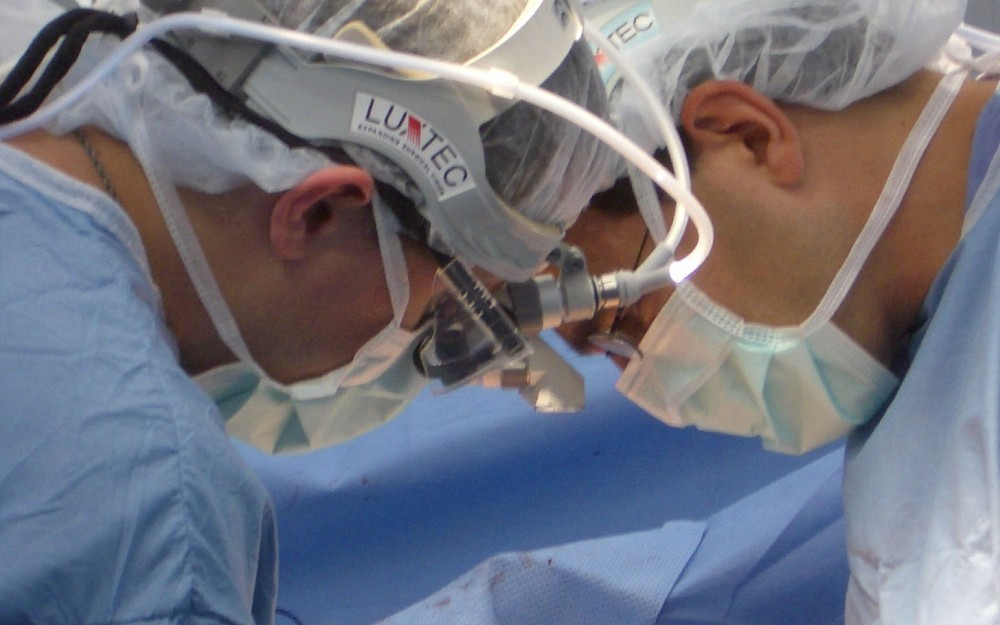
CINCINNATIVascular Surgeons at the University of Cincinnati (UC) have performed the Tristates first completely laparoscopic bypass procedure to treat blockages in the arteries that supply the lower body.
Joseph Giglia, MD, assistant professor and interim director of UCs vascular surgery division, performed the operation on May 22 at University Hospital.
Laparoscopic (minimally invasive) surgery is a method of operating inside the abdomen through small ports using a fiber-optic light source, camera and specialized instruments.
This procedureknown as a laparoscopic aortobifemoral bypassis used to treat aortoiliac arterial occlusive disease, a type of peripheral arterial disease (PAD) that causes large blood vessels in the abdomen and pelvis to become narrowed and restrict blood flow.
According to the American Vascular Association (AVA), as many as 12 million people in the United States suffer from PAD. The condition is caused by a buildup of plaque on the arterial walls, which decreases the flow of nutrient-rich blood to muscles and tissues in the lower body. Patients with PAD usually experience squeezing pain or tightening in the legs and buttocks during exertion.
Laparoscopic surgery eliminates the need to make a major incision to access the body cavity, explains Giglia. Because it is minimally invasive, we can also reduce the patients post-surgery pain and expedite the patients recovery.
Traditional open bypass surgery requires a large incision (12 to 16 inches) between the breastbone and the tip of the pubic bone. Giglias laparoscopic technique requires only seven small (1 cm) incisions.
To surgically bypass a blockage, the blood is redirected through an inverted Y-shaped graft made of synthetic material sewn to the existing artery. By attaching the single end of the Y to the aorta, and the split ends below the narrowed areas of the femoral arteries, the blood can travel around the diseased area and restore proper flow.
Minimally invasive vascular surgery techniques are regularly used in Europe in Canada, adds Giglia, but only a handful of centers are performing them in the United States.
Earlier this month, Giglia received the American Vascular Associations annual E.J. Wylie Traveling Fellowship Award, a professional development grant that will allow him to visit established vascular centers across the world. This experience and resulting collaborations will help Giglia create a laparoscopic vascular surgery center at UC.

Joseph Giglia, MD, accepts the American Vascular Association's E.J. Wylie Traveling Fellowship Award.
Tags
Related Stories
UC radiation oncologist speaks with Local 12 news about clinical trial for head and neck cancer treatment
August 10, 2026

Dr. Sara Medek, a UC radiation oncology professor, speaks with Local 12 news about a new clinical trial aimed at reducing radiation in certain areas while still treating cancer effectively but with fewer painful side effects.
Cancer Center director charts future based on collaboration, AI
August 10, 2026

David Gius, MD, PhD, was featured in a Cincinnati Business Courier article and The Cancer Letter’s “The Directors" podcast discussing his priorities and goals as he recently took the helm as director of the University of Cincinnati Cancer Center.
Bidirectional link between oral, kidney health calls for patient education, access
August 4, 2026

Despite growing awareness of the connection between oral health and chronic health conditions, patient awareness and access to dental care remain limited, according to University of Cincinnati experts who recently spoke with Healio | Nephrology News & Issues.