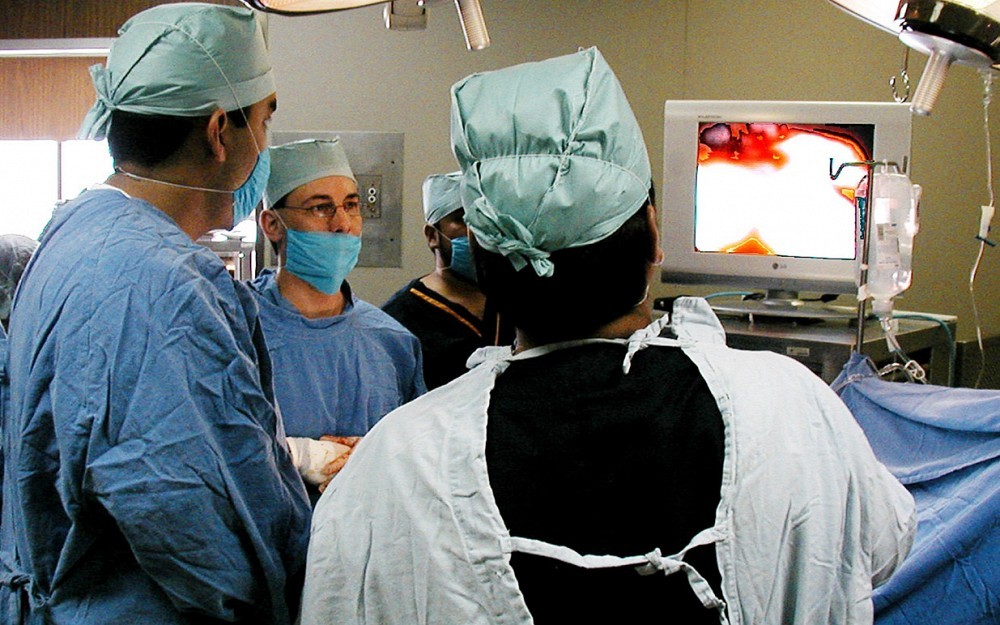
Cincinnati Surgeon s Pediatric Laparoscopic Liver Surgery a World First

Mark
Thomas, MD, an assistant professor and transplant surgeon at UC,
performed the operation in a 2-year-old boy with liver cancer on May 24
at La Raza Pediatric Medical Hospital in
Liver cancer is rare in childrenless than 150 cases are diagnosed each year compared to more than 18,000 in adultsso the disease often misdiagnosed as constipation, food intolerance or anorexia until it is in advanced and difficult-to-treat stage.
This patients symptoms had been dismissed as such for several months before physicians confirmed he had hepatoblastoma of the liver, a type of cancer that starts in the organs cells (hepatocytes) and develops into one or multiple tumors. Thomas was invited to the La Raza Pediatric Medical Hospital to perform the patients surgery and teach two lectures on the specialized minimally invasive procedure.
Laparoscopic (minimally invasive) surgery is a method of operating inside the abdomen through small, tube-like ports using a fiber-optic light source, camera and specialized instruments. Known as laparoscopic liver resection, this procedure requires incisions so small (about three-inches) that they leave only minimal scarring.
Two months post-surgery, the patient is doing well and is expected to have a full recovery after several additional rounds of chemotherapy.
Thomas says the procedure is a safe, effective alternative to traditional open surgery for liver cancerwhich requires up to a 30-inch incision. It also is available for patients with advanced liver disease who cannot tolerate the standard operation. The minimally invasive laparoscopic approach is most often used to remove liver tumors and treat other liver diseases.
Laparoscopic liver resection results in less pain and faster recovery times for patients, Thomas explains. Adult patients can usually start eating again a day after surgery and are back to work within one or two weeks.
Now weve shown that the same procedure can improve survival for patients with childhood liver cancer, he adds.
Thomas says the laparoscopic liver procedure has the same success rates as traditional open surgery and the patient usually goes home within two days.
The liver, one of the bodys largest organs, helps metabolize food and medicine absorbed from the intestines in the blood supply, produces bile to help digest fats, and stores energy-producing glycogen (sugar).
Primary liver cancerwhich grows from within the organ as opposed to spreading there from another area of the bodyis rare. In adults, the most common type of primary liver cancer is hepatocellular carcinoma (HCC) and in pediatric patients it is hepatoblastoma. Both develop from hepatocytes and can occur as one or multiple tumors. HCC accounts for 80 percent of all primary liver cancers. Colorectal, breast and gastric cancers also commonly spread to the liver.
To perform the laparoscopic liver procedure, carbon dioxide gas is pumped into the patients abdomen to increase the operative area and improve visualization of the tumor. The surgeon then makes two to four small incisions on the right side of the rib cage to accommodate the laparoscope, a tiny telescope equipped with a camera, and other specialized surgical instruments. The surgeon then severs and ties off tumors blood supply, cuts out the tumor itself, places it inside a sealed bag, and removes it through one of the incisions.
The liver is a self-healing organ, explains Thomas, so once the cancerous tumor is removed the area typically heals within two to four weeks.
Research suggests that cirrhosis, a condition that results in scarring of the liver tissue and long-term hepatitis B and C infections, can increase the risk for liver cancer. People who abuse alcohol, smoke cigarettes or are obese are also at an increased risk for the disease.
Thomas and his team perform about 250 laparoscopic liver cases a year. According to a literature review, there are no published reports of laparoscopic liver resection in a pediatric patient with cancer.
Only a handful of centers in the world perform the number of specialized laparoscopic liver surgeries that we do in
The
American Cancer Society estimates that about 18,000 new cases of
primary liver cancer and bile duct cancer will be diagnosed in the
For more information on laparoscopic liver surgery, visit www.lapliver.com.

Mark Thomas, MD, is an assistant professor and transplant surgeon at UC.
Tags
Related Stories
UC radiation oncologist speaks with Local 12 news about clinical trial for head and neck cancer treatment
August 10, 2026

Dr. Sara Medek, a UC radiation oncology professor, speaks with Local 12 news about a new clinical trial aimed at reducing radiation in certain areas while still treating cancer effectively but with fewer painful side effects.
Cancer Center director charts future based on collaboration, AI
August 10, 2026

David Gius, MD, PhD, was featured in a Cincinnati Business Courier article and The Cancer Letter’s “The Directors" podcast discussing his priorities and goals as he recently took the helm as director of the University of Cincinnati Cancer Center.
Bidirectional link between oral, kidney health calls for patient education, access
August 4, 2026

Despite growing awareness of the connection between oral health and chronic health conditions, patient awareness and access to dental care remain limited, according to University of Cincinnati experts who recently spoke with Healio | Nephrology News & Issues.