UC HEALTH LINE: Rare But Aggressive Form of Breast Cancer Undetectable By Mammogram

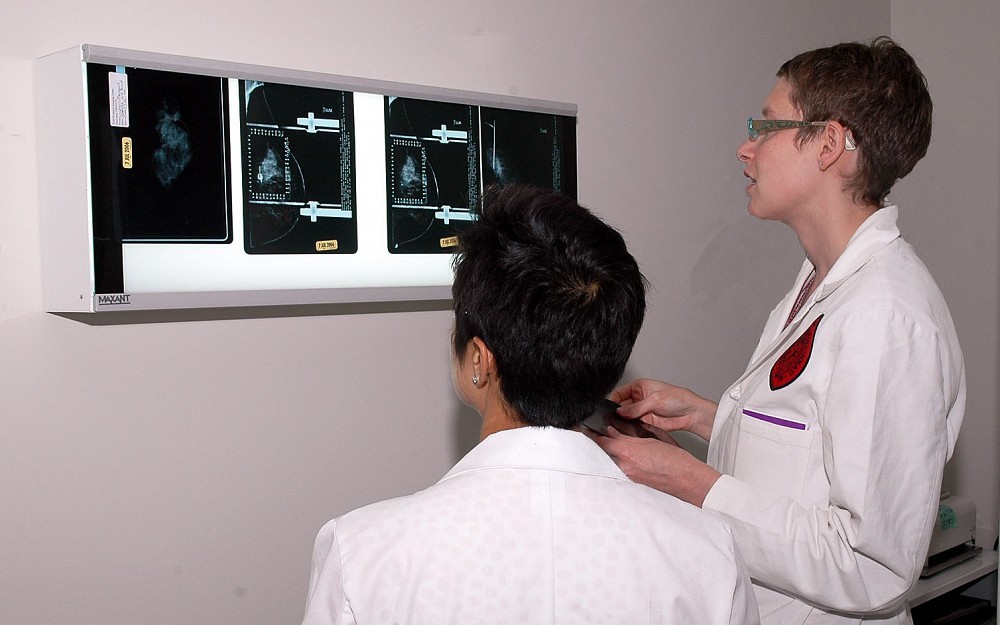
But University of Cincinnati (UC) breast cancer experts counsel that paying attention to even minor changes in breast appearance could save your life if you get a rare form of the disease known as inflammatory breast cancer. Unlike most other forms of breast cancer, they say, this disease is undetectable on a mammogram and doesnt start as a lump.
Inflammatory breast cancer starts as a tissue thickening or redness, versus a lump that can be felt, explains Jennifer Manders, MD, assistant professor and breast surgeon at the UC, so it often goes undetected until the disease has spread to the lymph nodes and possibly to other areas of the body.
There are two primary types of breast cancer: noninvasive, which is localized to one place, and invasive, which can spread to other parts of the body. Inflammatory breast cancer is a very aggressive form of invasive cancer caused by a build-up of breast cancer cells that block the lymphatic vessels.
The bodys lymphatic system produces and stores cells to fight off infection and disease. Breast lymphatics, tiny channels similar to blood vessels, transport fluid from the breast tissue to the lymph node glands in the underarm, which in turn help to fight infection and disease. Inflammatory breast cancer cells enter directly into the lymphatic channels within the skin of the breast, allowing the disease to spread more quickly to other parts of the body.
Although scientists estimate that the disease represents only 1 to 5 percent of all breast cancers, it is one of the most difficult types to treat because it is often diagnosed in an advanced stage.
There is a lack of awareness about this disease, says Manders, so women often dismiss the warning signs of inflammatory breast cancer because its not obvious that something is wrong.
Those warning signs include painless skin discoloration or redness (similar to a bug bite), rapid increase in breast size, an inverted nipple, and enlarged lymph nodes in the underarms or neck.
Every woman should be familiar with the way her breasts look and feel normally, adds
Treatment for inflammatory breast cancer typically involves chemotherapy first, to halt the spread of cancer, followed by surgery to remove the lymph nodes and breast tissue and chest radiation to kill any remaining cancer cells.
Whats important is that women recognize the warning signs before the disease becomes untreatable, adds Nahleh.
For information on breast cancer clinical trials, call the UC Cancer Center research office at (513) 584-2951.

Jennifer Manders, MD, is a breast surgeon and assistant professor of medicine at the University of Cincinnati.
Tags
Related Stories
Selecting noninvasive tests for liver disease diagnosis, monitoring
September 3, 2026

Noninvasive tests have emerged as valuable alternatives for diagnosing, staging and monitoring MASLD and MASH, according to a recent MedCentral report.
Why can it get so hot at times?
September 3, 2026

Cincinnati is experiencing more days of extreme heat this summer than in previous decades, due in large part to warmer global temperatures. But explanations for these higher temperatures also relate to regional factors, including the city's location in a river valley and large proportion of built environment.
Cancer Center plays key role in lab research, clinical trials for new pancreatic cancer drug
September 1, 2026

WLWT and WCPO highlighted the contributions of University of Cincinnati Cancer Center researchers that helped lead to the recent FDA approval of daraxonrasib, a new treatment for pancreatic cancer.