Small-Incision Rectal Cancer Procedure a Tristate First

Treatment options are very limited for people with advanced, low-lying rectal and anal cancers, says assistant professor Bradley Davis, MD. By doing the procedure laparoscopically, we can minimize the patients post-surgery pain, expedite recovery and improve cosmetic outcomes.
Known as laparoscopic abdominoperineal resection (APR), the procedure involves removing the cancerous tissue via an incision between the patients legs, eliminating the need for a large incision into the abdomen. The procedure is used in special cases to treat advanced rectal cancers that affect the anal sphincter muscles, which control the release of bodily waste.
Davis and his colleagues are the only physicians in the Greater Cincinnati region specifically trained to perform this laparoscopic procedure.
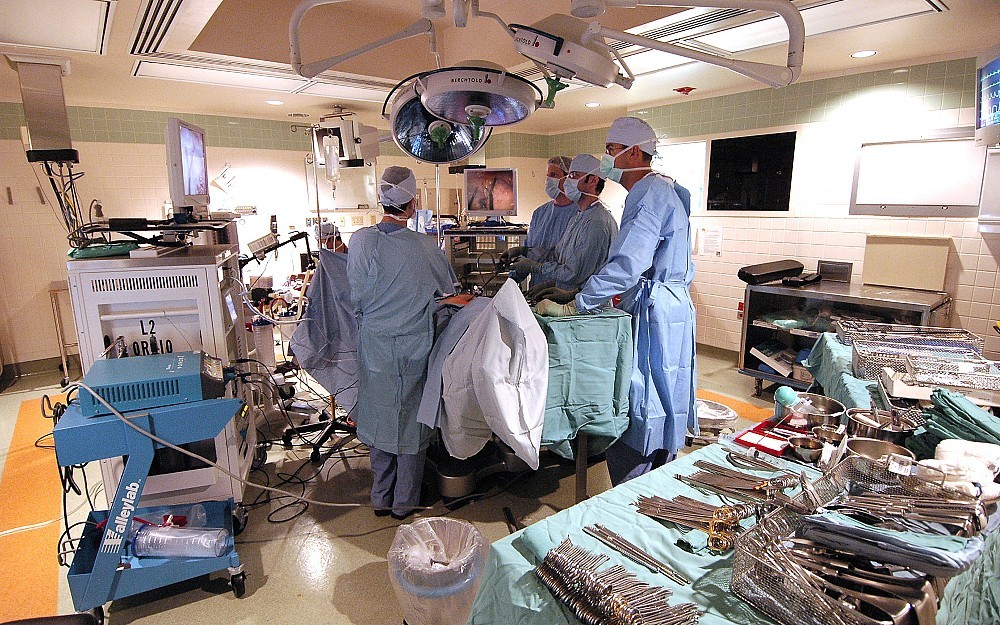
To begin the APR, the surgeon makes a 1/3-inch cut near the navel and inserts the laparoscope, a flexible instrument tipped with a light source and camera that displays a clear image of the operative area on a monitor near the operating table. Other specialized surgical tools are inserted into the abdomen through four more tiny incisions (less than one centimeter each).
Then the surgeon cuts off about 15 inches of the lower large intestineincluding the sigmoid colon, rectum and anusand removes it from the abdomen via a small incision between the patients legs.
Because the surgery requires removing both the rectum and the anal sphincter muscles, the patient must wear a permanent colostomy bag. This pouch is connected to the bowel and worn outside the body to collect waste that would normally pass through the digestive system.
Although we cant eliminate the need for a permanent colostomy in patients with this type of advanced rectal cancer, we can offer them the best chance for eradicating the disease, adds
Davis and his colleagues are trained to research, diagnose and treat diseases of the colon and rectum. Together, they perform more than 100 laparoscopic colon and rectal procedures annually.
They see patients at

Bradley Davis, MD, (far left) and his team perform laparoscopy at Christ Hospital.

Bradley Davis, MD, is a colorectal surgeon and assistant professor of surgery at UC.
Tags
Related Stories
On-site training in Speech & Hearing Clinic sets UC’s programs apart
August 27, 2026
At the University of Cincinnati’s Speech & Hearing Clinic, Doctor of Audiology and Speech-Language Pathology graduate students gain real-world experience while providing free speech and hearing services to the community.
Funding expands UC research into weight gain side effects of bipolar medication
August 26, 2026
University of Cincinnati researchers have been approved for funding by the Patient-Centered Outcomes Research Institute (PCORI) to expand the implementation of healthy lifestyle interventions and metformin prescription to help manage weight gain in overweight or obese youth taking second-generation antipsychotic medications.
One in four NFL players had CTE at death
August 25, 2026

Forbes cites research on concussions and football helmets by the University of Cincinnati in a report that found one in four NFL players had brain damage at death.