Childhood Lead Exposure Linked to Increased Injuries as Teens

The UC team reports these findings in the October 2006 edition of the Journal of Adolescent Health.
The researchers surveyed 212 teens (with a 42 percent response rate) from the Cincinnati Lead Study, a group of children from neighborhoods with high lead concentrations who were exposed to the substance at various levels.
Participants with varying childhood blood-lead levels were surveyed to determine the relationship between lead exposure and injuries during adolescence. These included sprains and cuts, most of which occurred at home and affected the upper extremities.
Using advanced probability tools, the UC research team showed that the injuries were more likely to occur in adolescents who had experienced elevated blood-lead levels when they were younger.
The teens blood lead measurements were not categorized as high or low, explains Laurel Kincl, PhD, lead author of the study and a graduate of UCs occupational ergonomics and safety program. Using each individual's historical blood lead levels we found that those who reported having an injury had higher historical blood lead levels than those who didnt report an injury. Also, teenagers who reported that loss of balance or a fall was the cause of injury, resulting in limited activity or having to seek medical care, also had higher historical blood lead levels.
This study shows a significant correlation between elevated childhood blood lead levels and the risk for multiple, unintentional injuries related to a fall or loss of balance later in life, says Kincl, who is now on the faculty of the
Previous research has shown that childhood lead exposure affects neuromotor (muscle-function) skills. This new study is the first to examine the relationship between lead exposure at a young age and the risk for injury later in life.
The UC team found that 42 percent of teens who responded to the survey suffered at least one unintentional injurythe majority being related to a fall or loss of balancesince age 14. In addition, they found that more than a third of those injuries were serious enough to limit the teens activities for more than four days.
Lead exposure is a major public health threat, Kincl adds. We need to learn more about the risk for injuries in adolescents so we can develop good intervention tactics to protect them.
The team received information from 89 adolescents, aged 14 to 17, about their history of unintentional injuriesincluding where the injury happened, what part of the body was hurt and its severity.
Falls and loss of balance were the most common causes of these injuries, according to the UC team, a finding that supports previous research showing that lead exposure directly affects a childs balance and other neuromotor skills.
According to the most recent U.S. National Health and Nutrition Examination Survey, more than 434,000 children between the ages of 1 and 5 have elevated blood lead levels. Lead is known to be associated with decreased intellectual capabilities and balance disorders among infants, children and teens.
We know that lead exposure can affect motor coordinationspecifically bilateral body coordination (moving arms and legs together), upper limb speed and dexterity, as well as fine motor coordination, adds Amit Bhattacharya, PhD, a professor of environmental health and study collaborator. But our research shows that this early-life exposure can cause lasting health effects that impact a persons functional abilities well into adolescence and adulthood.
This research was supported by grants from the Pilot Research Training Program sponsored by the National Institute for Occupational Safety and Health and from the National Institute of Environmental Health Sciences. Kim Dietrich, PhD, director of UCs epidemiology and biostatistics division, collaborated on the study.

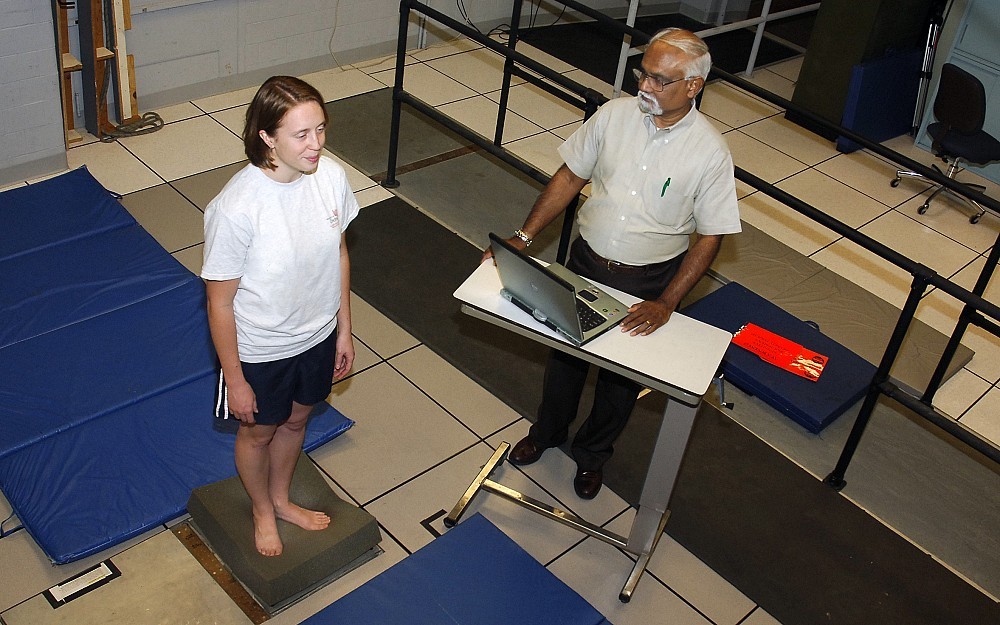
Amit Bhattacharya, PhD, is a professor of environmental health.
Tags
Related Stories
UC radiation oncologist speaks with Local 12 news about clinical trial for head and neck cancer treatment
August 10, 2026

Dr. Sara Medek, a UC radiation oncology professor, speaks with Local 12 news about a new clinical trial aimed at reducing radiation in certain areas while still treating cancer effectively but with fewer painful side effects.
Cancer Center director charts future based on collaboration, AI
August 10, 2026

David Gius, MD, PhD, was featured in a Cincinnati Business Courier article and The Cancer Letter’s “The Directors" podcast discussing his priorities and goals as he recently took the helm as director of the University of Cincinnati Cancer Center.
Bidirectional link between oral, kidney health calls for patient education, access
August 4, 2026

Despite growing awareness of the connection between oral health and chronic health conditions, patient awareness and access to dental care remain limited, according to University of Cincinnati experts who recently spoke with Healio | Nephrology News & Issues.