UC HEALTH LINE: Robotic Surgery Can Alleviate Swallowing Trouble

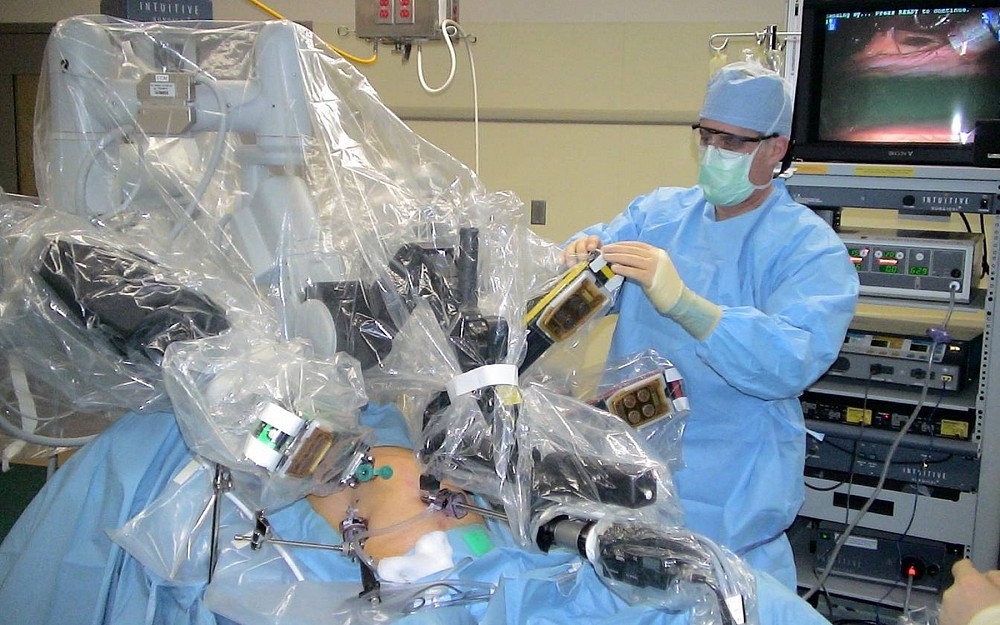
Michael Nussbaum, MD, interim chairman of UCs surgery department, is using the four-armed da Vinci Surgical System robot to perform esophagocardiomyotomy procedurescommonly known as the Heller myotomiesto treat achalasia at
Robotic surgery is a method of operating inside the abdomen using robotic arms and specialized instruments inserted through small incisions (about half an inch each) into the body. A surgeon controls these arms from behind a computer console several feet away from the patient.
Achalasia (pronounced ak uh ley zhuh) can render a person unable to pass food and liquids from the esophagus (food tube) into the stomach. Nussbaum estimates that 6 percent of Americans suffer from the condition.
This disorder affects both the nerves and muscles in the esophagus, explains Nussbaum, professor of surgery at UC. The cause of achalasia is unknown, but as it progresses the nerves in the mid and lower esophagus that produce the act of swallowing begin to degenerate and, eventually, disappear.
When this happens, he adds, the valve connecting the esophagus to the stomach cannot relax to let food pass into the stomach and can result in serious digestive problems for the patient.
Surgery to correct this problem involves cutting the already-damaged muscles that connect the esophagus to the stomach, leaving the lower-esophageal valve open to allow food and liquids to pass into the stomach.
To perform this procedure, the surgeon makes a small incision above the navel and inserts a specialized tube to pump the abdomen full of carbon dioxide gas to improve visualization of the operative area. Several additional small incisions are made to accommodate the robotic arms, a laparoscope (a tiny telescope equipped with a camera), and other specialized surgical instruments.
The robotic technology helps improves visualization of the operative area inside the body without having to make a major incision into the patient, says Nussbaum. The robotic arms essentially become an extension of my arms and hands, but with the benefit of a 360-degree range of motion thats just not possible with traditional methods.
The surgeon carefully separates the esophagus and stomach from surrounding tissues and then cuts an opening into the muscles that divide the esophagus and stomach. The stomach is wrapped partially around the esophagus and sewn to the edges of the muscle incision to support the esophageal valve that allows food to pass into the stomach but prevents acid from the stomach from backing up into the esophagus.
Nussbaum says the procedure is a safe, effective alternative to traditional open surgery and is 85 to 90 percent effective in alleviating long-term symptoms of achalasia.
A robotic Heller myotomy takes three to four hours to perform and Nussbaum says the patient usually goes home the day after surgery.
Although scientists are still unclear as to what causes this disease, research suggests that achalasia is a degenerative autoimmune system problem that cannot be prevented.
Its important that people recognize the warning signsdifficulty swallowing, regurgitation of undigested food and saliva and heartburnso we can begin rapid treatment and help the patient avoid further digestive complications, he adds.
For more information, visit www.netwellness.org, a collaborative health-information Web site staffed by

Michael Nussbaum, MD, specializes is gastrointestinal and endocrine surgery.
Tags
Related Stories
UC radiation oncologist speaks with Local 12 news about clinical trial for head and neck cancer treatment
August 10, 2026

Dr. Sara Medek, a UC radiation oncology professor, speaks with Local 12 news about a new clinical trial aimed at reducing radiation in certain areas while still treating cancer effectively but with fewer painful side effects.
Cancer Center director charts future based on collaboration, AI
August 10, 2026

David Gius, MD, PhD, was featured in a Cincinnati Business Courier article and The Cancer Letter’s “The Directors" podcast discussing his priorities and goals as he recently took the helm as director of the University of Cincinnati Cancer Center.
Bidirectional link between oral, kidney health calls for patient education, access
August 4, 2026

Despite growing awareness of the connection between oral health and chronic health conditions, patient awareness and access to dental care remain limited, according to University of Cincinnati experts who recently spoke with Healio | Nephrology News & Issues.