Uranium Plant Screening Shows Improved Survival, Overall Health

CINCINNATISixteen years after the launch of the United States first and largest legally mandated comprehensive medical monitoring program, University of Cincinnati (UC) researchers find that people living near a former uranium processing plant are living longer and enjoying healthier lifestyles compared with the general population.
Initial study results from the Fernald Medical Monitoring Program (FMMP), which began its last round of medical testing in this month, show that most adult participants lowered their cholesterol and blood pressure while participating in the program.
According to study epidemiologist Susan Pinney, PhD, overall death rates as well as disease-specific deaths were also lower than expected, compared with general population statistics. Researchers attribute this phenomenon to the holistic design of the screening program.
Based on general population statistics, wed expect 11 percent of the people who enrolled in the program as adults to die during the first 12 years of the program, but only 8 percent did, explains Pinney. The improvement in survival is most likely due to specific cancer screening tests and the general physical examination laboratory testswhich also detect early signs of cancerincluded in the FMMP.
In 1984, a federal investigation revealed that National Lead of Ohios Feed Materials Production Center in Fernald, Ohio, about 18 miles northwest of Cincinnati, was emitting dangerous levels of uranium dust and gases into surrounding communities. The FMMP was established in 1990 as the result of a $73 million class-action lawsuit against National Lead of Ohio and the U.S. Department of Energy on behalf of the people living near the Fernald plant.
From the very beginning, the philosophy behind this program was to improve participants health in any way we could, explains Robert Wones, MD, program medical director, so we screened for exposure-related diseases as well as general health issues. Our initial results show that this program really has made a difference in the health of the Fernald community.
We werent just screening for diseases related to environmental exposures, adds Wones. We implemented a full-scale preventive health program centered on early disease detection and healthy lifestyles, so everyone would benefit.
About 11,000 people applied for the program, and 9,500 completed enrollment. Today, more than 50 percent of the original program participants are still getting regular exams. Nationwide, public health programs retain only about 30 percent of participants for the duration of screening.
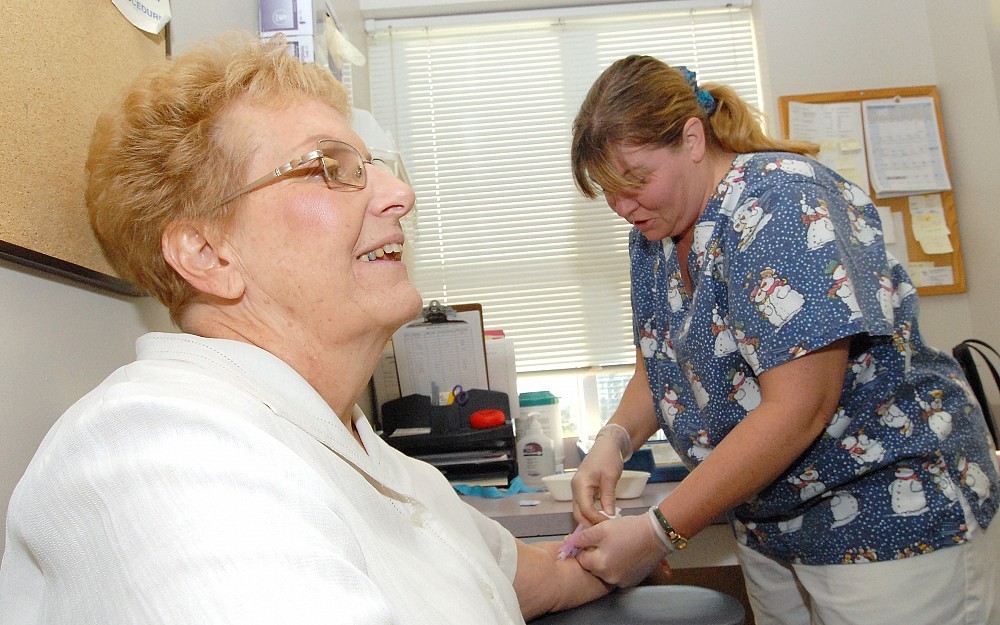
Each eligible participant received a comprehensive medical exam every two to three years, plus a personalized two-page report detailing any follow-up recommendations for medical care. Participants also got copies of all test results, which could include blood tests for cholesterol, liver and kidney function, chest X-rays, mammograms and results from other cancer screenings.
Diligent cancer screening exams, aggressive patient follow-up and health education were cornerstones of the program, the researchers say, and several nurses were employed specifically to monitor each patients follow-up recommendations and ensure that follow-up care happened.
Our goal was to make sure patients understood the long-term importance of good overall health, says nurse and program coordinator Jenny Buckholz, while also helping them establish a pattern of healthful living that includes a good diet and regular exercise.
Appointments for the final round of screening exams are currently available at the FMMP clinic, at
For eligibility information or to schedule an appointment, call (513) 874-1074.

Fernald Medical Monitoring Program
Tags
Related Stories
Cancer Center plays key role in lab research, clinical trials for new pancreatic cancer drug
September 1, 2026

WLWT and WCPO highlighted the contributions of University of Cincinnati Cancer Center researchers that helped lead to the recent FDA approval of daraxonrasib, a new treatment for pancreatic cancer.
Cancer Center physician receives $150,000 New Investigator Research Grant to study treatment-resistant leukemia
September 1, 2026
The University of Cincinnati Cancer Center’s Sarah Skuli, MD, PhD, received a two‑year, $150,000 Leukemia Research Foundation New Investigator Grant to study TP53‑mutated leukemia, a treatment‑resistant subtype with very poor outcomes.
Heavy social media use linked to depression
August 31, 2026

U.S. News and World Report, Yahoo! News, MSN, USA Today and other national media highlight a new study by the University of Cincinnati and Northwestern University that found a correlation between heavy social media use and depression in adults.