NASA Astronauts Visit UC to Announce 12th Underwater Extreme Environment Mission

CincinnatiTwo NASA astronauts and a NASA flight surgeon will be at the University of Cincinnati (UC) Monday, March 5, for the announcement of NASAs 12th underwater Extreme Environment Mission Operation (NEEMO 12).
UCs Timothy Broderick, MD, will be part of the undersea crewtogether with astronauts Heidemarie Stefanyshyn-Piper, Jose Hernandez and flight surgeon Josef Schmidand will also head NEEMO 12s scientific research program.
A gastrointestinal surgeon, Broderick, became an aquanaut as part of the NEEMO 9 mission in 2006.
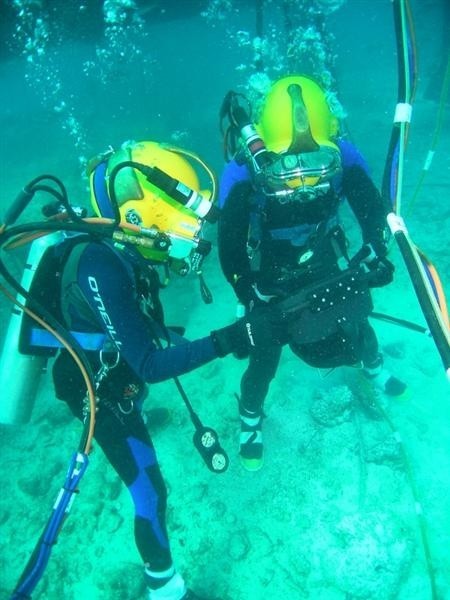
The NEEMO 12 crew will splash down May 7 for 12 days submerged aboard the National Oceanic and Atmospheric Administrations Aquarius Underwater Laboratory off the Florida coast.
The crews goal is to further refine surgical technologies to be used in long space voyages. The aquanauts will test two remotely controlled surgical robots in a variety of advanced medical experiments, including robotic telesurgery on simulated patients.
At 10 a.m. Monday, mission leader Bill Todd of United Space Alliance and NASAs
At 1:30 p.m., Broderick and his crewmates will visit with patients at
At 3 p.m., the crewmates return to room 427, where UC will host an exploration-focused seminarCollaborations and Innovation in Explorationon how discoveries and innovations like those made through NEEMO 12 could translate into future job opportunities for students in UCs medical and engineering colleges.
Technology applications developed and refined during the NEEMO 12 mission, Broderick says, will help surgeons overcome interplanetary communication lag time and could improve the care of astronauts on future missions to the moon and Mars.
We need to figure out better ways to care for astronauts before we make the long trip to Mars, Broderick says. Telemedicine and robotic surgery could be the key to maintaining the health of future spacefarers and responding to medical emergencies in space.
More information on the NEEMO initiative is available at www.nasa.gov/neemo.
-30-

Timothy Broderick, MD, performs a laparoscopic gallbladder surgery on a simulated patient in the NEEMO undersea habitat.

Chief-Division of Gastrointestinal and Endocrine Surgery, Medical Director-Center for Surgical Innovation. Assistant Professor of Surgery and Biomedical Engineering
Tags
Related Stories
UC radiation oncologist speaks with Local 12 news about clinical trial for head and neck cancer treatment
August 10, 2026

Dr. Sara Medek, a UC radiation oncology professor, speaks with Local 12 news about a new clinical trial aimed at reducing radiation in certain areas while still treating cancer effectively but with fewer painful side effects.
Cancer Center director charts future based on collaboration, AI
August 10, 2026

David Gius, MD, PhD, was featured in a Cincinnati Business Courier article and The Cancer Letter’s “The Directors" podcast discussing his priorities and goals as he recently took the helm as director of the University of Cincinnati Cancer Center.
Bidirectional link between oral, kidney health calls for patient education, access
August 4, 2026

Despite growing awareness of the connection between oral health and chronic health conditions, patient awareness and access to dental care remain limited, according to University of Cincinnati experts who recently spoke with Healio | Nephrology News & Issues.