UC HEALTH LINE: Once-a-Day Drug May Alleviate Toenail Fungus

Led locally by Debra Breneman, MD, and
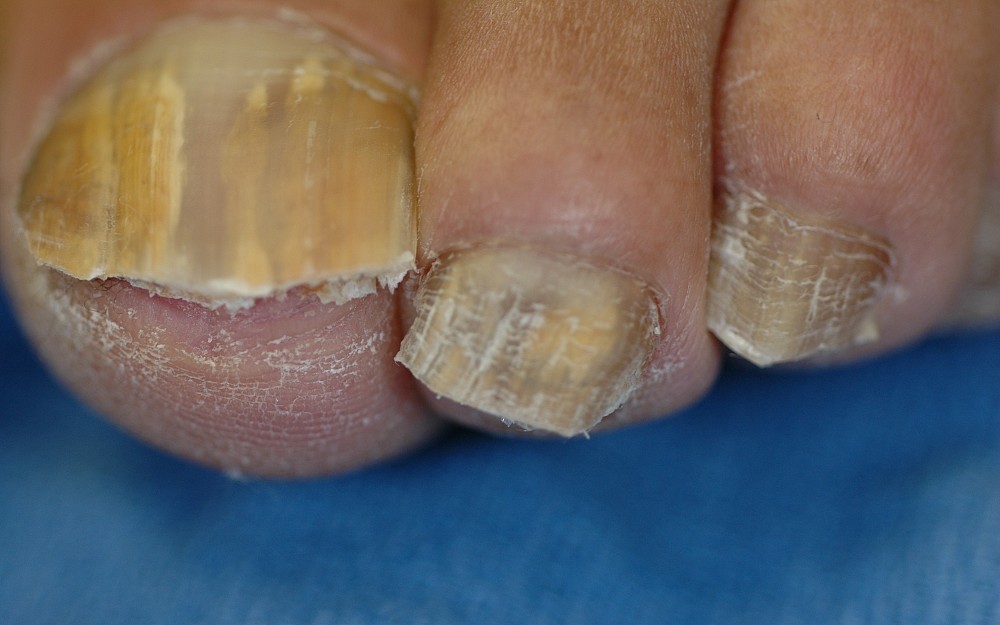
The condition is caused by common skin fungi that invade the actual nail or infect the skin under the nail. As the infection progresses, it can cause the nail to thicken, crack and become discolored. This can result in discomfort and pain when walking or standing for long periods. Left untreated, it can cause permanent nail damage and become difficult to cure.
Fungi thrive in warm, moist placeslike between the toesand can be spread through both direct and indirect contact, explains Sheth. Once the infection gets into the nail, it acts as a reservoir of fungus that can then lead to recurrent infection of the skin (athletes foot) and spread to other nails.
These infections may be prevented by keeping nails short to minimize injuries that are susceptible to infection and by not sharing nail clippers or walking barefoot in public places, he adds.
Sponsored by Barrier Therapeutics, the phase-3, evaluator-blind trial will determine whether the investigational oral tablet form of the drug itraconazole (eye-truh-CON-uh-zole) can safely eliminate toenail fungus in patients with onychomycosis.
In general, treatment of fungal nail infections with antifungal creams, lotions or gels has not provided patients with satisfactory results says Sheth. Effective toenail infection treatment often requires prescription oral medications.
The
Study participants will be randomized into three treatment groups and receive treatment daily for 12 weeks. Each group will receive a 200-milligram itraconazole tablet, two 100-milligram itraconazole capsules, or a placebo to be taken once a day.
Researchers will track patients for up to 60 weeks, monitoring any changes in toenail fungus through periodic examinations and other medical monitoring procedures.
Study participants will be compensated up to $480 for full participation in this study and receive all study-related medications and care at no charge.
Sheth and Breneman have no financial interest in Barrier Therapeutics.
For more information on trial eligibility, call Vivian Berger at (513) 475-7575.
More information on nail infections is available at www.netwellness.org, a collaborative health-information Web site staffed by
Tags
Related Stories
UC radiation oncologist speaks with Local 12 news about clinical trial for head and neck cancer treatment
August 10, 2026

Dr. Sara Medek, a UC radiation oncology professor, speaks with Local 12 news about a new clinical trial aimed at reducing radiation in certain areas while still treating cancer effectively but with fewer painful side effects.
Cancer Center director charts future based on collaboration, AI
August 10, 2026

David Gius, MD, PhD, was featured in a Cincinnati Business Courier article and The Cancer Letter’s “The Directors" podcast discussing his priorities and goals as he recently took the helm as director of the University of Cincinnati Cancer Center.
Bidirectional link between oral, kidney health calls for patient education, access
August 4, 2026

Despite growing awareness of the connection between oral health and chronic health conditions, patient awareness and access to dental care remain limited, according to University of Cincinnati experts who recently spoke with Healio | Nephrology News & Issues.