New Study Probes How Religion Can Help HIV/AIDS Patients

Previous research showed among other things that black patients claimed to have become more spiritual and that more white than black patients felt alienated from their religious communities after HIV diagnosis.
Now, Magdalena Szaflarski, PhD, and Joel Tsevat, MD, both researchers at UCs Institute for the Study of Health, have received a grant from the National Institute of Child Health and Human Development to study how religious organizations respond to HIV/AIDS within their congregations and communities.
The grant will fund a two-year study in which UC researchers will interview clergy from 150 different religious organizations in Greater Cincinnati and compare their responses with 60 HIV/AIDS patients who have or havent felt welcome in their congregations.
There isnt much research on how churches, synagogues and other places of worship feel about HIV or AIDS, and the research that was done is mostly from the 1980s and 90s, Szaflarski says, adding that the study will describe the current levels of HIV-related involvement on the part of religious organizations and highlight factors shaping religious organizations responses to HIV/AIDS.
Were interested in seeing the organizations viewpoints, Szaflarski continued. We want to see if these affiliations can improve levels of support provided to patients with HIV/AIDS and create better quality of life for patients.
In a previous study published in December 2006, Szaflarski, Tsevat and colleagues showed that spirituality and religion play an important role in shaping patients perceptions of living with HIV/AIDS.
In a report on the study, Sian Cotton, PhD, assistant professor of family medicine, said the team found that patients with HIV/AIDS, particularly black patients, claimed to have become more spiritual after diagnosis.
However, more white patients felt alienated from their religious communities than did blacks.
Twenty-four percent of all patients felt alienated in their religious communities, 60 percent did not feel welcome, and 10 percent changed their place of worship because of their HIV status, says Szaflarski.
In the new study, Szaflarski says she wants to look closely at the role of black churches in the lives of patients with HIV.
Theres a large population of African-Americans affected by HIV/AIDS, and they seem to gain a lot of knowledge and strength from their religious communities, she says, adding that about 50 percent of participants, again, mostly blacks, believed their spirituality helped them live longer.
Researchers hope the new study will help discover existing support groups and reveal how these social networks could increase patients self-worth and prolong their lives.
People with HIV and AIDS tend to live much longer than they used to, and if they have a good social support network, they have a better chance of living a longer, more normal life, says Szaflarski. Religious organizations tend to raise social capital. They are social groups promoting cohesiveness and support.
We want to know how people living with HIV/AIDS could benefit from these organizations.

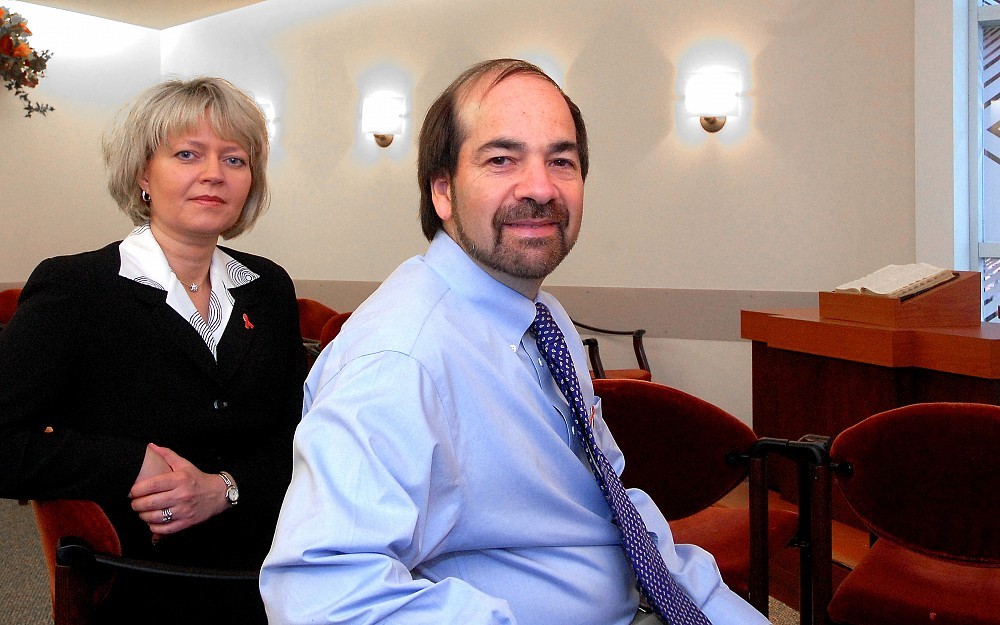
Magdalena Szaflarski, PhD, and Joel Tsevat, MD, both from the department of public health sciences
Tags
Related Stories
UC radiation oncologist speaks with Local 12 news about clinical trial for head and neck cancer treatment
August 10, 2026

Dr. Sara Medek, a UC radiation oncology professor, speaks with Local 12 news about a new clinical trial aimed at reducing radiation in certain areas while still treating cancer effectively but with fewer painful side effects.
Cancer Center director charts future based on collaboration, AI
August 10, 2026

David Gius, MD, PhD, was featured in a Cincinnati Business Courier article and The Cancer Letter’s “The Directors" podcast discussing his priorities and goals as he recently took the helm as director of the University of Cincinnati Cancer Center.
Bidirectional link between oral, kidney health calls for patient education, access
August 4, 2026

Despite growing awareness of the connection between oral health and chronic health conditions, patient awareness and access to dental care remain limited, according to University of Cincinnati experts who recently spoke with Healio | Nephrology News & Issues.