Patient's Own Platelets May Speed Up Skin Wound Healing

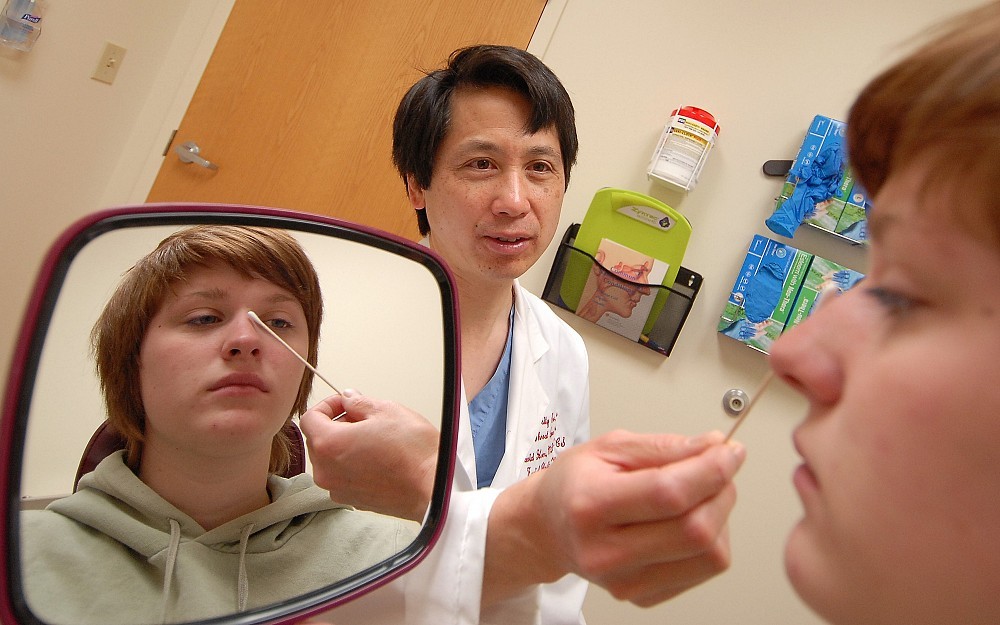
Study leader David Hom, MD, now a UC otolaryngologist (ear, nose and throat specialist) and a facial plastic surgeon completed the work while he was on faculty of the
Hom and his team looked at how quickly skin wounds treated with a gel of their own platelets (autologous platelet gel or APG) compared with a control antibiotic ointment. It is believed to be one of the earliest preliminary studies comparing the effectiveness of APG on skin wounds in healthy humans.
Four male and four female volunteers aged 2158 received five full-thickness skin punch wounds (4 mm diameter) on each thigh. APG was applied topically to the punch sites (one to two times) on one thigh and antibiotic ointment to the other, and the wounds were monitored for six months.
Over a 42-day period, the researchers found that skin wounds treated with APG had a statistically significant increased wound closure compared with the antibiotic-treated sites.
On day 14, the researchers report in the May/June 2007 issue of Archives of Facial Plastic Surgery, the APG-treated sites had a closure rate of 73.9 percent, while the control, antibiotic-treated sites closed at 49.6 percent. By day 17, 81.1 percent of the APG-treated sites closed, compared with 57.2 percent of the antibiotic sites.
Clinical analysis of the APG-treated sites also showed increased growth factor levels, which are essential in wound healing.
Overall, some of the APG-treated wound sites healed two to three days faster, says Hom. Thats a significant amount of time. This may be especially useful for patients who are prone to poor healing, such those with diabetes.
Accelerating normal wound healing could also improve the quality of life for patients post-op, says Hom. They may be able to leave the hospital sooner and get back to their regular routines more quickly.
Hom says APG treatment on skin wounds may also help patients who typically heal poorly.
If APG continues to prove it speeds up skin wound healing in future studies, it could be beneficial to give it to patients during surgery as a preventive measure to reduce post-op healing complications, Hom says.
Collaborators on the study include Bradley Linzie, MD, department of pathology,

David Hom, MD, specializes in facial plastic surgery and reconstruction.
Tags
Related Stories
UC radiation oncologist speaks with Local 12 news about clinical trial for head and neck cancer treatment
August 10, 2026

Dr. Sara Medek, a UC radiation oncology professor, speaks with Local 12 news about a new clinical trial aimed at reducing radiation in certain areas while still treating cancer effectively but with fewer painful side effects.
Cancer Center director charts future based on collaboration, AI
August 10, 2026

David Gius, MD, PhD, was featured in a Cincinnati Business Courier article and The Cancer Letter’s “The Directors" podcast discussing his priorities and goals as he recently took the helm as director of the University of Cincinnati Cancer Center.
Bidirectional link between oral, kidney health calls for patient education, access
August 4, 2026

Despite growing awareness of the connection between oral health and chronic health conditions, patient awareness and access to dental care remain limited, according to University of Cincinnati experts who recently spoke with Healio | Nephrology News & Issues.