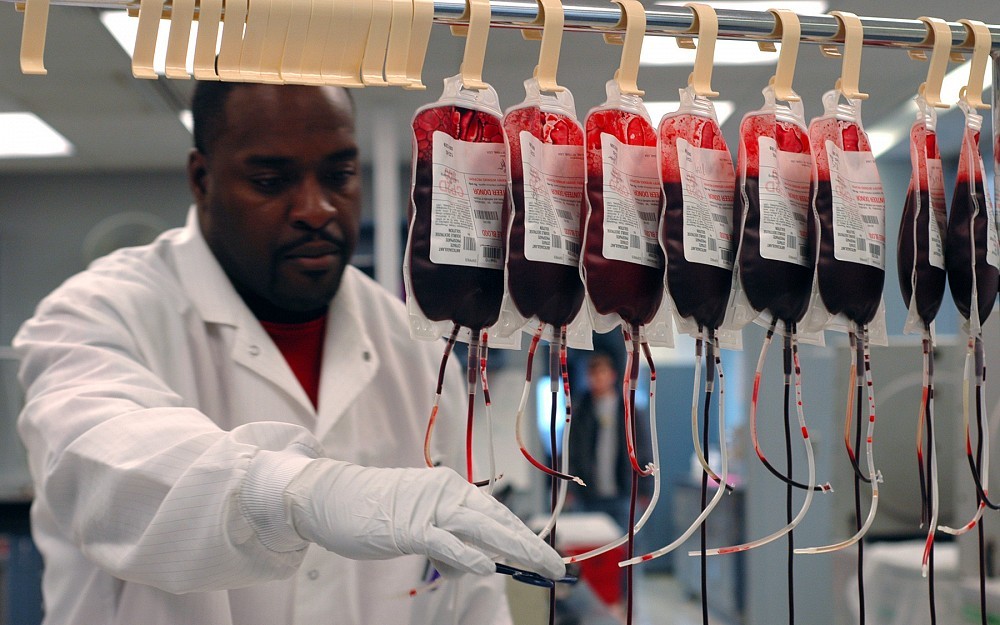
Hoxworth Issues Emergency Appeal for Blood and Platelet Donors

CINCINNATIHoxworth Blood Center has issued an emergency appeal for donors of all blood types, especially Type O, and platelets.
The communitys blood supply is down 615 units in type O+ and O- combined, which are the types in greatest demand at local hospitals. (one unit = one pint)
Reasons for the shortage include heavy usage at local hospitals last weekend and below average collections. Attempts to source blood and blood products from other blood centers have been denied due to critical shortages nationwide. Hospitals and trauma centers can't function without Type O blood, the most common blood type.
Approximately 44 percent of the population is either O+ or O- (38 percent O+ and 6 person O-).
Inventory levels at Hoxworth are at the lowest point they have ever been this summer. Blood or platelet donations can be made at the
Walk-ins are welcome. Appointments can be scheduled by calling (513) 451-0910 or visiting www.hoxworth.org.
Donating blood is safe and easy. Donors must be at least 17 years old, in good health and weigh at least 110 pounds. Donors should eat a good meal and drink plenty of water within four hours prior to donating, and bring identification with them to the donation center.

Hoxworth Blood Center's mobile donor unit.
Tags
Related Stories
UC radiation oncologist speaks with Local 12 news about clinical trial for head and neck cancer treatment
August 10, 2026

Dr. Sara Medek, a UC radiation oncology professor, speaks with Local 12 news about a new clinical trial aimed at reducing radiation in certain areas while still treating cancer effectively but with fewer painful side effects.
Cancer Center director charts future based on collaboration, AI
August 10, 2026

David Gius, MD, PhD, was featured in a Cincinnati Business Courier article and The Cancer Letter’s “The Directors" podcast discussing his priorities and goals as he recently took the helm as director of the University of Cincinnati Cancer Center.
Bidirectional link between oral, kidney health calls for patient education, access
August 4, 2026

Despite growing awareness of the connection between oral health and chronic health conditions, patient awareness and access to dental care remain limited, according to University of Cincinnati experts who recently spoke with Healio | Nephrology News & Issues.