UC Environmental Health Scientists Awarded $1.6 Million for Lead Research

CincinnatiThe U.S. Department of Housing and Urban Development (HUD) has awarded about $1.6 million in research grants to University of Cincinnati (UC) environmental health scientists investigating lead and mold exposure in homes.
Award recipients include bioaerosols expert Tiina Reponen, PhD, and environmental and occupational health and safety experts Scott Clark, PhD, and Bill Menrath.
UC was one of just four institutions in
Reponen, professor of environmental health, received more than $785,000 to conduct a comprehensive analysis of the health effects of total mold exposure in children starting from infancy to age 6. Her goal is to identify a method that can predict adverse health effects caused by residential mold exposure, most notably those related to asthma and allergic rhinitis.
This study could have a significant affect on public health because it will improve our overall understanding of allergic disease related to mold in homes, says Reponen. Our hope is that we can improve early prediction of allergic disease and establish cost-effective testing of mold in homes.
This research, which is being conducted as part of the Cincinnati Childhood Allergy and Air Pollution Study, will test two new mold evaluation concepts to determine the role of early- and late-childhood mold exposures in allergy development; how different microbes interact with environmental agents to cause allergy, and which methods are most sensitive in predicting the development of asthma and allergic rhinitis.
In conjunction with the National Center for Healthy Housing (NCHH), Clark, UC professor of environmental health, is involved in two HUD grants totaling about $500,000 for studies related to lead-based paint exposure. The first project will supplement a previous research database of information on more than 1,000 housing units. This new funding will allow Clark and his team to learn more about the impact of soil lead treatment on interior and exterior home dust lead levels.
The second project will assess dust and soil lead levels and paint condition in homes with different window treatments. As a subcontractor to the NCHH,
Menrath received a $328,000 grant to improve the accuracy of a commercially available wipe method to test for settled dust on the floors, window sills and window troughs of homes. He believes this test, which was originally used to clean workers hands, might help identify the presence of lead dust hazards following renovation, repair, painting and lead hazard reduction activities.
UCs environmental health department is ranked fourth among National Institutes of Health-funded environmental health research programs. In total, the department holds approximately 147 grants and research contracts that total more than $24 million in direct funding annually.

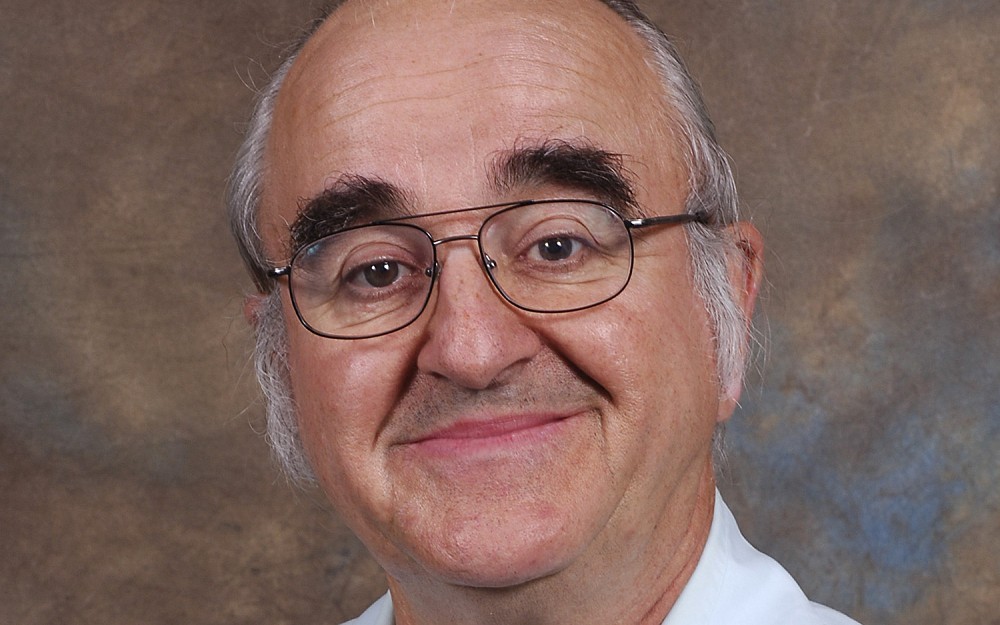
Tiina Reponen, PhD, is a professor of environmental health in UC's division of occupational health and hygeine.

Bill Menrath is a senior research associate in UC's environmental health department.
Tags
Related Stories
UC radiation oncologist speaks with Local 12 news about clinical trial for head and neck cancer treatment
August 10, 2026

Dr. Sara Medek, a UC radiation oncology professor, speaks with Local 12 news about a new clinical trial aimed at reducing radiation in certain areas while still treating cancer effectively but with fewer painful side effects.
Cancer Center director charts future based on collaboration, AI
August 10, 2026

David Gius, MD, PhD, was featured in a Cincinnati Business Courier article and The Cancer Letter’s “The Directors" podcast discussing his priorities and goals as he recently took the helm as director of the University of Cincinnati Cancer Center.
Bidirectional link between oral, kidney health calls for patient education, access
August 4, 2026

Despite growing awareness of the connection between oral health and chronic health conditions, patient awareness and access to dental care remain limited, according to University of Cincinnati experts who recently spoke with Healio | Nephrology News & Issues.