UC HEALTH LINE: Enlarged Veins Could Warn of Vascular Problem

Without treatment, problems with blood flow in the veins can cause chronic leg pain and sometimes death, according to University of Cincinnati (UC) vascular health experts. The good news is that problems usually can be detected and treated before they become debilitating or life-threatening.
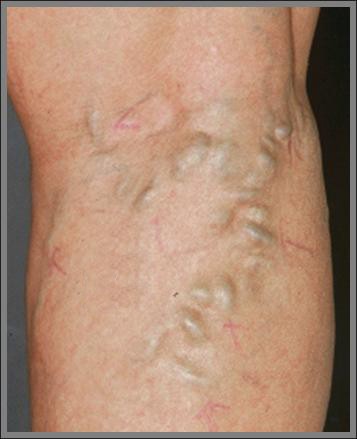
Enlarged blood vessels, known as varicose veins, appear as bulging or twisted blue veins that are visible through the skin. They most commonly occur in the legs.
The condition occurs when the valves in the veins fail to work properly and allow blood to build up. Because these veins are very small, they cannot withstand extended periods of increased blood volume. The excess blood causes damage to the vein valves and weakens the vessel wall, resulting in unappealing, often uncomfortable, raised spots on the legs.
Your leg veins have to work against gravity to pump oxygen-rich blood through the vein valves and back up to the heart, explains Amy Reed, MD, vascular surgeon and assistant professor surgery at UC. Problems occur when you stand or sit for extended periods, she adds, because the blood in your leg veins starts to accumulate and hinder proper blood circulation.
Severe cases can result in swelling, pain, non-healing ulcers (open wounds) and skin coloration changes in the legs.
Chronic blood flow problems in the veins can make it difficult to sit or stand for long periods and ultimately compromise a persons ability to work, she adds.
According to the American Venous Forum, more than 24 million Americans have varicose veins and an estimated six million have skin coloration or texture appearances associated with chronic poor blood flow in the veins.
The UC Heart and
The non-invasive screening exam includes a medical questionnaire, clinical examination of the legs and ultrasound scan of the leg veins. In addition to educational materials about the prevention and treatment of venous diseases, each participant will receive a venous health report detailing any problem areas and recommended next steps.
Reed and her vascular surgery team offer a minimally invasive vascular procedureknown as radiofrequency ablation (RFA)for the treatment of varicose veins at Red Bank Surgery Center and University Pointe Surgical Hospital in West Chester.
During the RFA procedure, a thin, flexible tube (catheter) with tiny electrodes at its tip is inserted directly into the varicose vein. The surgeon then administers heat to destroy vein tissue, causing the vessel to collapse and seal. The vein, no longer able to carry blood, breaks up and is absorbed back into the body. This minimally invasive procedure replaces vein stripping, requires no sutures and is typically performed with local anesthetic.
For more information on vascular health, visit www.netwellness.org, a collaborative health-information Web site staffed by
Tags
Related Stories
UC radiation oncologist speaks with Local 12 news about clinical trial for head and neck cancer treatment
August 10, 2026

Dr. Sara Medek, a UC radiation oncology professor, speaks with Local 12 news about a new clinical trial aimed at reducing radiation in certain areas while still treating cancer effectively but with fewer painful side effects.
Cancer Center director charts future based on collaboration, AI
August 10, 2026

David Gius, MD, PhD, was featured in a Cincinnati Business Courier article and The Cancer Letter’s “The Directors" podcast discussing his priorities and goals as he recently took the helm as director of the University of Cincinnati Cancer Center.
Bidirectional link between oral, kidney health calls for patient education, access
August 4, 2026

Despite growing awareness of the connection between oral health and chronic health conditions, patient awareness and access to dental care remain limited, according to University of Cincinnati experts who recently spoke with Healio | Nephrology News & Issues.