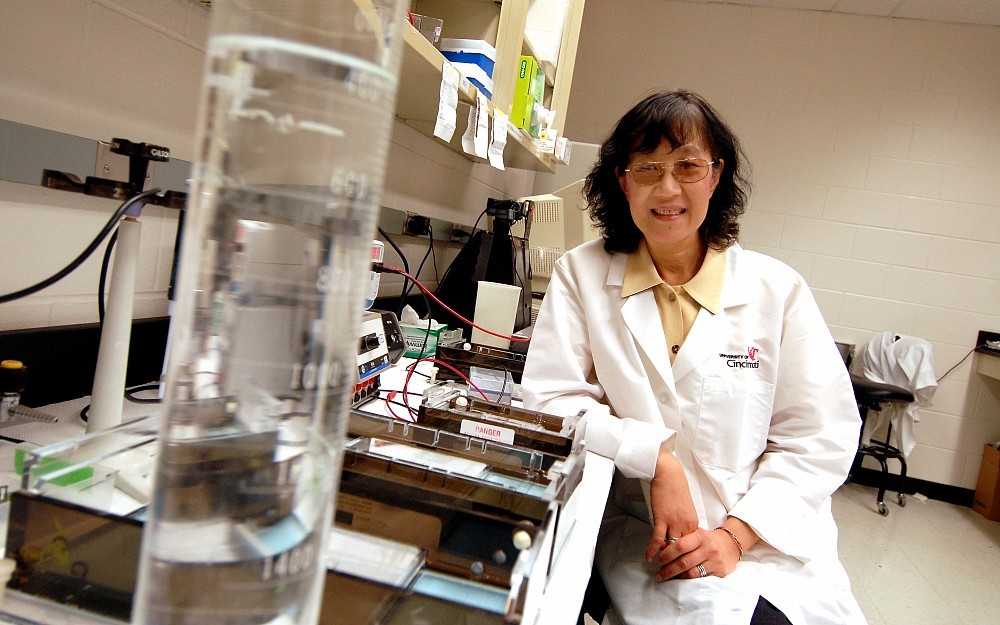
Grant Focuses on Link Between Chemical Exposure and Prostate Cancer

Ho and co-principal investigator Gail Prins, PhD, reported the first evidence of a direct link between chemical exposure while in the womb and prostate cancer development later in life in the June 2006 issue of the journal Cancer Research.
In that laboratory study, the duo found that animals exposed to low doses of the natural human estrogen estradiol or the environmental estrogen BPA during fetal development were more likely to develop an early form of prostate cancer in humans (prostatic intraepithelial neoplasia) than those who were not exposed.
Their findings suggested that exposure to environmental and natural estrogens during fetal development could affect the way prostate genes behave, leading to higher rates of prostate disease during aging.
BPA is a chemical regularly used in the manufacture of plastics that can leach out when heated. It is one of many man-made chemicals known as endocrine disruptors, which permanently alter the function of the endocrine system by mimicking the role of the bodys natural hormones. Hormones are secreted through endocrine glands and dispersed to serve different functions throughout the body.
Ho and Prins will use this new five-year grant from the National Institute of Environmental Health Sciences to assess whether genes that are epigenetically regulated by estrogen exposures during fetal development play a direct role in prostate cancer development later in life.
The researchers believe that this increased sensitization to prostate cancer is an epigenetic effect of exposure to estrogen earlier in life. Epigenetics is an emerging field targeting heritable changes in gene expression that do not cause mutations in DNA.
We know developmental exposure to natural or environmental estrogens may predispose an individual to prostate cancer with age, but the molecular underpinnings of this phenomenon are unclear, explains Ho.
To explore their hypothesis, Ho and Prins will use two laboratory models designed to reflect the characteristics of a developing male: one in an animal and the other using human prostate-like structures. Their goal is to identify genes that undergo changes when exposed to low-dose environmental and natural estrogens and establish a dose-response relationship between prostatic BPA and the developmental window of susceptibility.
We need to understand how these neonatal estrogens imprint or transform the prostate gland, says Ho. We know now that they are regulated, in part, by epigenetic mechanisms. Now we must determine if those epigenetic factors play a direct role in predisposing an individual to cancer later.
According to the U.S. Centers for Disease Control and Prevention, more than 95 percent of Americans age 6 or older have measurable BPA in their bloodand higher concentrations of the chemical have been found in amniotic fluid, placenta and fetal tissues.
Tags
Related Stories
UC radiation oncologist speaks with Local 12 news about clinical trial for head and neck cancer treatment
August 10, 2026

Dr. Sara Medek, a UC radiation oncology professor, speaks with Local 12 news about a new clinical trial aimed at reducing radiation in certain areas while still treating cancer effectively but with fewer painful side effects.
Cancer Center director charts future based on collaboration, AI
August 10, 2026

David Gius, MD, PhD, was featured in a Cincinnati Business Courier article and The Cancer Letter’s “The Directors" podcast discussing his priorities and goals as he recently took the helm as director of the University of Cincinnati Cancer Center.
Bidirectional link between oral, kidney health calls for patient education, access
August 4, 2026

Despite growing awareness of the connection between oral health and chronic health conditions, patient awareness and access to dental care remain limited, according to University of Cincinnati experts who recently spoke with Healio | Nephrology News & Issues.