UC HEALTH LINE: High Blood Pressure on the Rise in Teens

Chronic high blood pressure can affect the heart and can cause the pumping chamber (the left ventricle) to become enlarged. Developing high blood pressure at an early age can lead to cardiovascular problems later in life.
High blood pressure is no longer an adult-only disease, says Sarah Couch, PhD, associate professor of nutritional sciences in the UC College of Allied Health Sciences. Early prevention and intervention efforts are needed to address this increasing public and individual health problem.
Couch, who studies how diet affects health, was recently awarded funding from the National Heart, Lung, and Blood Institute to examine the long-term effects of a specific diet on blood pressure and vascular function in adolescents.
The funding$1.9 million over five yearswill support the study of 185 adolescents who will be seen in the Hypertension Clinic at Cincinnati Childrens
Couchs team will compare regular hospital-based nutritional care to the DASH diet, which stands for dietary approaches to stop hypertension and is particularly high in fruits and vegetables and low in fat and sodium.
Weve studied the DASH diet in the past and have demonstrated its short-term effects on lowering blood pressure in adolescents, says Couch. Were now trying to determine whether the diet works long-term to improve blood pressure.
Study participants will be randomly assigned to receive the DASH diet intervention or regular nutrition care. They will be asked to stick with either diet for a 24-week period. Blood pressure will be measured two weeks before beginning the study and again upon completion. Participants will also be asked to come in for a one-year follow-up appointment.
Couchs team will use in-person counseling sessions and follow-up telephone calls to assist with and determine adherence to each diet. Parental involvement in this study, Couch says, is crucial.
Parents are ultimately the ones responsible for buying the groceries, so their participation in their childs health is extremely important.
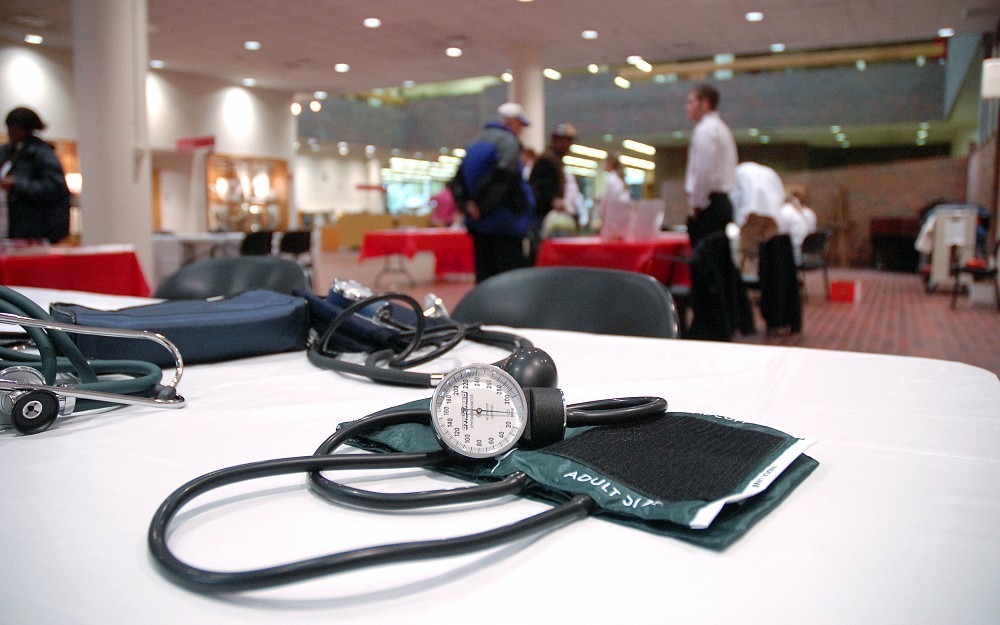
Blood pressure (hypertension) is calculated by measuring the systolic number, which represents the pressure inside arteries when the heart is beating, and the diastolic number, the pressure in arteries when the heart is at rest.
These numbers are organized by placing the systolic reading on top of the diastolic reading. In adults, a blood pressure measurement of 120/80 is considered normal. A reading between 121139/8089 is considered pre-hypertensive, and a reading higher than 140/90 indicates high blood pressure.
In adolescents, blood pressure is measured the same way, although age, gender and height are considered when deciding what level is appropriate.
Couch says one high reading in adolescents should result in a referral to a hypertension clinic, where the child can be monitored to determine if their blood pressure is in fact elevated.
To learn more about this study, call (513) 558-7504.
For more information on high blood pressure, visit www.netwellness.org, a collaborative health-information Web site staffed by

Sarah Couch, PhD
Related Stories
Family honors son by expanding access to music education
August 20, 2026
Ben Carlson-Berne Endowed Fund for CCM Prep scholarship has moved under the umbrella of CCM Prep at the University of Cincinnati College-Conservatory of Music, which will allow the scholarship to continue in perpetuity.
UC radiation oncologist speaks with Local 12 news about clinical trial for head and neck cancer treatment
August 10, 2026

Dr. Sara Medek, a UC radiation oncology professor, speaks with Local 12 news about a new clinical trial aimed at reducing radiation in certain areas while still treating cancer effectively but with fewer painful side effects.
Cancer Center director charts future based on collaboration, AI
August 10, 2026

David Gius, MD, PhD, was featured in a Cincinnati Business Courier article and The Cancer Letter’s “The Directors" podcast discussing his priorities and goals as he recently took the helm as director of the University of Cincinnati Cancer Center.