UC HEALTH LINE: Working Sick: Do or Don't?

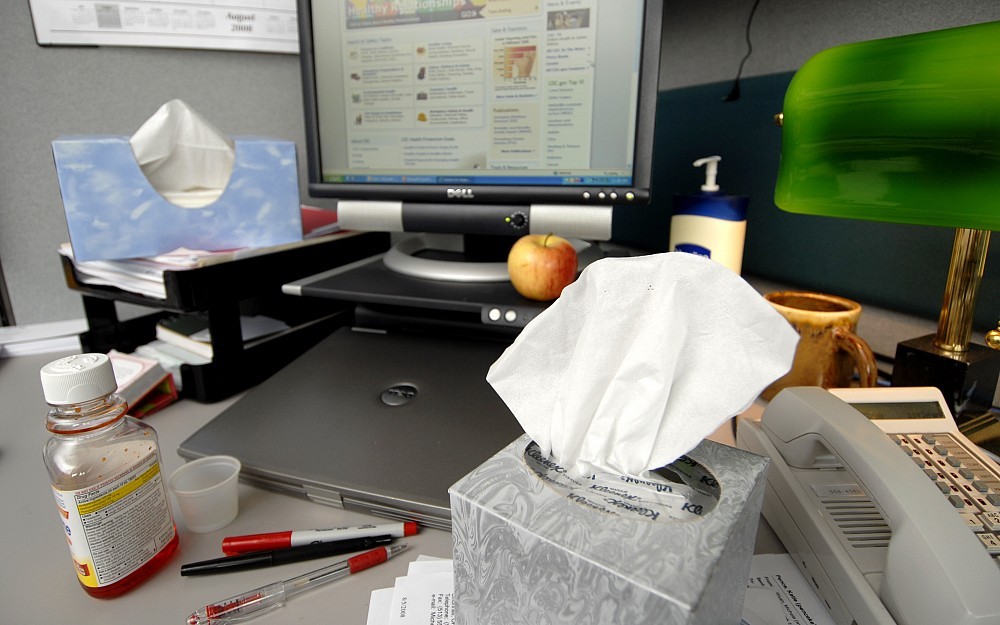
And you're afraid to breathe for fear of being infected with a nasty bug.
A recent National Public Radio (NPR) survey of people in
Nancy Elder, MD, associate professor in the department of family medicine at UC, says that although working sick may have been deemed a no-no in the past, its a reality, and people often dont have a choice.
People need to work, she says. If you dont work, you dont get paid.
Many employers dont offer paid sick days, and therefore, employees are forced to bring their illness to the office or pay the price.
In
Elder says if you have to work sick, the best thing you can do to avoid spreading germs is wash your hands.
There are germs everywhere, she says. We live in a germy world, and there is no way to ever get rid of all of them, but the most important prevention tactic is washing your hands or using an alcohol-based cleanser regularly.
In addition, she says sick employees should consider rescheduling meetings, avoid close contact with other individuals or even work from home, if permitted.
Everyone feels that their work is important, but you still have to pay attention to your own health and the health of others around you, she says.
Elder says people are most infectious around 24 hours before symptoms of the cold or flu even begin. Washing your hands regularly will prevent those germs from being spread.
She says that even though you may feel the effects of the illness three to five days later, you are less likely to be infectious.
You may feel crummy, but it is less likely you will spread the infection, she says.
However, she adds that a day or two at home in bed is the best option.
If you are ill and feel so bad that you cant concentrate and do your job to the best of your ability, then you should stay home, she says. Just be reasonable, and if you are lucky enough to have sick days, definitely take advantage of them so that you can get back on your feet in the fastest manner possible.

A recent survey found that half of people reported going to work sick due to financial issues but believed they should have stayed at home.
Tags
Related Stories
UC radiation oncologist speaks with Local 12 news about clinical trial for head and neck cancer treatment
August 10, 2026

Dr. Sara Medek, a UC radiation oncology professor, speaks with Local 12 news about a new clinical trial aimed at reducing radiation in certain areas while still treating cancer effectively but with fewer painful side effects.
Cancer Center director charts future based on collaboration, AI
August 10, 2026

David Gius, MD, PhD, was featured in a Cincinnati Business Courier article and The Cancer Letter’s “The Directors" podcast discussing his priorities and goals as he recently took the helm as director of the University of Cincinnati Cancer Center.
Bidirectional link between oral, kidney health calls for patient education, access
August 4, 2026

Despite growing awareness of the connection between oral health and chronic health conditions, patient awareness and access to dental care remain limited, according to University of Cincinnati experts who recently spoke with Healio | Nephrology News & Issues.