UC Team Studies Link Between Parkinson's and Depression

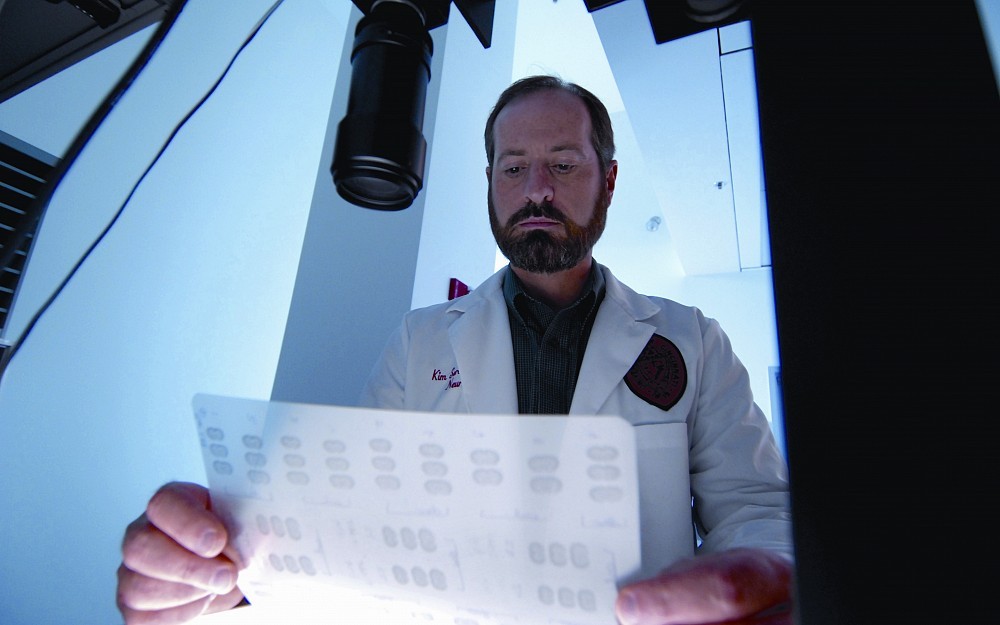
CINCINNATI--A patient who receives a diagnosis of Parkinsons disease might become depressed, and understandably so. But does the depression then exacerbate the progression of Parkinsons? Thats one of the questions a team of Parkinsons disease is a degenerative neurological disorder involving the death of dopamine-producing cells, or neurons, deep within the brain. Depression is highly prevalent in Parkinsons disease, previous research has found. Principal investigator Kim Seroogy, PhD, and co-investigator James Herman, PhD, are studying a stress-induced model of depression and Parkinsons in rodents. Seroogy is a professor of neurology and director of the Selma Schottenstein Harris Lab for Research in Parkinsons at the James J. and Parkinsons-induced rodents are stressed in a variety of ways, such as being placed briefly in a cold room or a crowded setting. In studying the results, the UC team hopes to gain insight into a problem Seroogy likens to the classic chicken-and-egg question: Which comes first, Parkinsons or depression? There are two schools of thought on co-morbidity of depression and Parkinsons, says Seroogy. One is that the onset of depression precedes and possibly leads to Parkinsons. The other is that Parkinsons disease predisposes for depression. Clinically, theres evidence for both of those lines of thinking. The NIH grant will enable the UC team to examine the question and, as Seroogy puts it, have it surrounded. Were going to have some groups that undergo depression first, then the Parkinsons, and then well do the reverse, he says. Then there will be some that are combineddepression, then parkinsonism, then further depression. In pilot models so far, Seroogy and Herman have found that in those animals that have stress combined with Parkinsons, their normal loss of dopamine cells in the brain is accelerated. In addition, the movements of their impaired limbs also worsened in the behaviors that were tested. So stress-induced depression exacerbates problems with movement, and also causes the relevant brain cells to die faster, Seroogy says. Learning more about the relationship between depression and Parkinsons will provide insight into possible treatments of Parkinsons, Seroogy says. You might ask, Why dont we just prescribe antidepressants? he adds. Well, we do. But there are no really definitive epidemiological studies or long-term assessments of the effects of antidepressants on the progression of Parkinsons. Seroogy and Herman will explore that, plus the possibility that antidepressants can protect the brain from Parkinsons disease. Not only could they reduce depression, but they might actually protect dopamine cells in the brain and thus slow the progression of Parkinsons, says Seroogy. Seroogy and Herman began their research into depression and Parkinsons with a $14,000 grant from the Sunflower Revolution Encore, a private fund-raiser hosted by Melody Sawyer Richardson in 2005. Two years later, they received a $50,000 grant from the Davis Phinney Foundation to continue their research, which was also supported in the interim by about $20,000 from the Parkinsons Disease Support Network of Were gratified that an investment in our research by the local community and the Davis Phinney Foundation has now led to a five-year NIH grant that will allow us to investigate how stress causes enhanced parkinsonian symptoms, and how to prevent stress from causing further damage to the parkinsonian brain, says Seroogy. The Sunflower Revolution is an annual gala, symposium and bike ride that raises funds for the Neuroscience Institute at UC and Phinney, 49, is one of only three Americans to win multiple stages of the Tour de France. His 300 national and international victories make him This years Sunflower Revolution V events are scheduled for Sept. 5 (gala at the Hyatt Regency in downtown
Tags
Related Stories
UC radiation oncologist speaks with Local 12 news about clinical trial for head and neck cancer treatment
August 10, 2026

Dr. Sara Medek, a UC radiation oncology professor, speaks with Local 12 news about a new clinical trial aimed at reducing radiation in certain areas while still treating cancer effectively but with fewer painful side effects.
Cancer Center director charts future based on collaboration, AI
August 10, 2026

David Gius, MD, PhD, was featured in a Cincinnati Business Courier article and The Cancer Letter’s “The Directors" podcast discussing his priorities and goals as he recently took the helm as director of the University of Cincinnati Cancer Center.
Bidirectional link between oral, kidney health calls for patient education, access
August 4, 2026

Despite growing awareness of the connection between oral health and chronic health conditions, patient awareness and access to dental care remain limited, according to University of Cincinnati experts who recently spoke with Healio | Nephrology News & Issues.