UC Researchers Link Blood-Thinning Drug to Increased Bleeding in Brain

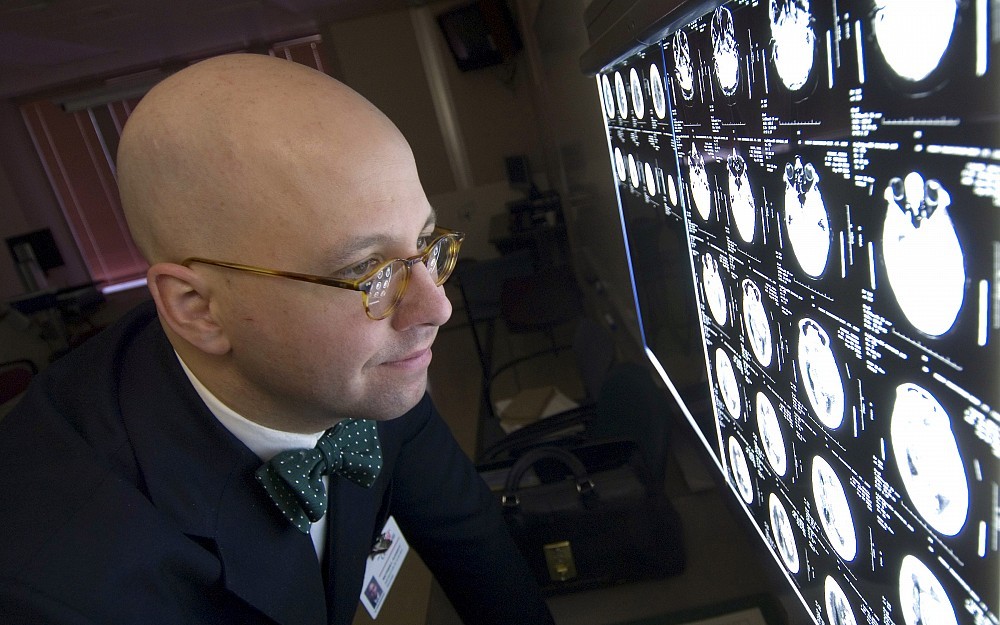
CINCINNATIPatients who take the commonly used blood-thinning drug warfarin face larger amounts of bleeding in the brain and increased risk of mortality if they suffer a hemorrhagic stroke, new research from the University of Cincinnati (UC) shows.
The study is published in the Sept. 30, 2008, print issue of Neurology, the medical journal of the American Academy of Neurology (AAN). The lead author is Matthew Flaherty, MD, an assistant professor in the department of neurology and an AAN member.
Warfarin is commonly prescribed to prevent blood clotting, particularly for patients with an abnormal heart rhythm called atrial fibrillation. Studies have shown that patients with atrial fibrillation are at increased risk for ischemic stroke, which is the most common type of stroke. It occurs when an artery to the brain is blocked by a blood clot.
Warfarin is generally more effective than aspirin for preventing blood clots in this setting. If warfarin makes the blood too thin, however, it can increase the risk of intracerebral hemorrhage, a type of stroke caused by bleeding in the brain.
The study involved 258 adult patients from the Greater Cincinnati/Northern Kentucky area who were hospitalized with intracerebral hemorrhage in 2005. Fifty-one of the patients were taking warfarin.
Researchers recorded the patients international normalized ratio (INR), which is a measure of the bloods ability to clot. The higher the INR, which is about 1.0 in healthy patients and targeted between 2.0 and 3.0 for patients taking warfarin for atrial fibrillation, the more likely bleeding is to occur.
The study found that patients who took warfarin and suffered an intracerebral hemorrhage while their INR was above 3.0 had about twice as much initial bleeding, or hematoma volume, as those not taking warfarin. Larger hematoma volume is one determinant of mortality after an intracerebral hemorrhage.
Flaherty says the research shows that while warfarin is an effective medication for most patients with atrial fibrillation, its important to determine the correct dosage through periodic blood sampling.
There is a slight increased risk of hemorrhagic stroke with warfarin, but that is more than offset by the reduction in risk of ischemic stroke for most patients with atrial fibrillation, Flaherty says.
People should talk to their doctors about the proper management of warfarin and learn the signs of stroke so they can get to an emergency room immediately if a stroke occurs.
To learn the five signs of stroke, visit the Give Me Five for Stroke Web site at www.giveme5forstroke.org. Give Me Five for Stroke is a joint campaign of the AAN, the American College of Emergency Physicians and the American Heart Association/American Stroke Association to encourage people to recognize stroke symptoms, call 9-1-1 and get to the emergency department.
The study was supported by the National Institute of Neurological Disorders and Stroke and a UC College of Medicine Student Summer Research Fellowship.
Related Stories
UC radiation oncologist speaks with Local 12 news about clinical trial for head and neck cancer treatment
August 10, 2026

Dr. Sara Medek, a UC radiation oncology professor, speaks with Local 12 news about a new clinical trial aimed at reducing radiation in certain areas while still treating cancer effectively but with fewer painful side effects.
Cancer Center director charts future based on collaboration, AI
August 10, 2026

David Gius, MD, PhD, was featured in a Cincinnati Business Courier article and The Cancer Letter’s “The Directors" podcast discussing his priorities and goals as he recently took the helm as director of the University of Cincinnati Cancer Center.
UC graduates cross finish line at commencement
August 7, 2026
The University of Cincinnati recognized 2,125 graduates in two ceremonies at summer commencement Friday on campus at Fifth Third Arena.