$1.3 Million Supports Engineered Skin Research at UC, Shriners

Steven Boyce, PhD, will use the funding to initiate pre-clinical studies focused on regulating pigmentation (color) and growing blood vessels in engineered skin grafts. He says both are important challenges that researchers have yet to overcome to improve the functionality of skin grafts.
Skin provides a protective covering to the body that prevents infection and injury to internal organs. Individuals who suffer severe burns often have open wounds that need permanent closure to prevent life-threatening infections.
To engineer skin, a small piece of skin is harvested from an unburned area of the body and taken to a laboratory where the skin cells are placed in a special nutrient solution that stimulates cell division. A fabric made from collagen is used as a framework to help the skin cells organize into a complete sheet that can then be transplanted onto the human body.
Adding blood vessels to the engineered skin grafts, says Boyce, will allow researchers to speed the healing process and minimize scarring.
"The ability to develop a vascular network in engineered tissue is a critical step for the bodys acceptance of the new skin. Currently, the engineered skin grafts do not have a vascular system like the rest of the body, so vascular development occurs more slowly, explains Boyce, a UC professor of surgery and researcher with Shriners Hospitals for ChildrenCincinnati. "By adding blood vessels, the skin graft can regain blood flow faster. This would allow us to create thicker skin substitutes and minimize scarring because we would be replacing more tissue which was injured by the burn.
As part of the AFIRM-sponsored studies, Boyce will also work on refining skin graft coloration and conduct additional safety testing to ensure that adding melanocytes to engineered skin does not cause any adverse effects, such as melanoma. He will conduct the laboratory studies at Shriners.
"We can generate brown or black skin by adding melanocytes to the skin graft, but we cannot regulate it as closely as wed like, he says. "The goal is to tailor the process of adding melanocytes so we can more closely match the new skin to the persons original skin color.
Boyce also collaborates in other AFIRM projects investigating limb and digit salvage as well as craniofacial repair. Dorothy Supp, PhD, an associate investigator at
AFIRM is an initiative to improve care for wounded soldiers and is funded collectively by the U.S. Army Medical Research and Materiel Command, Office of Naval Research, National Institutes of Health, Air Force Office of the Surgeon General and Department of Veterans Affairs. It consists of two research consortia managed out of
Boyce is part of UCs Institute for Military Medicine, a partnership between surgerys divisions of trauma/critical care and research as well as several other UC departments focused on military medicine.

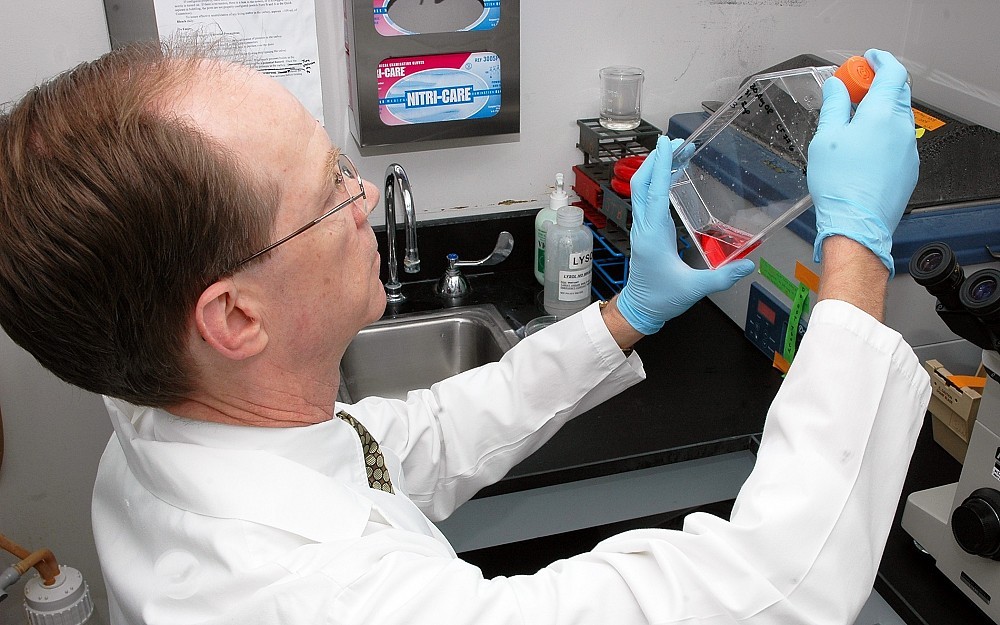
Steven Boyce, PhD, with engineered skin samples.

Steven Boyce, PhD, is an expert in engineered skin.
Tags
Related Stories
UC radiation oncologist speaks with Local 12 news about clinical trial for head and neck cancer treatment
August 10, 2026

Dr. Sara Medek, a UC radiation oncology professor, speaks with Local 12 news about a new clinical trial aimed at reducing radiation in certain areas while still treating cancer effectively but with fewer painful side effects.
Cancer Center director charts future based on collaboration, AI
August 10, 2026

David Gius, MD, PhD, was featured in a Cincinnati Business Courier article and The Cancer Letter’s “The Directors" podcast discussing his priorities and goals as he recently took the helm as director of the University of Cincinnati Cancer Center.
Bidirectional link between oral, kidney health calls for patient education, access
August 4, 2026

Despite growing awareness of the connection between oral health and chronic health conditions, patient awareness and access to dental care remain limited, according to University of Cincinnati experts who recently spoke with Healio | Nephrology News & Issues.