Body s Defenses May Worsen Chronic Lung Diseases in Smokers

In a preclinical research study, UC environmental health scientists have identified a link between cigarette smoke and activation of a specific cellular receptor (NKG2D) critical to immune system activation. They say the finding is key to understanding COPD disease progression and developing future interventional drug therapies.
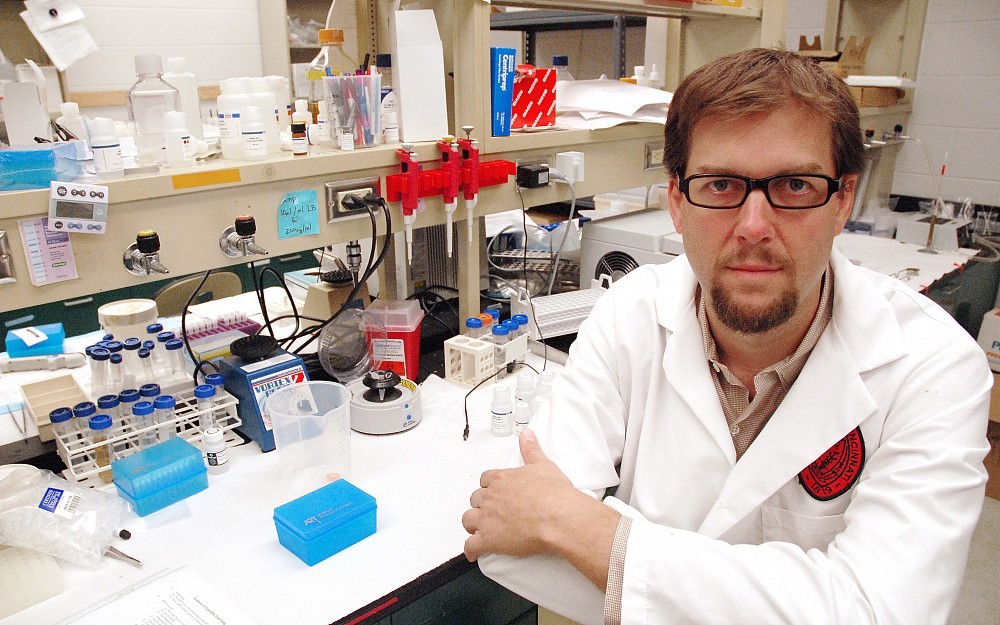
People have historically believed that if you smoke, you suppress the immune system. Weve shown that you actually activate certain parts of the immune system and it could potentially work against you, explains Michael Borchers, PhD, lead investigator of the study and UC assistant professor of environmental health.
Borchers and his team report their findings in the March 2009 issue of theJournal of Clinical Investigation. The study appears online ahead of print Feb. 9, 2009. It is the first study to report data defining a link between the immune system and COPD disease progression and severity.
COPD is a progressive pulmonary disease believed to be caused by long-term cigarette smoking. The irreversible and incurable condition is characterized by emphysema and severe inflammation of the lung tissue.
Previous research had suggested that immune cells (lymphocytes) contributed to chronic inflammation, a key indicator of COPD; however, it was unclear whether this caused extensive cellular damage.
For this study, Borchers team developed a transgenic mouse model to further examine how the immune system responds to chronic inflammation indicative of COPD. His team hypothesized that when tissue was damaged, the cells would send signals to the immune system indicating they are transformedsimilar to cancer or virally infected cellsand must be destroyed.
Scientists examined molecular signaling pathways in lung tissue exposed to cigarette smoke and found a strong correlation between cellular stress signals, activation of the immune system and development of COPD-like disease.
This method was repeated and cross-referenced in tissue samples from a human cohort that included non-smokers, smokers with COPD and smokers who did not develop COPD. In patients who had never smoked, there was a complete absence of the NKG2D signal. Current and former smokers who developed the disease expressed signals that correlated with severe COPD disease.
By combining both sets of data, they determined that cigarette smoke set off a molecular chain of events resulting in activation of a specific receptorNKG2Din lung cells, causing the immune system to attack stressed (damaged) lung tissue.
Our study is evidence that when the lungs are exposed to chronic damage from cigarette smoke, at some point that damage exceeds the bodys natural ability to repair tissue and can start to contribute to COPD instead of protecting against it, Borchers says.
Borchers intends to expand this research using other genetically altered mouse models to explore the relationship between the NKG2D receptor and other immune pathways involved in of alterations in the immune system of COPD patients.
Funding for the multi-institutional study comes from the National Institute of Environmental Health Sciences. UC thoracic surgeons Michael Reed, MD, and Sandra Starnes, MD, and investigators at the Institut Municipal dInvestigació Mèdica in

According to the Centers for Disease Control and Prevention, smoking is the single most common cause of preventable death and disease in the United States.
Tags
Related Stories
UC radiation oncologist speaks with Local 12 news about clinical trial for head and neck cancer treatment
August 10, 2026

Dr. Sara Medek, a UC radiation oncology professor, speaks with Local 12 news about a new clinical trial aimed at reducing radiation in certain areas while still treating cancer effectively but with fewer painful side effects.
Cancer Center director charts future based on collaboration, AI
August 10, 2026

David Gius, MD, PhD, was featured in a Cincinnati Business Courier article and The Cancer Letter’s “The Directors" podcast discussing his priorities and goals as he recently took the helm as director of the University of Cincinnati Cancer Center.
Bidirectional link between oral, kidney health calls for patient education, access
August 4, 2026

Despite growing awareness of the connection between oral health and chronic health conditions, patient awareness and access to dental care remain limited, according to University of Cincinnati experts who recently spoke with Healio | Nephrology News & Issues.