
Research Suggests Pollution-Related Asthma May Start in the Womb

In a study of umbilical cord blood from New York City children, researchers have discovered evidence of a possible new biomarkeran epigenetic alteration in the gene ACSL3associated with prenatal exposure to polycyclic aromatic hydrocarbons (PAHs). These chemical compounds are created as byproducts of incomplete combustion from carbon-containing fuels, resulting in high levels in heavy-traffic areas. Exposure to PAHs has been linked to diseases such as cancer and childhood asthma.
Researchers say this finding provides a potential clue for predicting environmentally related asthma in childrenparticularly those born to mothers who live in high-traffic areas like Northern Manhattan and
This is the first study to examine the effects of prenatal ambient air pollutant exposure on epigenetic changes linked to asthma. Epigenetic changes may disrupt the normal functioning of genes by affecting their expression but do not cause structural changes or mutations in the genes.
For this study, UC researchers teamed with Columbias Mailman School of Public Health to study the relationship between prenatal PAH exposure and childhood asthma, hypothesizing that transplacental exposure to PAHs could reprogram fetal genes and lead to airway inflammation or asthma during childhood. Epigenetic reprogramming is the result of an organisms genes interacting with the environment.
Our data support the concept that environmental exposures can interact with genes during key developmental periods to trigger disease onset later in life, and that tissues are being reprogrammed to become abnormal later, says Shuk-mei Ho, PhD, senior author of the paper , chair of UCs Department of Environmental Health and the director of the Center for Environmental Genetics.
This research is aimed at detecting early signs of asthma risk so that we can better prevent this chronic disease that affects as many as 25 percent of children in Northern Manhattan and elsewhere, adds
The researchers found a significant association between changes in ACSL3 methylationa gene expressed in the lungand maternal PAH exposure. ACSL3 also was associated with a parental report of asthma symptoms in the children prior to age 5.
With confirmation in further studies, researchers say changes in the ACSL3 gene could serve as a novel biomarker for early diagnosis of pollution-related asthma.
This study provides a blueprint for the discovery of epigenetic biomarkers relevant to other investigations of exposure-disease relationships in birth cohorts, says Wan-yee Tang, PhD, a UC research scientist and a co-first author on the paper.
Understanding early predictors of asthma is an important area of investigation, adds Rachel Miller, MD, director of the CCCEH asthma project and study co-author, because they represent potential clinical targets for intervention.
The CCCEH birth cohort was launched in 1998 to study the effects of prenatal exposure to common urban pollutants on the health of mothers and their children. Children in the cohort were born to non-smoking Dominican and African-American women in Northern Manhattan or the
Funding for the multi-institutional study comes from the National Institute of Environmental Health Sciences (NIEHS), the U.S. Environmental Protection Agency (EPA) and private foundations. UCs Linda Levin, PhD and
This research is part of the Columbia Center for Childrens Environmental Health, one of 11 National Centers funded by the NIEHS and EPA and one of three Disease Investigation through Specialized Clinically-Oriented Ventures In Environmental Research (DISCOVER) Centers funded by the NIEHS. The CCCEH is a leading research organization dedicated to understanding and preventing environmentally related disease in children.
This research is also part of UCs Center for Environmental Genetics, one of 16 environmental centers funded by the NIEHS. It supports state-of-the-art core facilities and technologies needed to conduct innovative research that focuses on how environmental agents interact with genetic and epigenetic factors to influence disease risk and outcome.
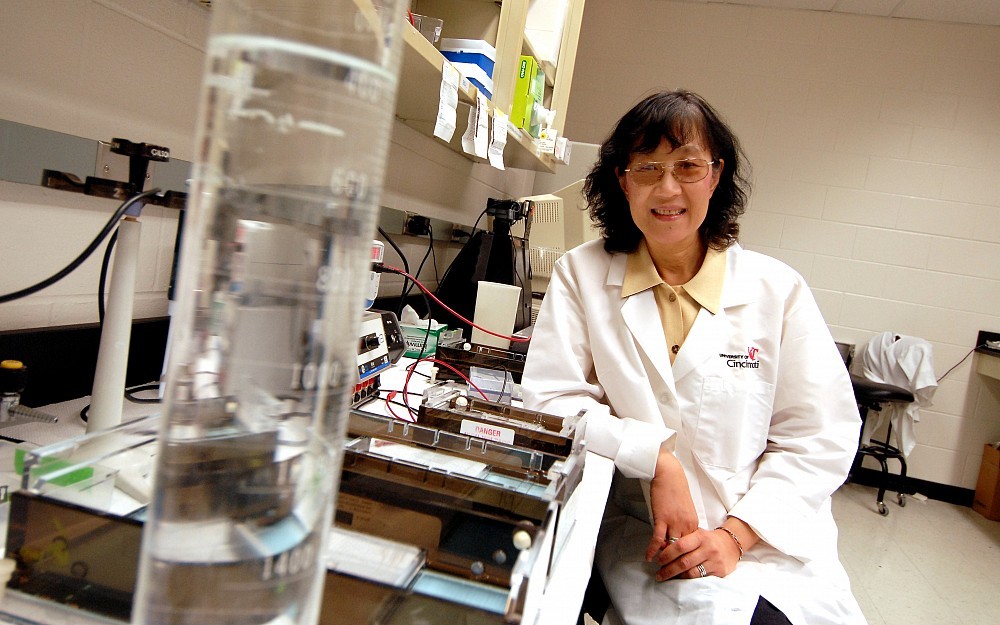
Shuk-Mei Ho, PhD, is chair of UC's environmental health department.

Frederica Perera, DrPH, professor of environmental health sciences and director of the Columbia Center for Children s Environmental Health (CCCEH) at the Mailman School of Public Health
Tags
Related Stories
UC expert weighs in on current MASH treatment approaches
June 5, 2026

As MedCentral recently reported, pending broader pharmacologic approvals for metabolic dysfunction-associated steatohepatitis (MASH), lifestyle modifications remain the go-to intervention.
At least two weather patterns increase headaches, UC study suggests
June 4, 2026
University of Cincinnati physicians and collaborators identified two specific weather patterns that increase headache and migraine risk and found the preventive medication fremanezumab (Ajovy) can reduce weather‑associated headaches. The findings will be presented at the American Headache Society Annual Scientific Meeting in Orlando.
UC researcher secures $3.3M grant to study microplastics’ impact on heart
June 2, 2026
The National Institute of Environmental Health Sciences awarded a $3.3M grant to University of Cincinnati researcher Hong‑Sheng Wang, PhD, to study how microplastics and nanoplastics affect cardiovascular health.