High-Fat Diets Inflame Fat Tissue Around Blood Vessels, Contribute to Heart Disease

These findings will be published in the Feb. 20 edition of the American Heart Association journal Circulation Research.
Neal Weintraub, MD, and colleagues examined adipose tissueor fatsurrounding the coronary arteries of humans. The researchers found these fat cells to be highly inflamed, suggesting that they could trigger inflammation of the blood vessels, an important component of atherosclerosis.
They also found that the inflammation of fat tissues around the arteries of mice is increased by feeding the animals a high-fat diet for just two weeks.
This is independent of weight gain or blood lipidscholesterol levels, says Weintraub, senior author of the study and chair of the cardiovascular diseases division at UC.
Weintraub says that high fat diets contribute to atherosclerosisor the hardening of arteriesin a number of ways.
Elevated blood lipidsor cholesterol levelscan worsen with the intake of high fat diets, and this is known to contribute to atherosclerosis, he says. However, many patients who consume high fat diets do not exhibit abnormal lipid profiles but still develop atherosclerosis nonetheless.
These new findings suggest a direct link between poor dietary habits and inflammation of blood vessels, mediated by the fat cells surrounding the blood vessel wall.
Weintraub adds that the diet fed to the mouse models was not unlike the diets consumed by many Americans.
It produced striking abnormalities of the fat tissue surrounding blood vessels in a very short period of time, he says. This is a warning to those who say there isnt a problem because their weight and cholesterol levels are under control. Lipid profiles dont hold all the answers.
Bad dietary habits can lead to a number of problems, and this suggests that a high fat diet is detrimental in ways we didnt previously understand.
Weintraub says there is no real way to measure the effects of poor dietary habits on fat tissue surrounding blood vessels.
We dont know why these cells are so responsive to high-fat diets, he says. We must now conduct further experiments to answer these types of questions.
Researchers in the division of transplant surgery at UC and in the emergency medicine department at UC and the University of Iowa Carver College of Medicine were also involved in this study.
This study was funded by the National Institutes of Health.

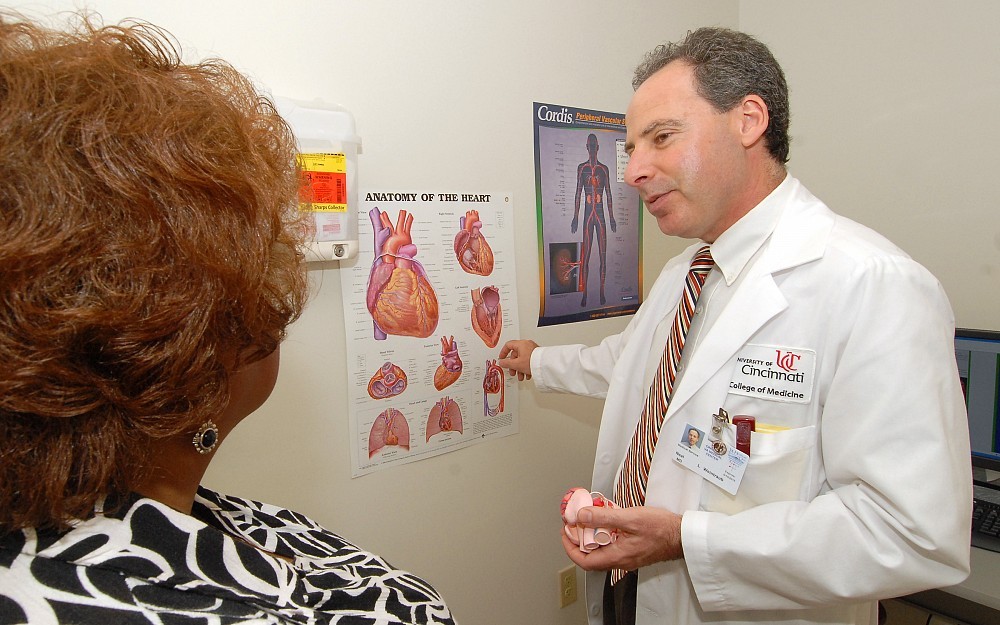
Neal Weintraub, MD, chair of the cardiovascular diseases division

Neal Weintraub, MD, director of the cardiovascular diseases division
Related Stories
UC radiation oncologist speaks with Local 12 news about clinical trial for head and neck cancer treatment
August 10, 2026

Dr. Sara Medek, a UC radiation oncology professor, speaks with Local 12 news about a new clinical trial aimed at reducing radiation in certain areas while still treating cancer effectively but with fewer painful side effects.
Cancer Center director charts future based on collaboration, AI
August 10, 2026

David Gius, MD, PhD, was featured in a Cincinnati Business Courier article and The Cancer Letter’s “The Directors" podcast discussing his priorities and goals as he recently took the helm as director of the University of Cincinnati Cancer Center.
UC graduates cross finish line at commencement
August 7, 2026
The University of Cincinnati recognized 2,125 graduates in two ceremonies at summer commencement Friday on campus at Fifth Third Arena.