$2 Million Gift Supports Technology, Facility Improvements for Adult Cancer Program

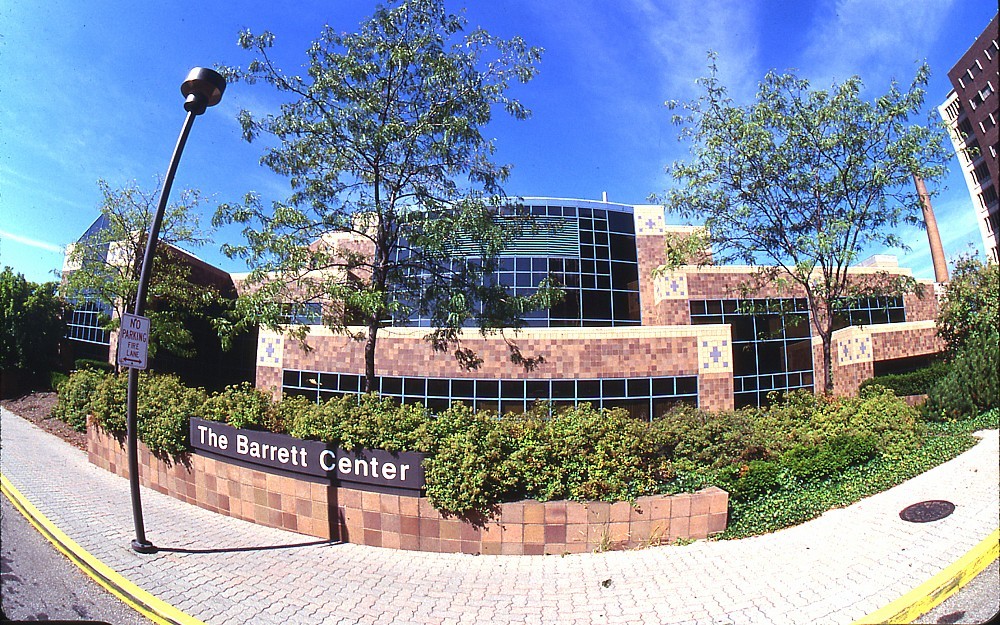
The gift, which comes from Western & Southern Financial, will partially fund phase-2 renovations to the Barrett Cancer Institute. The company made an initial contribution of $2 million in 2008.
The multiyear renovation is aimed at improvements to accommodate expanding multidisciplinary care teams and improved patient services, access and satisfaction.
Its very gratifying to know that in these difficult economic times we can still count on philanthropic support from community partners to ensure the cancer program not only continues but is also able to expand and improve to better serve our community, says George Atweh, MD, director of the Barrett Cancer Institute and Koch chair and professor of UCs division of hematology-oncology.
Atweh assumed leadership of adult cancer program at the Barrett Cancer Institute in March 2009 from
This renovation is symbolic of our commitment to deliver the best possible care to patients in the Tristate, Atweh adds. In addition to physical and technological upgrades, we are also working to build a more robust team of clinicians and scientists who will work every day to deliver cutting-edge care and advance the field through new and innovative research.
Tom Kyllo, administrative director for the Barrett Cancer Institute, says capital investments include leading edge diagnostic and treatment technology and updated spaces designed for patient comfort and use by multidisciplinary teams of physicians, nurses and support staff.
The radiation oncology service at the Barrett Cancer Institute recently installed a new Trilogy Radiotherapy System by Varian Medical Systems. The system expands the institutes technological capabilities beyond intensity modulated radiotherapy (IMRT) to include electronic 2D and 3D image-guided delivery of radiation treatment. Trilogy includes the latest radiosurgical capabilities, which will be used by Barrett Cancer Institute clinicians to treat brain tumors and other neurosurgical problems.
These technologic advances allow for radiation to be more precisely delivered than has been previously available, which can lead to fewer side effects from radiation therapy and higher cure rates for our patients, explains William Barrett, MD, chair of UCs department of radiation oncology and a physician with the Barrett Cancer Institute.
Other key stage-two renovations include:
- A new dual-purpose linear accelerator to treat superficial cancers, such as shallow skin cancers.
- Installation of a next generation intensity modulated radiation therapy treatment planning system (Philips Medical Systems Pinnacle3) that incorporates pre-treatment visualization tools for identifying soft tissues and vascular connections surrounding tumors
- Upgrade to an integrated, advanced technology radiation oncology information system (MOSAIQ) that serves as the central source for radiation oncology patient care management.
For information on how to support cancer research, patient care and education, contact the UC Foundation at (513) 558-6769.
For patient appointments at the Barrett Cancer Institute, call (513) 584-3200. For UC clinical trial information, call (513) 584-7698.
The Barrett Cancer Institute is part of the Cincinnati Cancer Consortium, a joint cancer program involving the UC College of Medicine, Cincinnati Childrens

George Atweh, MD, is director of UC's hematology/oncology division and the adult patient care programt at the UC Barrett Cancer Institute at University Hospital.

William Barrett, MD, is chair of UC's radiation oncology department.
Related Stories
UC radiation oncologist speaks with Local 12 news about clinical trial for head and neck cancer treatment
August 10, 2026

Dr. Sara Medek, a UC radiation oncology professor, speaks with Local 12 news about a new clinical trial aimed at reducing radiation in certain areas while still treating cancer effectively but with fewer painful side effects.
Cancer Center director charts future based on collaboration, AI
August 10, 2026

David Gius, MD, PhD, was featured in a Cincinnati Business Courier article and The Cancer Letter’s “The Directors" podcast discussing his priorities and goals as he recently took the helm as director of the University of Cincinnati Cancer Center.
UC graduates cross finish line at commencement
August 7, 2026
The University of Cincinnati recognized 2,125 graduates in two ceremonies at summer commencement Friday on campus at Fifth Third Arena.