Research Reveals Molecular Pathway Behind Invasive Prostate Cancers

CincinnatiUniversity of Cincinnati (UC) cancer and cell biologists have identified a new molecular pathway key to the development of invasive prostate cancers.
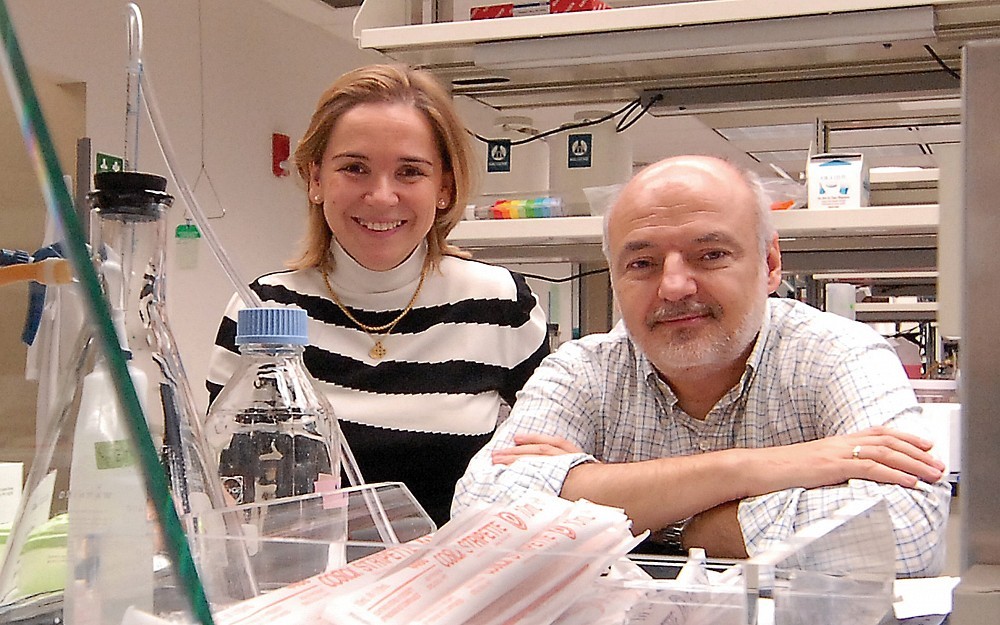
In a preclinical study led by Maria Diaz-Meco, PhD, the UC team found that simultaneous inactivation of two particular genesknown as PTEN and Par-4caused the rapid development of invasive prostate cancer tumors in mice.
We knew that independent mutations in either of these genes could result in benign tumors, but when those changes occur simultaneously it appears to have a synergistic effect that causes prostate cancer, explains Diaz-Meco, an associate professor of cancer and cell biology at UC and corresponding author of the paper. This switch affects the cells ability to both grow and survive, leading to more aggressive and invasive tumors.
This is an important discovery becauseuntil nowthose signaling pathways were not clearly defined. Without a clear molecular target, its impossible to develop effective drugs to treat this disease without causing harm to the patient, she adds.
Diaz-Meco and her team report their findings online ahead of print in Proceedings of National Academy of Sciences (PNAS) the week of May 18.
PTEN is a well-defined gene shown to be suppressed in prostate cancer tumors, as well as in other types of cancer. Its mutation has been shown to result in the formation of benign tumors. Par-4 gene is also mutated in prostate cancer, but this study is the first to report its relationship with PTEN mutations and aggressive prostate cancer tumor development.
The UC study was done in a laboratory mouse model over the course of two years. Data from the mouse model was correlated and compared to human prostate cancer tissue samples to determine if their findings were applicable in humans as well.
Theoretically, this new knowledge could be used to better categorize a tumors aggressiveness by measuring the levels of PTEN and Par-4 expressed in a tissue biopsy, adds Diaz-Meco. That would help clinicians make tough decisions about how aggressively to treat a patients prostate cancer and minimize unnecessary treatment.
Cancer and cell biologists are working on identifying the molecular targets involved in cancer progression to better understand the mechanisms of action that lead to prostate cancer so that pharmaceutical companies and clinicians can develop better methods of diagnosing and treating the disease.
Funding for this study comes from the National Cancer Institute and National Institutes of Health. Coauthors of the study include UCs Shadi Abu-Baker, Jayashree Joshi, Anita Galvez, Elias Castilla, and Jorge Moscat, PhD. Spanish National Cancer Research Centers scientists Pablo Fernandez-Marcos, Marta Canamero, Manuel Collado, Gema Moreno-Bueno and Manuel Serrano and Carmen Saez of the Biotechnology Centre of Oslo in Norway also contributed to the study.
Tags
Related Stories
UC radiation oncologist speaks with Local 12 news about clinical trial for head and neck cancer treatment
August 10, 2026

Dr. Sara Medek, a UC radiation oncology professor, speaks with Local 12 news about a new clinical trial aimed at reducing radiation in certain areas while still treating cancer effectively but with fewer painful side effects.
Cancer Center director charts future based on collaboration, AI
August 10, 2026

David Gius, MD, PhD, was featured in a Cincinnati Business Courier article and The Cancer Letter’s “The Directors" podcast discussing his priorities and goals as he recently took the helm as director of the University of Cincinnati Cancer Center.
Bidirectional link between oral, kidney health calls for patient education, access
August 4, 2026

Despite growing awareness of the connection between oral health and chronic health conditions, patient awareness and access to dental care remain limited, according to University of Cincinnati experts who recently spoke with Healio | Nephrology News & Issues.