Researcher Receives NIH Grant to Study Dialysis Access Development

CINCINNATIUniversity of Cincinnati researchers have been awarded a grant from the National Institutes of Health (NIH) to study biological mechanisms that influence the development of arteriovenous fistulas in hemodialysis patients.
Arteriovenous fistulas are surgically created in hemodialysis patients and work to connect the artery and veinessential for the removal and purification of blood during dialysis.
However, stenosis, or narrowing of the veins, often causes restricted access to the arteriovenous fistulasthe point in the body where blood is removed and then replaced during the dialysis process.
Timmy Lee, MD, an assistant professor of medicine in the division of nephrology and hypertension, will examine blood and tissue markers that may predict why arteriovenous fistulas dont mature, or develop properly, in patients with end-stage renal disease.
This work will be funded by a five-year, renewable granttotaling $847,509from the National Institute of Diabetes and Digestive and Kidney Diseases.
Poor arteriovenous fistula development remains a significant problem among hemodialysis patients, Lee says. This study will improve the understanding of why some arteriovenous fistulas do not mature adequately for successful use in dialysis and which individuals are at highest risk for maturation failures.
Researchers will collect blood and tissue samples prior to and during surgery to test for a variety of biological markers, including markers of inflammation and oxidative stressan imbalance between the bodys production of oxygen and its ability to detoxify or easily repair damage. They will use this data to evaluate if these mediators play an integral role in arteriovenous fistula maturation and failure.
Lee, whose research will be overseen by Prabir Roy-Chaudhury, MD, PhD, professor of medicine in the division of nephrology and hypertension, with collaborations from Rino Munda, MD, professor of transplant surgery, and Tianying Wu, PhD, assistant professor in the department of environmental health, says this research will lead to studies with targeted interventions, using both systemic and local delivery systems to improve arteriovenous fistula maturation.
Primary arteriovenous fistula failurenot suitable for dialysis at four to five monthsremains the most significant obstacle in increasing overall prevalence of fistula use in the U.S., Lee says. There are currently no clinical or biological markers to predict which patients will experience primary AVF failure.
We hope this research will provide a better understanding of mechanisms that lead to poor arteriovenous fistula development and novel therapies to treat this clinical problem.
The granta NIH K23provides young investigators financial support and protected time to pursue clinical research.
Both Lee and Roy-Chaudhury are members of the Cincinnati Dialysis Access Program (CAP), which is a translational research program based at UC that focuses on dialysis vascular access dysfunction.

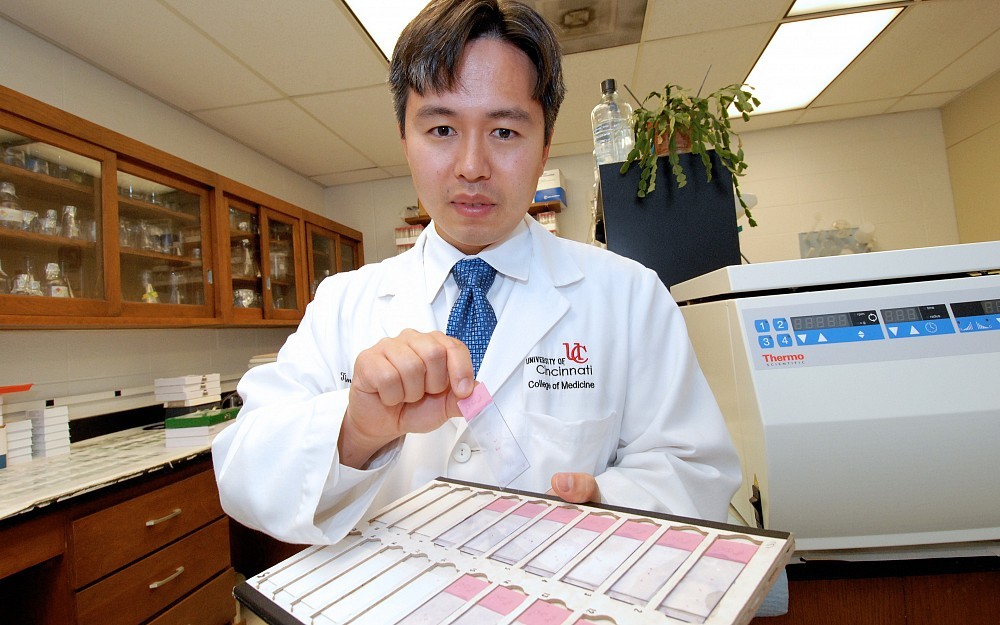
Timmy Lee, MD, assistant professor in the nephrology and hypertension division
Tags
Related Stories
UC radiation oncologist speaks with Local 12 news about clinical trial for head and neck cancer treatment
August 10, 2026

Dr. Sara Medek, a UC radiation oncology professor, speaks with Local 12 news about a new clinical trial aimed at reducing radiation in certain areas while still treating cancer effectively but with fewer painful side effects.
Cancer Center director charts future based on collaboration, AI
August 10, 2026

David Gius, MD, PhD, was featured in a Cincinnati Business Courier article and The Cancer Letter’s “The Directors" podcast discussing his priorities and goals as he recently took the helm as director of the University of Cincinnati Cancer Center.
Bidirectional link between oral, kidney health calls for patient education, access
August 4, 2026

Despite growing awareness of the connection between oral health and chronic health conditions, patient awareness and access to dental care remain limited, according to University of Cincinnati experts who recently spoke with Healio | Nephrology News & Issues.