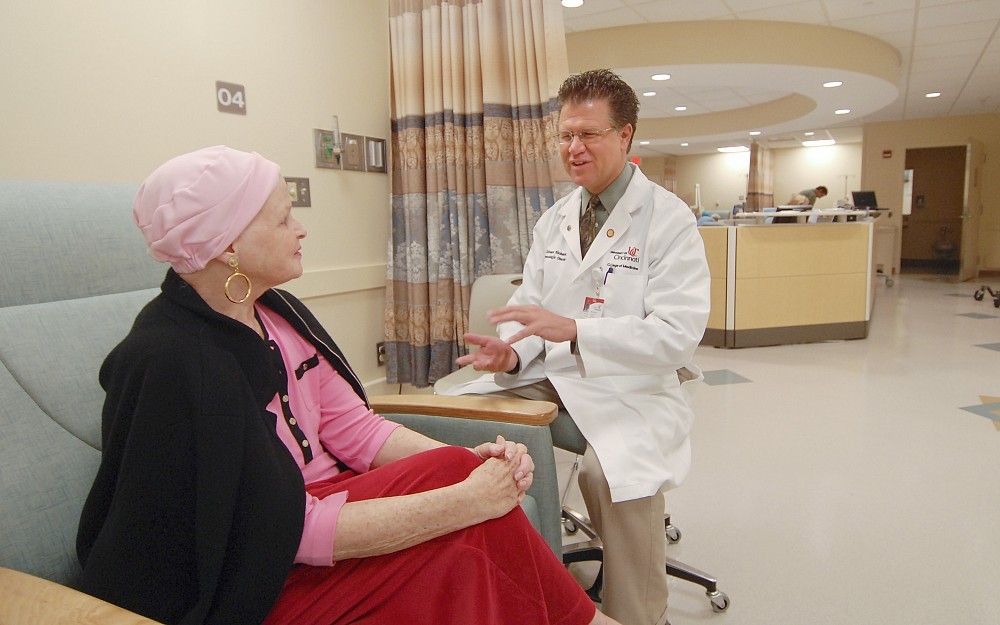
UC HEALTH LINE: Endometrial Cancer Most Common, Least Talked About Gynecologic Cancer

CincinnatiOne of the most common cancers affecting women in the United States has a precancerous state and obvious warning signs, yet almost 8,000 women die from the disease annually.
That form of cancerendometrial, also known as uterine canceroccurs in the inner lining of the uterus and gives a clear warning sign: irregular vaginal bleeding. The challenge, says W. Edward Richards, MD, is that symptoms often occur in women on the verge of menopause, leading many to mistakenly attribute the irregular bleeding to natural physiological changes.
If you look at all the cancers women are diagnosed withbreast, lung, liver, everythingendometrial cancer represents 6 percent of cases diagnosed and its the most common cancer of the reproductive tract, says Richards, a gynecologic oncologist with UC Health University of Cincinnati Physicians and director of womens cancer at the UC Barrett Cancer Institute at University Hospital.
Endometrial cancers occur most often in women older than 50 and, unfortunately, many women put off seeing a doctor because they think they are going through the change, he adds.
Richards stresses that any irregular bleeding should be addressed by a physician regardless of the patients age. Women who are in the premenopausal age rangeparticularly those with risk factors such as obesity, diabetes, hypertension or excessive estrogen usage without the use of progesterone (known as unopposed estrogen usage)should be aware of their risk for uterine cancer.
Most endometrial cancers are thought to be caused by a hormone imbalance that can occur over an extended period time. In addition to obesity, diabetes, hypertension or unopposed estrogen usage, women with polycystic ovary syndrome and those over age 50 who have never been pregnant are also considered at higher risk to develop endometrial cancer.
The good news is that surgery is often curative when endometrial cancer is caught early, says Richards.
Surgery involves removing the uterus, cervix and ovaries as well as the surrounding lymph nodes to confirm that the disease has not spread beyond the reproductive system. More aggressive forms of endometrial cancer can often be effectively managed with adjuvant chemotherapy and/or radiation therapy.
Routine pap tests rarely detect endometrial cancer, so its extremely important that unexplained bleedingno matter what a womans age or life circumstancesbe checked out, adds Richards. This disease is not exclusive to women of a certain age and the symptoms should not be ignored.
The most accurate way to diagnose endometrial cancer is with a biopsy, which can be done on an outpatient basis by inserting a small tool through the cervix into the uterus to extract a tissue sample.
Certain types of precancerous lesions may also need to be evaluated by a gynecologic oncologist, adds Richards, because in those specific cases an underlying malignancy exists about 48 percent of the time.
According to the American Cancer Society, more than 42,000 women are diagnosed with endometrial cancer annually and the chance of a woman having this cancer during her lifetime is about one in 40.
Richards and his colleague Thomas Reid, MD, are board-certified in gynecologic oncology to perform cancer care as well as advanced pelvic surgery. They specialize in minimally invasive surgical procedures, including robotic surgery, performed at UC Health University Hospital as well as a network of community-based hospitals throughout Greater Cincinnati and Dayton.
For appointments with a UC Health gynecologic oncologist, call (513) 584-6373. Appointments are available in Clifton, Kettering and West Chester.
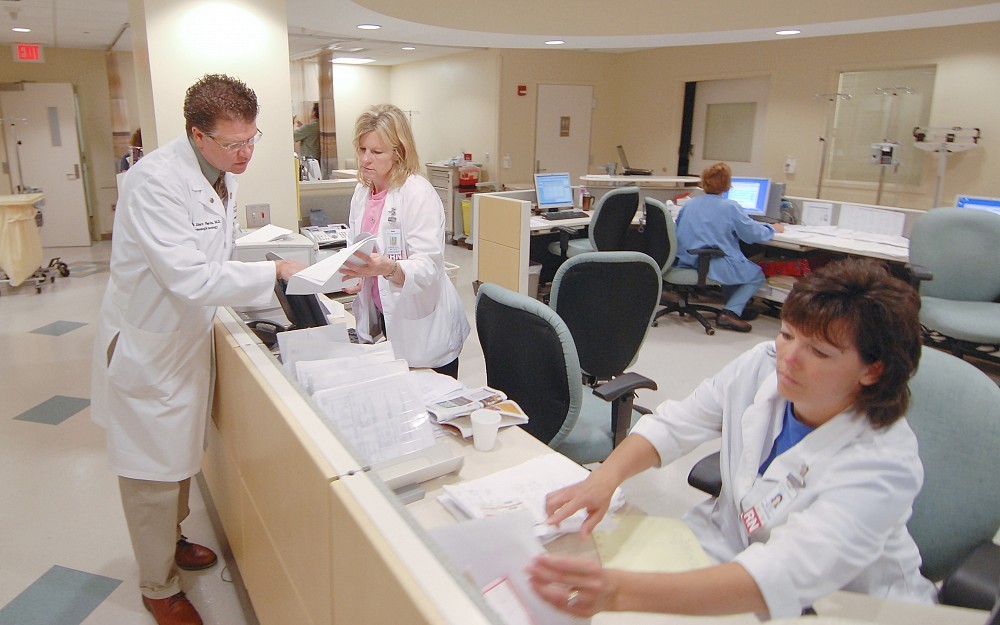
W. Edward Richards, MD, consulting with nursing staff at the UC Barrett Cancer Institute at University Hospital about a patient.

W. Edward Richards, MD, is director of women's cancer for the UC Barrett Cancer Institute at University Hospital.
Tags
Related Stories
UC radiation oncologist speaks with Local 12 news about clinical trial for head and neck cancer treatment
August 10, 2026

Dr. Sara Medek, a UC radiation oncology professor, speaks with Local 12 news about a new clinical trial aimed at reducing radiation in certain areas while still treating cancer effectively but with fewer painful side effects.
Cancer Center director charts future based on collaboration, AI
August 10, 2026

David Gius, MD, PhD, was featured in a Cincinnati Business Courier article and The Cancer Letter’s “The Directors" podcast discussing his priorities and goals as he recently took the helm as director of the University of Cincinnati Cancer Center.
Bidirectional link between oral, kidney health calls for patient education, access
August 4, 2026

Despite growing awareness of the connection between oral health and chronic health conditions, patient awareness and access to dental care remain limited, according to University of Cincinnati experts who recently spoke with Healio | Nephrology News & Issues.