Smoking Multiplies Risk of Aneurysm in People With Certain Gene Variants

CINCINNATIStroke researchers at the University of Cincinnati (UC) have confirmed two gene variants that raise the risk of aneurysm, a blood vessel in the brain that weakens and balloons out.
In addition, the researchers found that smoking, the biggest risk factor for brain aneurysm, greatly increases the risk of aneurysm in people who carry those gene variants.
The research from the Familial Intracranial Aneurysm (FIA) project is being presented Friday, Feb. 26, at the American Stroke Associations International Stroke Conference 2010 in San Antonio.
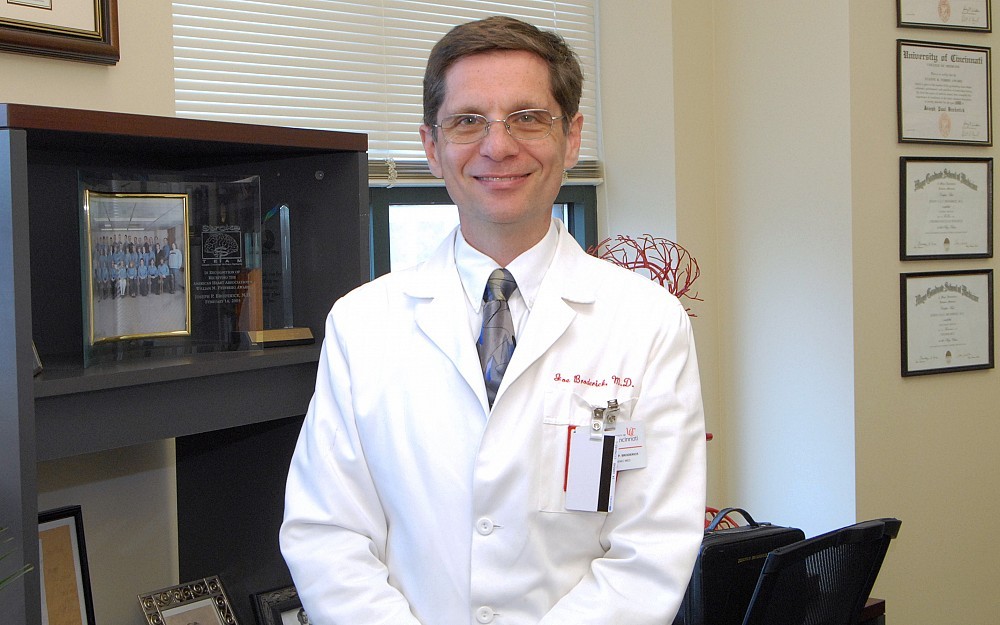
Joseph Broderick, MD, chair of the neurology department at UC and research director at the UC Neuroscience Institute at University Hospital, is the principal investigator for the FIA study, a collaborative research effort of investigators throughout the United States, Canada, Australia and New Zealand. Sponsored by the National Institutes of Health, the study is examining genetic and other environmental risk factors for intracranial aneurysm.
By comparing 406 patients from families with a high aggregation of aneurysms in Cincinnati and Northern Kentucky with 392 control subjects without aneurysm, the researchers confirmed that certain gene variants on chromosomes 8 and 9 raise the risk of intracranial aneurysm. Other variants on chromosome 2, suggested as genetic risks in a prior study on other populations, were not found to be risk factors in this study.
"These results tell us the approximate location of the risk-inducing gene on the chromosomes but does not identify the exact gene or how its functioning contributes to the risk of aneurysm, Broderick says.
Researchers found that the chance of an intracranial aneurysm increased between 37 percent and 48 percent for people who carried one copy of an identified gene variation. However, when the gene variant was combined with smoking the equivalent of one pack a day for 20 years, the risk increased more than five-fold. People with two copies of the gene variant were at even higher risk.
"Like putting a match to kindling, smoking greatly increases the likelihood of a ruptured aneurysm in people with a genetic susceptibility, Broderick says. "This is a powerful message to family members of people who have ruptured aneurysms. Even if you have a gene variant that increases your risk, you can dramatically affect your risk by not smoking. If you smoke, you are multiplying the effect of the gene.
In addition to Broderick, study investigators were Ranjan Deka, PhD, Subba Rao Indugula, PhD, Guangyun Sun, PhD, Daniel Woo, MD, Laura Sauerbeck, Dawn Kleindorfer, MD, Matthew Flaherty, MD, and Charles Moomaw, PhD, all of UC; Daniel Koller, PhD, Dongbing Lai and Tatiana Foroud, PhD, Indiana University School of Medicine; Robert Brown, MD, John Huston III, MD, and Irene Meissner, MD, the Mayo Clinic; Richard Hornung, DPH, Cincinnati Childrens Hospital Medical Center; Craig Anderson, MD, University of Sydney; Guy Rouleau, Notre Dame Hospital, Montreal; E. Sander Connolly, Columbia University; Carl Langefeld, PhD, Wake Forest University School of Medicine; and Joan Bailey-Wilson, National Institutes of Health, as well as the investigators at FIA centers in the United States, Canada, Australia and New Zealand.
The study was primarily funded by grants from the National Institute of Neurological Diseases and Stroke and the state of Ohio.
Tags
Related Stories
UC radiation oncologist speaks with Local 12 news about clinical trial for head and neck cancer treatment
August 10, 2026

Dr. Sara Medek, a UC radiation oncology professor, speaks with Local 12 news about a new clinical trial aimed at reducing radiation in certain areas while still treating cancer effectively but with fewer painful side effects.
Cancer Center director charts future based on collaboration, AI
August 10, 2026

David Gius, MD, PhD, was featured in a Cincinnati Business Courier article and The Cancer Letter’s “The Directors" podcast discussing his priorities and goals as he recently took the helm as director of the University of Cincinnati Cancer Center.
Bidirectional link between oral, kidney health calls for patient education, access
August 4, 2026

Despite growing awareness of the connection between oral health and chronic health conditions, patient awareness and access to dental care remain limited, according to University of Cincinnati experts who recently spoke with Healio | Nephrology News & Issues.