Genetic Variant Greatly Increases Lung Cancer Risk for Light Smokers

CINCINNATIIndividuals with a certain type of genetic susceptibility to lung cancer face a greatly increased risk for the deadly disease with even a small exposure to cigarette smoke, a study team that includes researchers from the University of Cincinnati (UC) has concluded.
For family members who carry this genetic variant, the risk of lung cancer is similar for both light and heavy smokers, the researchers say, adding that even non-smokers who are exposed to second-hand cigarette smoke and have a family history of lung cancer should be monitored for early detection.
The study, conducted by the Genetic Epidemiology of Lung Cancer Consortium (GELCC), is being published online March 9, 2010, ahead of print by Cancer Research, a publication of the American Association for Cancer Research. Print date is March 15.
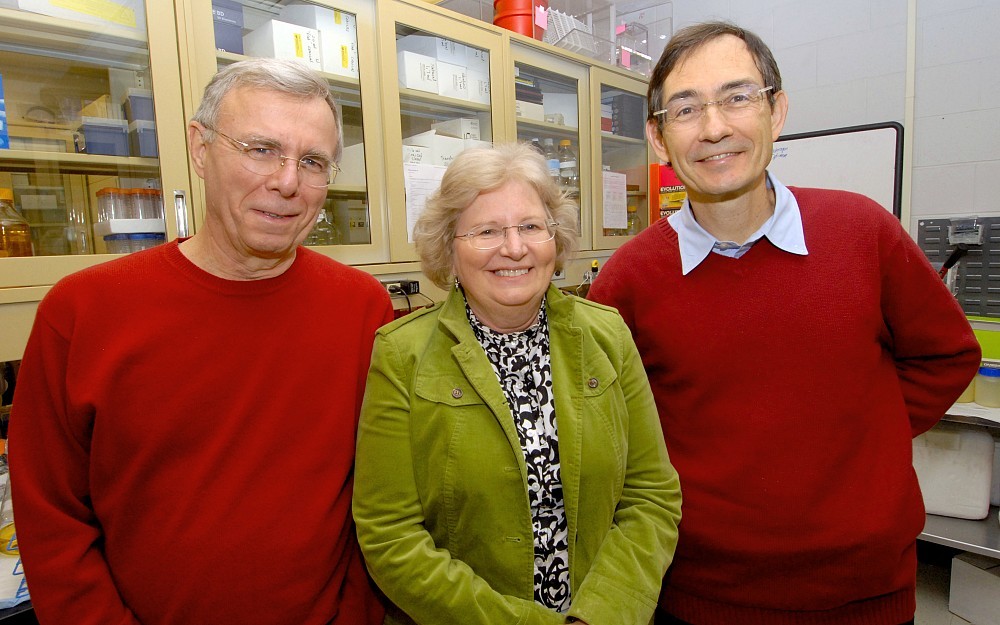
Marshall Anderson, PhD, a professor in UCs cancer and cell biology department, is principal investigator of the GELCC, whose UC portion is known as the Family Lung Cancer Study. Susan Pinney, PhD, an associate professor in the department of environmental health, is a co-investigator. The studys first author is Christopher Amos, PhD, a professor and epidemiologist at the University of Texas M.D. Anderson Cancer Center in Houston.
"The study shows a strong gene-environment interaction between a region of chromosome 6q and smoking, UCs Anderson says. "People with this susceptibility locus can develop lung cancer even with a very little bit of smoking.
According to the Centers for Disease Control and Prevention (CDC), about 200,000 cases of lung cancer were diagnosed in the United States in 2005, the most recent year for which statistics are available. More people die from lung cancer than any other type of cancer, the CDC says.
To study the chromosome regions effect on lung cancer risk, the researchers identified a haplotype (a portion of a chromosome containing genes that tend to be inherited together) that was associated with lung cancer. Collecting data from several recruitment sites including UC, they then divided smoking exposures into never smokers, light smokers (fewer than 20 pack years, with a pack year being the equivalent of a pack a day for 20 years), moderate smokers (20-40 pack years) and heavy smokers (40 or more pack years).
For family members without this genetic lung cancer risk, the risk of developing the disease tracked closely with the level of smokingin other words, heavy smokers had a significantly greater risk of developing lung cancer than moderate smokers, who had a significantly greater risk than light smokers. But in family members with the genetic risk haplotype, even light smoking resulted in a greatly increased risk for developing lung cancer. From there, increasing smoking behaviors in this group of family members carried only weakly increasing risk for developing lung cancer.
"If you carried the inherited risk and then you smoked, it didnt matter if you were a light smoker or a heavy smokeryou were significantly more likely to develop lung cancer, Pinney says.
Adds Anderson: "If you have a family history of lung cancer, you probably should not even be around cigarette smokers.
The research was supported by grants from the National Cancer Institute of the Institutes of Health (NIH) and intramural programs of the NIHs National Human Genome Research Institute.
Tags
Related Stories
UC radiation oncologist speaks with Local 12 news about clinical trial for head and neck cancer treatment
August 10, 2026

Dr. Sara Medek, a UC radiation oncology professor, speaks with Local 12 news about a new clinical trial aimed at reducing radiation in certain areas while still treating cancer effectively but with fewer painful side effects.
Cancer Center director charts future based on collaboration, AI
August 10, 2026

David Gius, MD, PhD, was featured in a Cincinnati Business Courier article and The Cancer Letter’s “The Directors" podcast discussing his priorities and goals as he recently took the helm as director of the University of Cincinnati Cancer Center.
Bidirectional link between oral, kidney health calls for patient education, access
August 4, 2026

Despite growing awareness of the connection between oral health and chronic health conditions, patient awareness and access to dental care remain limited, according to University of Cincinnati experts who recently spoke with Healio | Nephrology News & Issues.