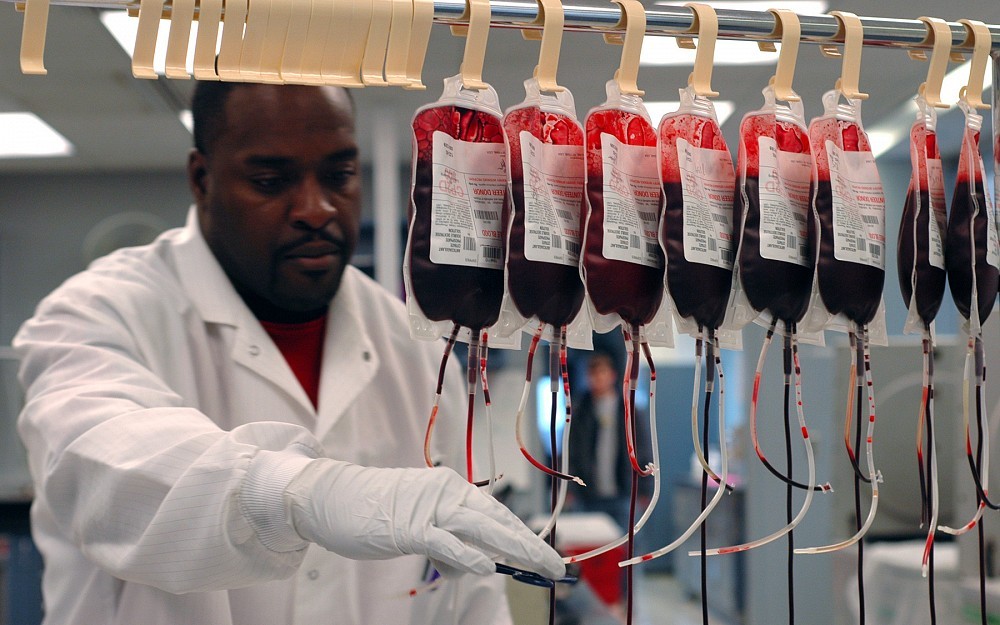
Hoxworth Makes Request for Type O Blood Donors

CINCINNATIHoxworth Blood Center at the University of Cincinnati has an urgent need for all type O blood donors as the local blood supply is at a critical level.
"Hoxworth is faced with a critically low inventory of type O blood which is the result of heavy hospital usage," says Alecia Lipton, Hoxworth spokesperson. "We need donors in the Tristate to step forward to meet the demand locally.
"We are asking eligible type O donors to make a donation at their earliest convenience in order to support patients at the 32-area hospitals we serve."
Hoxworth operates eight neighborhood donor centers in Anderson, Blue Ash, the UC Academic Health Center, Downtown, Ft. Mitchell, Mason, Tri-County and Western Hills. In times of shortages, walk-ins are always welcome.
How to Donate:
Donating blood is safe and easy. You must be at least 17-years-old (or 16-years-old with a signed parental consent) and in good health. You must weigh at least 110 pounds and bring identification to donate. It is recommended that donors eat a good meal and drink plenty of water within four hours before donating.
About Hoxworth:
Hoxworth Blood Center at the University of Cincinnati is on a campaign to recruit "100,000 Donors. 100,000 Heroes." Founded in 1938, Hoxworth serves 32 hospitals in 17 counties in Southwestern Ohio, Northern Kentucky and Southeastern Indiana. Annually, Hoxworth collects over 90,000 units of blood from local donors. At least 350 volunteer blood donors and 40 volunteer platelet donors are essential each day to keep up with the demands of Tritate hospitals and their patients.

UC's Hoxworth Blood Center collects, tests, processes and distributes blood and its components to 30 hospitals and medical centers in a 17-county area of Ohio, Kentucky and Indiana.
Tags
Related Stories
UC study shows lack of awareness for lung cancer screenings across country
August 21, 2026
University of Cincinnati Cancer Center researchers have published a study in the American Journal of Surgery that found only 15% of eligible American adults have discussed lung cancer screening with their doctors.This research emphasizes the need to spread awareness and better educate the public about screening through low-dose computed tomography.
UC radiation oncologist speaks with Local 12 news about clinical trial for head and neck cancer treatment
August 10, 2026

Dr. Sara Medek, a UC radiation oncology professor, speaks with Local 12 news about a new clinical trial aimed at reducing radiation in certain areas while still treating cancer effectively but with fewer painful side effects.
Cancer Center director charts future based on collaboration, AI
August 10, 2026

David Gius, MD, PhD, was featured in a Cincinnati Business Courier article and The Cancer Letter’s “The Directors" podcast discussing his priorities and goals as he recently took the helm as director of the University of Cincinnati Cancer Center.