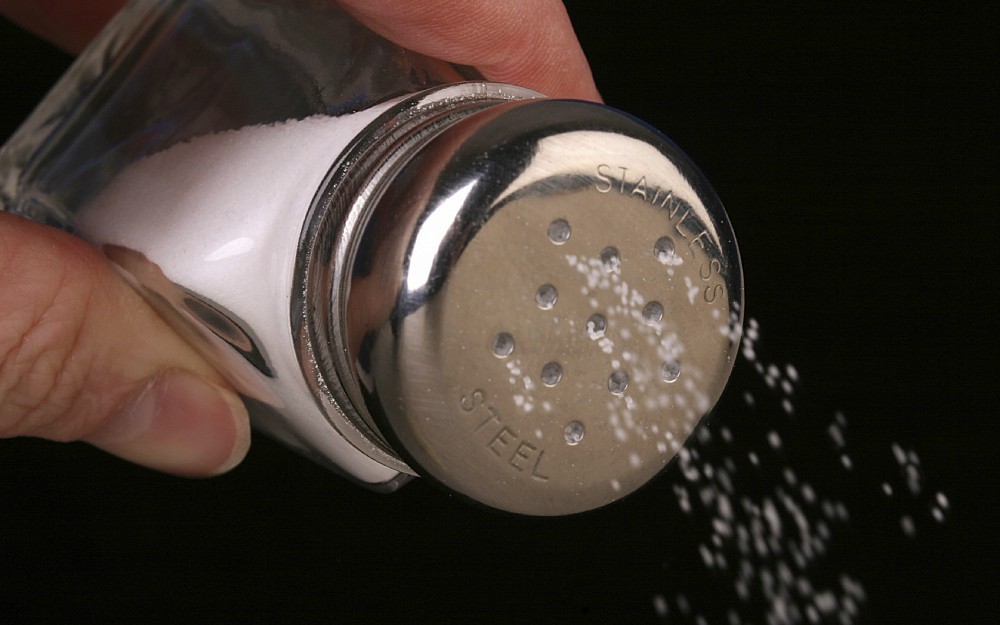
FDA Should Set Standards for Salt Added to Processed Food, Prepared Meals

WASHINGTONReducing Americans' excessive sodium consumption requires establishing new federal standards for the amount of salt that food manufacturers, restaurants, and food service companies can add to their products, says a new report by the Institute of Medicine.
Because the vast majority of people's sodium intake comes from salt that companies put in prepared meals and processed foods, this regulatory strategy would make it easier for consumers to eat lower, healthier amounts of salt, said the committee that wrote the report.
The committee was chaired by Jane Henney, MD, professor of medicine at the University of Cincinnati College of Medicine. Henney also served as commissioner of the U.S. Food and Drug Administration from 1998 until 2001.
The FDA should gradually step down the maximum amount of salt that can be added to foods, beverages and meals through a series of incremental reductions. The goal is not to ban salt, but rather to bring the amount of sodium in the average American's diet below levels associated with the risk of hypertension, heart disease and stroke, and to do so in a gradual way that will assure that food remains flavorful to the consumer, the committee said.
Regulatory action is necessary because four decades of public education campaigns about the dangers of excess salt and voluntary sodium cutting efforts by the food industry have generally failed to make a dent in Americans' intakes, the committee said. The industry's voluntary efforts have fallen short because of lack of a level playing field for all products. Companies have feared losing customers who could switch to competing products or brands with higher salt content. Also, salt is so widespread and present in such large amounts in grocery store and menu itemsincluding many foods and drinks that people do not think of as saltythat it is difficult for people who want to reduce their sodium intake to succeed.
"For 40 years we have known about the relationship between sodium and the development of hypertension and other life threatening diseases, but we have had virtually no success in cutting back the salt in our diets," Henney says. "This report outlines strategies that will enable all of us to effectively lower our sodium consumption to healthy levels. The best way to accomplish this is to provide companies the level playing field they need so they are able to work across the board to reduce salt in the food supply. Lowering sodium by the food industry in a stepwise, monitored fashion will minimize changes in flavor and still provide adequate amounts of this essential nutrient that are compatible with good health."
On average, Americans consume more than 3,400 milligrams of sodiumthe amount in about 1.5 teaspoons of salteach day. The recommended maximum daily intake of sodiumthe amount above which health problems appearis 2,300 milligrams per day for adults, about one teaspoon of salt. The recommended adequate intake of sodium is 1,500 milligrams per day, and people over 50 need even less.
Americans' salt consumption has been shaped in part by changes in eating habits as people consume more processed foods, dine out more frequently, and prepare fewer meals from basic, raw ingredients in the home. U.S. residents have gradually grown accustomed to saltier foods as the amount of salt in the nation's food supply has increased over time, but research indicates that this trend can be reversed as well. People's tastes can be reset to prefer less salty flavor through subtle reductions over time, studies show.
The FDA has the authority to regulate salt as a food additive, the report says. As a substance that has been added to foods throughout history, salt has been treated as "generally recognized as safe," and there are no regulatory limits on its use as an additive. But studies connecting high intakes of sodium to high blood pressure, heart attacks, strokes, kidney disease, and other debilitating and deadly conditions show that salt is safe only up to a certain amount. FDA will need to gather and assess an ample body of data to determine what limits to set on the mineral's use in processed foods and prepared meals and what the incremental decreases should be. The committee acknowledged that establishing the process will take significant time, staffing, and funding.
The percentage of Daily Value for sodium on food packagingwhich tells shoppers how much of their recommended daily intake is in a serving of the productis based on an earlier maximum level of 2,400 milligrams per day. Because using an upper level can lead people to mistakenly think that it is a desirable amount, the committee recommended that the Daily Value for sodium be changed to reflect the adequate intake for adults of 1,500 milligrams per day.
Given that it will take time to develop and implement FDA's new regulatory process for salt, restaurants, food service firms and food and beverage manufacturers should pursue voluntary sodium reduction efforts in the meantime, the committee said. These initiatives could provide experiences and information that could help FDA shape the standards and incremental decreases.
The report was requested by Congress and sponsored by the U.S. Centers for Disease Control and Prevention; U.S. Food and Drug Administration; National Heart, Lung, and Blood Institute; and Office of Disease Prevention and Health Promotion of the U.S. Department of Health and Human Services.
Established in 1970 under the charter of the National Academy of Sciences, the Institute of Medicine provides independent, objective, evidence-based advice to policymakers, health professionals, the private sector, and the public. The National Academy of Sciences, National Academy of Engineering, Institute of Medicine, and National Research Council make up the National Academies.

Jane Henney, MD
Related Stories
UC radiation oncologist speaks with Local 12 news about clinical trial for head and neck cancer treatment
August 10, 2026

Dr. Sara Medek, a UC radiation oncology professor, speaks with Local 12 news about a new clinical trial aimed at reducing radiation in certain areas while still treating cancer effectively but with fewer painful side effects.
Cancer Center director charts future based on collaboration, AI
August 10, 2026

David Gius, MD, PhD, was featured in a Cincinnati Business Courier article and The Cancer Letter’s “The Directors" podcast discussing his priorities and goals as he recently took the helm as director of the University of Cincinnati Cancer Center.
UC graduates cross finish line at commencement
August 7, 2026
The University of Cincinnati recognized 2,125 graduates in two ceremonies at summer commencement Friday on campus at Fifth Third Arena.