Air Force Agreement Dedicates $24 Million to UC for Air Medical Research

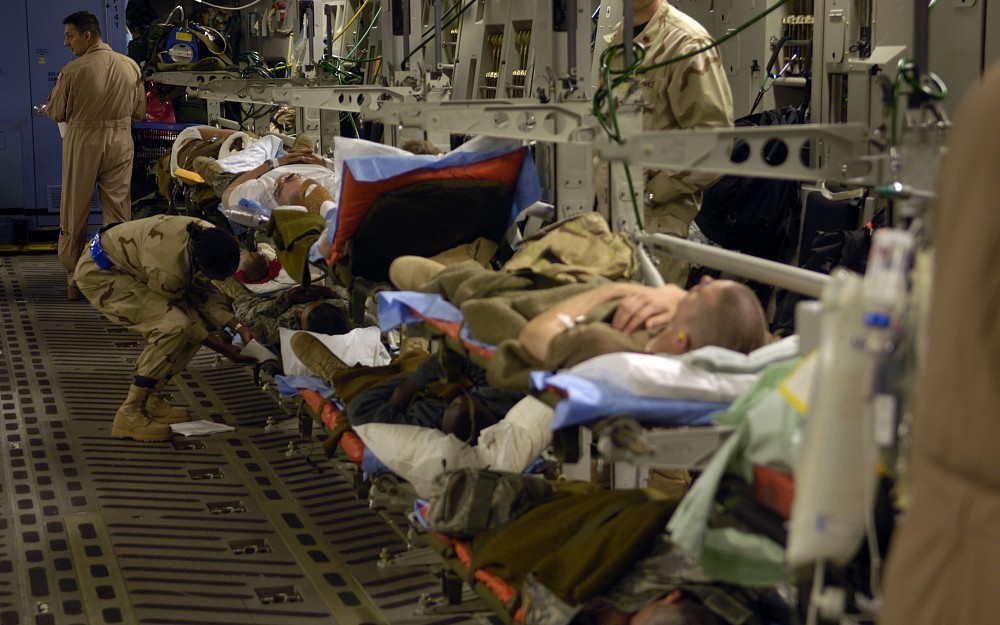
CINCINNATITrauma and critical care researchers at the University of Cincinnati (UC) will expand their research on air medical evacuation with the help of a new award from the United States Air Force.
The award, a cooperative agreement between the Air Force and UC, has a ceiling of $24 million to fund research housed at UCs Institute for Military Medicine, says Alex Lentsch, PhD, vice chairman for research in the department of surgery and director of the institute.
While the Air Force has funded multiple projects at UC in the past, Lentsch says this agreement allows for a direct and more efficient flow of research funds to the university.
"What weve created in terms of the Institute for Military Medicine is really founded in our great relationship with the Air Force. We have funding from virtually every source in the military, but clearly the funding from the Air Force is the largest. It runs very parallel with what we do as a department, in terms of our strengths in basic and clinical research.
The agreement is set to fund five research tasks in its beginningfrom basic sciences questions of how the unique environment of aeromedical evacuation affects the body (and possible treatments to offset those effects) to clinical studies on the amount of oxygen required when using an oxygen concentrator at altitude.
Other ongoing projects that will receive funding include a partnership between the UC emergency medicine researchers and local first responders, who receive tools to measure how much oxygen victims of traumatic injuries need.
Lentsch says the work isnt limited to those initial investigations: "This agreement allows us to work with the Air Force to continually develop new ideas and new studies that can answer questions for which they need answers. As those projects develop, we can add them on under the umbrella of this agreement.
One of the new projects funded focuses on the condition of the military medical team treating injured service personnel. During their training at UCs Center for Sustainment of Trauma and Readiness Skills (C-STARS), Critical Care Air Transport (CCAT) teams work in simulators designed to mimic the conditions of treating wounded patients in a dark, loud and moving helicopter.
"Were interested in understanding how you can use patient care simulation to understand task saturation for these teams, says Timothy Pritts, MD, PhD, assistant professor of surgery at UC. "Task saturation is simply when things come at you too quickly to react towe know it occurs in the ICU (Intensive Care Unit), we think it occurs during C-CAT missions.
By videotaping CCAT teams being trained in the simulator, Pritts says researchers will seek to find the saturation as it happens. They can then investigate ways to mitigate it during flights.
Lentsch estimates the research funded under the new agreement will initially involve two dozen faculty members, with anywhere from 50 to 100 researchers, staff and students contributing. "What we hope is that we can build on these research programs to increase the job growth related to our research. We have a great capacity to do more research that is relevant to the military at UC.
The agreement will also allow the Institute for Military Medicine to expand ongoing cooperation with Wright-Patterson Air Force base in Dayton, as the U.S. Air Force School of Aerospace Medicine transfers most of its operations from Brooks-City Base, Texas, to Wright Patterson next year.
"The Air Force agreement is a fantastic opportunity to advance our knowledge about combat casualty care, especially the science behind the things we do, says Pritts. "The current care is very good, but this is a way we can work with our military partners to sharpen the care and really it take it to the next level.
Tags
Related Stories
UC radiation oncologist speaks with Local 12 news about clinical trial for head and neck cancer treatment
August 10, 2026

Dr. Sara Medek, a UC radiation oncology professor, speaks with Local 12 news about a new clinical trial aimed at reducing radiation in certain areas while still treating cancer effectively but with fewer painful side effects.
Cancer Center director charts future based on collaboration, AI
August 10, 2026

David Gius, MD, PhD, was featured in a Cincinnati Business Courier article and The Cancer Letter’s “The Directors" podcast discussing his priorities and goals as he recently took the helm as director of the University of Cincinnati Cancer Center.
Bidirectional link between oral, kidney health calls for patient education, access
August 4, 2026

Despite growing awareness of the connection between oral health and chronic health conditions, patient awareness and access to dental care remain limited, according to University of Cincinnati experts who recently spoke with Healio | Nephrology News & Issues.