1st International Conference, NCI Partnership Highlight UC Research in RNA Nanotechnology

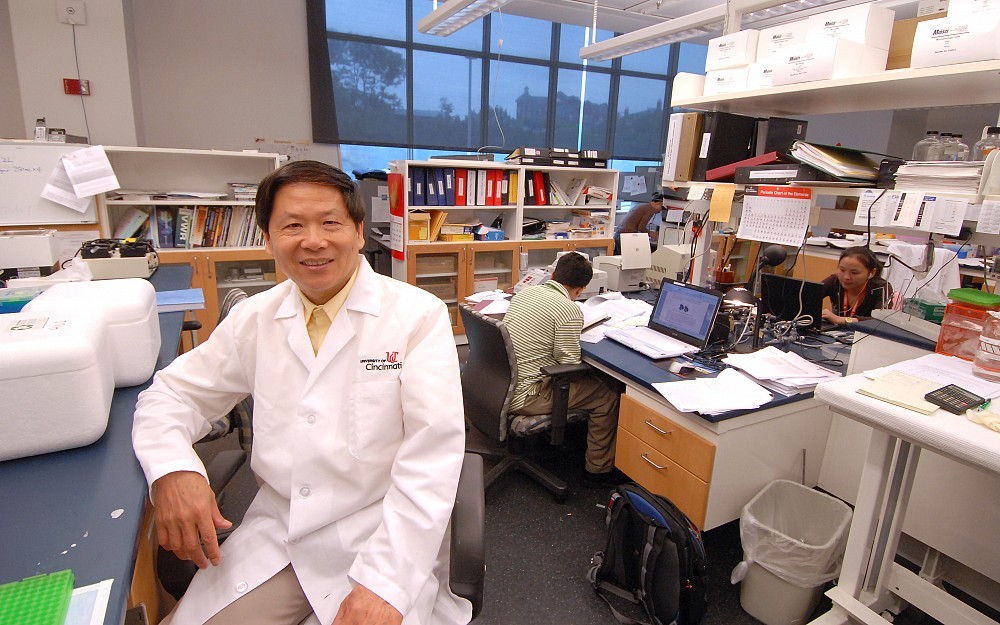
CINCINNATIUniversity of Cincinnati (UC) biomedical engineering professor Peixuan Guo, PhD, is expanding his work with RNA nanotechnology with a five-year National Cancer Institute (NCI) grant and a new international conference held this month to explore the possibilities for RNA in nanotechnology.
The 2010 International Conference of RNA Nanotechnology and Therapeutics will be held Oct. 23-25 in Cleveland. Guo, Dane and Mary Louise Miller Endowed Chair in biomedical engineering, serves as director of UCs NIH Nanomedicine Development Center and will chair the conference.
"The conference will be the first of its kind to bring together the brightest minds throughout the world to disseminate their knowledge involving RNA nanotechnology and its applications, says Guo. "We hope to promote collaboration among these researchers for advancing this interesting emerging field of science.
Guo was recently named principal investigator for a $2.4 million award from the National Institutes of Healths NCI. The NCI awarded UC the five-year grant to establish a "Cancer Nanotechnology Platform Partnership for the study of RNA nanotechnology in cancer therapy.
The award will help to create an interdisciplinary team of biomedical engineering scientists, cancer biologists and RNA and DNA nanotechnology experts, including Malak Kotb, PhD, chair of UCs molecular genetics, biochemistry and microbiology department.
Guo says RNAs unique diversity of function and structure makes it an exciting tool for researchers focused on nanotechnology, or the engineering of functional systems at the molecular scale.
"The study of nanotechnology has moved beyond imaginable possibilities, says Guo. "RNA is particularly attractive as a building block for assembly in nanotechnology and nanomedicineit can be manipulated as easily as DNA, but possesses the versatility in structure and catalytic function similar to that of proteins.
At UC, researchers will focus on constructing RNA nanoparticles for specific targeting of cancer cells and drug delivery to the cells, developing new ways to screen for stable segments of RNA that can target and enter cancer cells in models of ovarian cancer, liver cancer and leukemia.
The grant is part of the second phase of the NCIs Alliance for Nanotechnology in Cancer program, which funds researchers working to leverage the specific advantages of nanotechnology to improve the diagnosis, treatment and prevention of cancer. The phase includes an investment of approximately $30 million per year for the next five years to more than 30 investigators across the country.
Guo has pioneered RNA nanotechnology since 1998, when his lab discovered that RNA nanoparticles in the bacteriophage phi29 virus can self-assemble into RNA nanoparticles to gear a nanomotor to power DNA into the virus protein shell.

In Guo's study, researches inserted the core of the bacterial virus phi29 DNA packaging nanomotor into a lipid membrane. The path of the motor core serve as a nanochannel for the transport of double-stranded DNA.
Tags
Related Stories
On-site training in Speech & Hearing Clinic sets UC’s programs apart
August 27, 2026
At the University of Cincinnati’s Speech & Hearing Clinic, Doctor of Audiology and Speech-Language Pathology graduate students gain real-world experience while providing free speech and hearing services to the community.
Funding expands UC research into weight gain side effects of bipolar medication
August 26, 2026
University of Cincinnati researchers have been approved for funding by the Patient-Centered Outcomes Research Institute (PCORI) to expand the implementation of healthy lifestyle interventions and metformin prescription to help manage weight gain in overweight or obese youth taking second-generation antipsychotic medications.
One in four NFL players had CTE at death
August 25, 2026

Forbes cites research on concussions and football helmets by the University of Cincinnati in a report that found one in four NFL players had brain damage at death.